


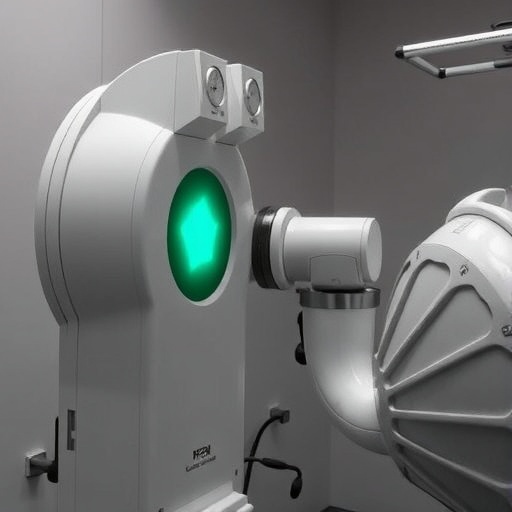
Researchers have been examining the efficacy of N-isopropylacrylamide (NIPAM) gels as a novel dosimetry tool within CyberKnife systems, a widely used platform for delivering stereotactic radiosurgery. The impetus behind this investigation lies in the pressing need for improved accuracy and sensitivity in radiation dose measurements, which can ultimately enhance treatment outcomes for patients. The method presented in the study employs magnetic resonance imaging (MRI) based R2 mapping to assess the characteristics of NIPAM gels, marking a significant advancement in functional imaging techniques in the field of medical physics.
As a biocompatible polymer, NIPAM has been a subject of interest in various biomedical applications, primarily due to its unique physical properties. One of the most intriguing features of NIPAM gels is their ability to undergo a reversible sol-gel transition in response to temperature changes, allowing for precise control over their mechanical and chemical behavior. Researchers have harnessed this property to create a gel that can act as a reliable dosimeter, responding predictably to ionizing radiation exposure and facilitating accurate dose measurements during radiation therapy procedures.
The current study meticulously prepares NIPAM gels across various formulations to ascertain their response to radiation. The dosimetry effectiveness of these gels stems from their high responsive behavior to radiation-induced changes in relaxation times, particularly T1 and T2. By employing R2 mapping through MRI, which effectively measures the decay of the nuclear spins in the gel, the researchers can obtain a detailed assessment of the radiation dose received by patients during their treatment.
In the study, the authors first describe the experimental setup involving the integration of NIPAM gel dosimetry with CyberKnife systems, detailing how this setup was calibrated to measure the response of the gel accurately. They articulate the meticulous calibration process that involves comparing the NIPAM gel dosimetry results with standard dosimeters, ensuring that the accuracy of the new method is aligned with established practices. This foundational work is essential for validating the practical application of NIPAM gels in clinical settings.
One highlight of this research is the exploration of the sensitivity of NIPAM gels via R2 mapping in environments that simulates the complex dynamics of CyberKnife radiation delivery. The authors delve into the various parameters affecting the performance of NIPAM gels, such as the gel composition and post-irradiation temperature, which could influence the precision of the dose assessments. The findings suggest that optimized formulations exhibit enhanced sensitivity, making NIPAM gels an attractive alternative to traditional dosimetry techniques.
Upon analyzing the results, the researchers present compelling evidence that NIPAM gel dosimeters can effectively detect small dose variations, a feat that is particularly important in the context of radiosurgery. The ability to monitor dose distributions accurately is crucial, especially when considering the delicate structures surrounding tumors that require precise targeting during treatment. True to their complexity, the CyberKnife systems often deliver radiation in a highly conformal manner, necessitating advanced dosimetry solutions to ensure that the prescribed dose aligns with the actual received dose.
The study further emphasizes the potential impact of integrating NIPAM gel dosimetry in clinical practice, particularly in enhancing the safety and effectiveness of radiation treatment. Enhanced dose verification enhances clinicians’ confidence in ensuring that patients receive the intended therapeutic benefits while minimizing the risks associated with radiation exposure. This could ultimately lead to improved patient outcomes and reduced side effects, factors that are paramount in cancer treatment.
The implications of this research extend to a broader context within the field of medical imaging and dosimetry, as it opens possibilities for other biocompatible materials to be utilized in similar applications. Moreover, the introduction of advanced imaging techniques such as MRI-based R2 mapping could usher in a new era of real-time dosimetry assessments, enabling physicians to make informed decisions during the therapeutic process based on accurate feedback from the dosimetry tools at their disposal.
Overall, the investigation of NIPAM gels as dosimeters in CyberKnife systems marks a noteworthy intersection of chemistry, physics, and medicine. The contributions outlined in this study serve as a foundation upon which future innovations in radiotherapy can be built. The ongoing research in this vein reaffirms the critical role of interdisciplinary collaboration in advancing patient care through technological advancements.
As we move forward, the need for precision in radiotherapy only becomes more pronounced. With growing interest in personalized medicine and individualized treatment plans, the development of sensitive and flexible dosimetry practices such as those demonstrated with NIPAM gels could be pivotal. Continuous refinement of such tools is vital to ensure that they meet the evolving demands of modern therapeutic environments.
In conclusion, this study represents a significant step towards realizing the full potential of NIPAM gel dosimetry in radiation therapy, particularly in specialized systems like CyberKnife. The innovative application of MRI-based techniques showcases how modern imaging modalities can complement traditional dosimetry methods, enhancing their effectiveness and reliability. As the landscape of cancer treatment continues to evolve, research endeavors like this one are vital to ensure that technology and clinical practice remain aligned for the benefit of patients around the world.
Cite Scienmag News
Ophelia Keating. (August 28, 2025). Assessing NIPAM Gel Sensitivity in CyberKnife Dosimetry. Scienmag. https://scienmag.com/assessing-nipam-gel-sensitivity-in-cyberknife-dosimetry/
Ophelia Keating. "Assessing NIPAM Gel Sensitivity in CyberKnife Dosimetry." Scienmag, 28 August 2025, https://scienmag.com/assessing-nipam-gel-sensitivity-in-cyberknife-dosimetry/. Accessed 3 September 2026.
Ophelia Keating. "Assessing NIPAM Gel Sensitivity in CyberKnife Dosimetry." Scienmag. August 28, 2025. https://scienmag.com/assessing-nipam-gel-sensitivity-in-cyberknife-dosimetry/


