

Saturday, August 1, 2026
Science
No Result
View All Result
  • Login
  • HOME
  • SCIENCE NEWS
  • CONTACT US
  • HOME
  • SCIENCE NEWS
  • CONTACT US
No Result
View All Result
Scienmag
No Result
View All Result
Home Science News Earth Science

Assessing Net-Zero Potential of Offshore Oil Platforms under New Policies

July 11, 2026
in Earth Science
Reading Time: 2 mins read
0
Assessing Net-Zero Potential of Offshore Oil Platforms under New Policies

Assessing Net-Zero Potential of Offshore Oil Platforms under New Policies

65
SHARES
587
VIEWS
Share on FacebookShare on Twitter
ADVERTISEMENT

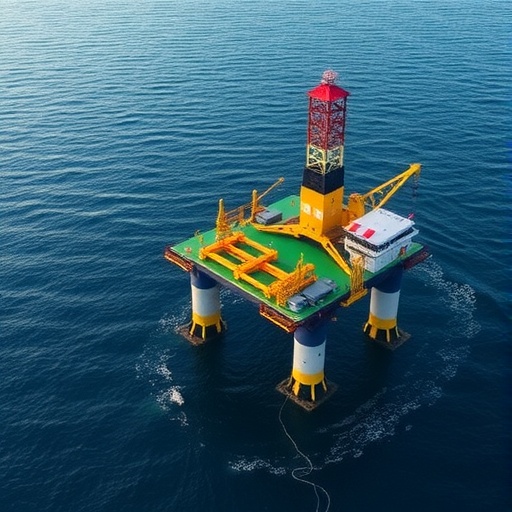
A groundbreaking study published in Communications Earth & Environment offers an unprecedented analysis of the feasibility of achieving net-zero emissions on offshore oil and gas platforms under varying decarbonization policies. As the energy sector faces mounting pressure to reduce its carbon footprint, this research delivers critical insights into how offshore operations—long considered difficult to decarbonize—can transition towards sustainability while maintaining productivity.

Using advanced modeling that integrates emission data, energy consumption patterns, and regulatory scenarios, the researchers provide a road map for offshore platforms to meet stringent climate targets. The study evaluates multiple policy frameworks, ranging from moderate emissions reductions to aggressive net-zero mandates, and assesses the technical viability and economic impacts of each scenario.

Central to these findings is the identification of key pathways to decarbonization. The research highlights the potential of electrification of platform operations, powered by renewable energy sources such as offshore wind and solar, as a transformative strategy. Additionally, the integration of carbon capture and storage (CCS) technologies is emphasized as a vital option, particularly for managing residual emissions that cannot be eliminated through operational efficiency alone.

The authors also address the challenges posed by the inherently remote and harsh offshore environment, which complicates the deployment of new technologies. Through sensitivity analysis, the study quantifies the risks and uncertainties involved, underscoring the need for adaptive policy mechanisms that can evolve alongside technological advancements.

Importantly, the research delves into the interplay between regulatory pressures and market forces. It reveals that stringent decarbonization policies not only drive technology adoption but also reshape economic incentives, potentially resulting in new business models that prioritize sustainability. However, some scenarios project increased operational costs and require significant upfront investment, suggesting a transition period marked by economic trade-offs.

One of the study’s most striking conclusions is the affirmation that net-zero targets are achievable without entirely abandoning offshore oil and gas production. Instead, the future landscape envisions hybrid systems where fossil fuel extraction coexists with low-carbon technologies, aiming to minimize environmental impact without sacrificing energy security.

By offering a comprehensive, data-driven framework, this work equips policymakers, industry leaders, and environmental advocates with actionable strategies to guide the offshore sector’s decarbonization journey. It exemplifies the power of interdisciplinary research in tackling complex environmental challenges and sets a precedent for future studies exploring sustainable energy futures.

As the global community intensifies its commitment to combat climate change, this research stands out as a pioneering effort, shedding light on the often-overlooked offshore oil and gas platforms and their potential role in a net-zero world.


Subject of Research: Feasibility of achieving net-zero emissions on offshore oil and gas platforms under different decarbonization policy scenarios.

Article Title: Net-zero feasibility of offshore oil and gas platforms under alternative decarbonization policy scenarios.

Article References:
Liu, H., Zhou, S., Gu, W. et al. Net-zero feasibility of offshore oil and gas platforms under alternative decarbonization policy scenarios. Commun Earth Environ (2026). https://doi.org/10.1038/s43247-026-03803-6

Image Credits: AI Generated

DOI: 10.1038/s43247-026-03803-6

Tags: carbon capture and storage (CCS) in offshore operationseconomic analysis of offshore decarbonizationelectrification of offshore platformsfeasibility of offshore wind and solar powerimpact of new regulations on offshore oil industrymodeling of offshore decarbonization pathwaysnet-zero emissions strategiesOffshore oil platform decarbonizationoffshore renewable energy integrationpolicy frameworks for offshore emissions reductionsustainability transition in offshore oil and gas industrytechnological challenges in offshore sustainability
Share26Tweet16
Previous Post

Evaluating Geriatric Assessment and Interventions for Prostate Cancer Patients on ADT

Next Post

Transient Simulation Advances in Bioresorbable Flexible Electronic Circuits

Related Posts

Affordable Lead Screening Using Transmission X-Ray Fluorescence
Earth Science

Affordable Lead Screening Using Transmission X-Ray Fluorescence

August 1, 2026
CO₂ Degassing Drives Microbial Carbon Fixation in a Partially Submerged Caldera
Earth Science

CO₂ Degassing Drives Microbial Carbon Fixation in a Partially Submerged Caldera

August 1, 2026
Mexico sheltered mammals for millions of years before continental migrations began
Earth Science

Mexico sheltered mammals for millions of years before continental migrations began

August 1, 2026
Management Focus on Climate Risk Curtails Greenwashing Through Green Innovation
Earth Science

Management Focus on Climate Risk Curtails Greenwashing Through Green Innovation

August 1, 2026
Mammals Intermingled Across the Americas Before North and South America Connected
Earth Science

Mammals Intermingled Across the Americas Before North and South America Connected

August 1, 2026
Improved Detection of Forced Signals in Monthly Precipitation Changes
Earth Science

Improved Detection of Forced Signals in Monthly Precipitation Changes

August 1, 2026
Next Post
Transient Simulation Advances in Bioresorbable Flexible Electronic Circuits

Transient Simulation Advances in Bioresorbable Flexible Electronic Circuits

  • Mothers who receive childcare support from maternal grandparents show more

    Mothers who receive childcare support from maternal grandparents show more parental warmth, finds NTU Singapore study

    27656 shares
    Share 11059 Tweet 6912
  • University of Seville Breaks 120-Year-Old Mystery, Revises a Key Einstein Concept

    1061 shares
    Share 424 Tweet 265
  • Bee body mass, pathogens and local climate influence heat tolerance

    682 shares
    Share 273 Tweet 171
  • Researchers record first-ever images and data of a shark experiencing a boat strike

    546 shares
    Share 218 Tweet 137
  • Groundbreaking Clinical Trial Reveals Lubiprostone Enhances Kidney Function

    531 shares
    Share 212 Tweet 133
Science

Embark on a thrilling journey of discovery with Scienmag.com—your ultimate source for cutting-edge breakthroughs. Immerse yourself in a world where curiosity knows no limits and tomorrow’s possibilities become today’s reality!

RECENT NEWS

  • Normal DNA Re-Replication Observed as Human Stem Cells Differentiate
  • Pusan National University Researchers Advance Solar Desalination Using Multifunctional Membrane
  • Memorial Sloan Kettering Research Highlights: July 30, 2026
  • Scientists uncover a new form of magnetism in quantum materials

Categories

  • Agriculture
  • Anthropology
  • Archaeology
  • Athmospheric
  • Biology
  • Biotechnology
  • Blog
  • Bussines
  • Cancer
  • Chemistry
  • Climate
  • Earth Science
  • Editorial Policy
  • Marine
  • Mathematics
  • Medicine
  • Pediatry
  • Policy
  • Psychology & Psychiatry
  • Science Education
  • Social Science
  • Space
  • Technology and Engineering

Subscribe to Blog via Email

Enter your email address to subscribe to this blog and receive notifications of new posts by email.

Join 5,147 other subscribers

© 2025 Scienmag - Science Magazine

Welcome Back!

Login to your account below

Forgotten Password?

Retrieve your password

Please enter your username or email address to reset your password.

Log In
No Result
View All Result
  • HOME
  • SCIENCE NEWS
  • CONTACT US

© 2025 Scienmag - Science Magazine

Discover more from Science

Subscribe now to keep reading and get access to the full archive.

Continue reading
