


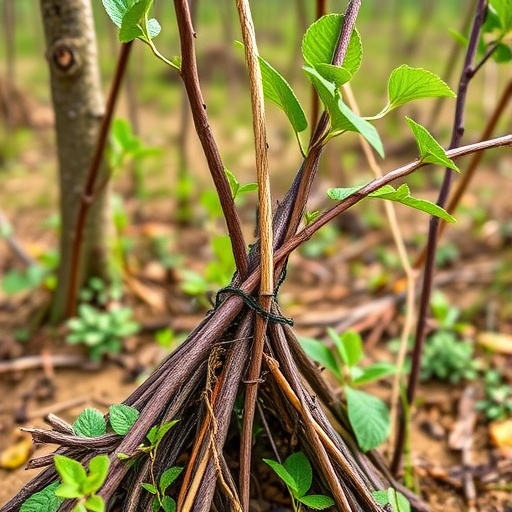
In recent years, the concept of agroforestry has gained significant prominence, particularly in regions where traditional farming practices collide with the pressing demands of sustainability and ecological preservation. This heightened interest is largely fueled by the need to address climate change and enhance food security. In this context, a pioneering study conducted by Reshad and Hunde sheds light on the intricate relationship between biomass carbon stocks, socio-ecological determinants, and economic valuation within Ethiopian traditional agroforestry practices.
Ethiopia, renowned for its diverse agro-ecological zones, presents a unique laboratory for understanding the dynamics of traditional agroforestry systems. The study illuminates how these systems can serve not only as a means of agricultural production but also as vital reservoirs for carbon sequestration. This dual role is crucial in the global fight against climate change, as the increasing concentration of greenhouse gases in the atmosphere poses grave risks to the planet’s ecological balance.
One of the core findings of the research is the quantification of biomass carbon stocks inherent in Ethiopian agroforestry. This determination is essential, as carbon stocks indicate the amount of carbon stored in vegetation and soil, which ultimately reveals the potential of these ecosystems to mitigate carbon emissions. In Ethiopia, traditional agroforestry systems, which incorporate trees within agricultural landscapes, have been shown to harbor substantial carbon reservoirs, thus positioning them as a significant resource in climate change mitigation efforts.
Moreover, the socio-ecological determinants highlighted in the study provide critical insights into how community practices and cultural values shape agricultural landscapes. Ethiopia’s rich tapestry of ethnic diversity means that local communities often employ unique agroforestry methods that reflect their traditions, beliefs, and socio-economic circumstances. These practices are not merely an agricultural choice; they are interwoven with the identity and sustainability of communities, showcasing how socio-cultural factors significantly influence environmental stewardship.
The economic valuation aspect of the study delves into the tangible and intangible benefits derived from these traditional agroforestry systems. Understanding the economics behind agroforestry is essential for policymakers and stakeholders as it provides a rationale for investing in these systems. The study underscores that beyond the evident agricultural yield, agroforestry systems offer a range of ecosystem services, including biodiversity conservation, soil health improvement, and water management. These services have considerable economic value, which, when captured, can aid in promoting sustainable development initiatives.
Furthermore, the research underscores the need for integrating local knowledge with scientific approaches. The convergence of indigenous practices with modern ecological science can lead to innovative agroforestry solutions tailored to specific environments. This synergy may enhance resilience against climatic extremes, ensuring food security and fostering sustainable livelihoods. In Ethiopia, where smallholder farmers represent a majority of the agricultural sector, empowering these farmers with knowledge and resources can catalyze positive change in agricultural practices.
The findings urge the necessity of forging partnerships among various stakeholders, including governmental bodies, NGOs, and local communities. Collaborative efforts can help leverage resources, enhance knowledge sharing, and strengthen the implementation of agroforestry systems. By fostering such alliances, there is potential to scale up successful agroforestry models that have been proven effective in various regions of Ethiopia, ultimately contributing to broader environmental goals.
As the world grapples with the multifaceted challenges posed by climate change, the need for diversified agricultural practices becomes ever more pressing. The study conducted by Reshad and Hunde brings to the forefront how traditional agroforestry not only preserves environmental integrity but also bolsters socio-economic resilience among communities. The intersection of ecological health and local economies showcases a pathway towards sustainable development that could be replicated in various global contexts.
The research also emphasizes the importance of policy frameworks that support the integration of agroforestry into national agricultural strategies. By recognizing the multifaceted benefits of these systems, policymakers can create an enabling environment that fosters innovation, encourages sustainable practices, and ultimately secures the livelihoods of local communities. This holistic approach is not only beneficial for the environment but could also lead to enhanced food production and reduced poverty levels.
Climate change adaptation and mitigation strategies are increasingly being developed worldwide, and the findings from Ethiopia offer valuable lessons on leveraging traditional practices within a modern context. As the international community strives for the Sustainable Development Goals (SDGs), particularly those focusing on climate action and zero hunger, the implications of this research resonate deeply. The pathways outlined could inform global strategies, emphasizing the need for localized solutions that are culturally sensitive and ecologically sound.
In conclusion, the study on Ethiopian traditional agroforestry practices contributes vital knowledge to the discourse on sustainable agriculture and climate change. By highlighting the intricate links between biomass carbon stocks, socio-ecological variables, and economic benefits, it propels the discussion towards actionable insights for policymakers, practitioners, and communities. The findings serve as a reminder that sustainable practices rooted in local traditions can yield significant environmental and economic dividends, forging a resilient future for generations to come.
As we move forward, it is critical that the knowledge derived from studies like that of Reshad and Hunde pervades agricultural education, community planning, and policy-making spheres. The urgency of addressing climate change necessitates innovative agricultural practices that not only benefit the environment but also empower the very communities that depend on these systems for their livelihoods. The journey towards sustainable agroforestry requires collective commitment and a shared vision, underscoring the importance of valuing both traditional knowledge and scientific advancement in our quest for a sustainable planet.
Reshad, M., Hunde, M. Biomass carbon stocks, socio-ecological determinants and economic valuation in Ethiopian traditional agroforestry practices. Discov Sustain (2025). https://doi.org/10.1007/s43621-025-02521-x
Cite Scienmag News
Sloane Callahan. (December 31, 2025). Assessing Biomass and Valuation in Ethiopian Agroforestry. Scienmag. https://scienmag.com/assessing-biomass-and-valuation-in-ethiopian-agroforestry/
Sloane Callahan. "Assessing Biomass and Valuation in Ethiopian Agroforestry." Scienmag, 31 December 2025, https://scienmag.com/assessing-biomass-and-valuation-in-ethiopian-agroforestry/. Accessed 3 September 2026.
Sloane Callahan. "Assessing Biomass and Valuation in Ethiopian Agroforestry." Scienmag. December 31, 2025. https://scienmag.com/assessing-biomass-and-valuation-in-ethiopian-agroforestry/


