Monday, October 26, 2026
Science
No Result
View All Result
  • Login
  • HOME
  • SCIENCE NEWS
  • CONTACT US
  • HOME
  • SCIENCE NEWS
  • CONTACT US
No Result
View All Result
Scienmag
No Result
View All Result
Home Science News Cancer

Ascites Cell Blocks Enable Ovarian Cancer Diagnosis and Molecular Profiling

October 25, 2026
in Cancer
Nathaniel Bowman
By Nathaniel Bowman Scienmag Editorial Profile - Precision Oncology
Reading Time: 2 mins read
0
Ascites Cell Blocks Enable Ovarian Cancer Diagnosis and Molecular Profiling

Ascites Cell Blocks Enable Ovarian Cancer Diagnosis and Molecular Profiling

65
SHARES
587
VIEWS
Share on FacebookShare on Twitter
ADVERTISEMENT

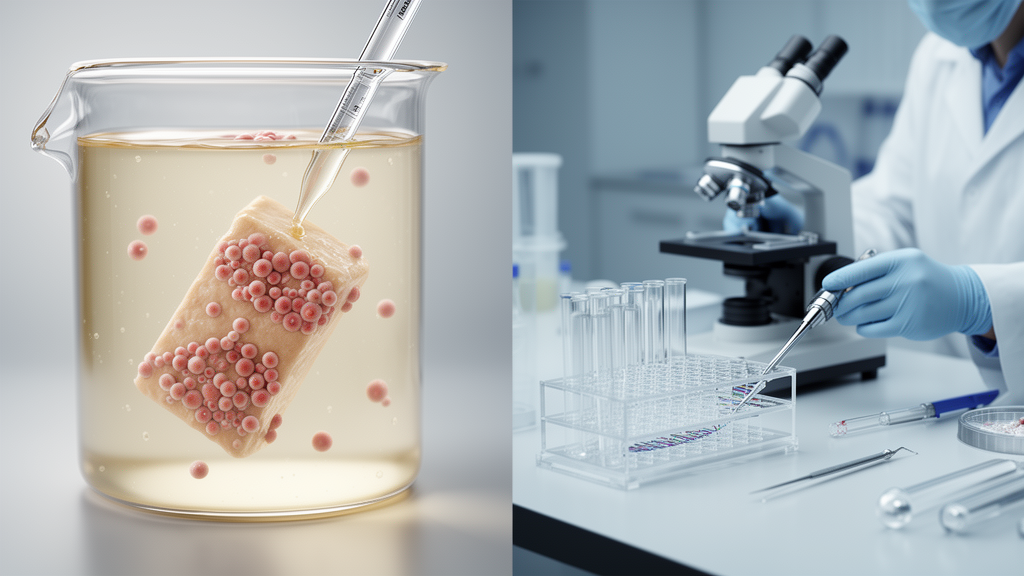
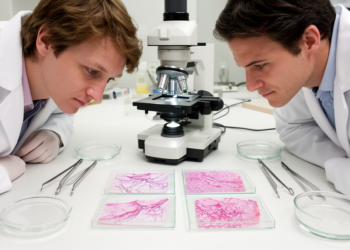
Ascitic fluid collected from 58 patients with ovarian cancer provided material for both immunohistochemical diagnosis and mutation testing when converted into paraffin-embedded cell blocks, according to the study. Researchers detected homologous recombination repair gene mutations in 45 patients, or 77.6% of the cohort, and identified nine BRCA1 or BRCA2 variants. The results show that these cell blocks can combine cellular characterization with molecular analysis of genes relevant to ovarian cancer.

Most patients with ovarian cancer are diagnosed at an advanced stage, when adequate solid tumor tissue for molecular testing is frequently unavailable. Malignant ascites is a common complication at this stage and represents an abundant, easily accessible source of tumor cells. The investigators prepared cell blocks from ascitic fluid obtained between January 2016 and June 2021 from 58 patients with ovarian cancer. They assessed diagnostic immunohistochemical markers, including Pax-8, WT-1, CA-125, CK7 and CK20, and used next-generation sequencing to examine 32 genes: 13 genetic or therapy-related genes and 19 homologous recombination repair genes.

Across histological subtypes, Pax-8 was expressed in 87.5% to 100% of cases, WT-1 in 87.8% to 90%, and CA-125 and CK7 in 100%. CK20 was largely negative, a different pattern from the other diagnostic markers. These observations supported the diagnostic value of the ascites-derived cell blocks. The study was a cohort analysis in 58 patients, however, and the supplied report does not describe a comparison with a separate diagnostic reference standard or establish performance in unselected clinical populations. Its scope was therefore the feasibility and characterization of the combined diagnostic and molecular approach in the enrolled group.

Mutation results showed TP53 as the most frequently altered gene, found in 50.8% of patients, followed by PIK3CA in 20.0%. The nine BRCA1/2 mutations comprised seven germline and two somatic variants, with germline and somatic status determined by comparison with matched blood samples. E545K and E542K were the most common PIK3CA variants, each accounting for 28.6% of observed PIK3CA variants. The authors proposed that homologous recombination repair status from these cell blocks could guide assessment of eligibility for PARP inhibitor therapy, while recurrent PIK3CA mutations highlight the PI3K/AKT pathway as a potential therapeutic target. The study itself did not test treatment response, progression-free survival or survival, and it did not prospectively evaluate whether cell-block-guided treatment selection improves clinical outcomes. Its central supported finding is that malignant ascites can supply a single specimen for morphological, immunophenotypic and molecular characterization of ovarian cancer, while the clinical value of using the genetic results for individualized treatment remains to be demonstrated.

Subject of Research: Diagnostic and molecular characterization of ovarian cancer using ascites-derived cell blocks

Article Title: The clinicopathological and molecular characterization in ascites-derived paraffin-embedded cell blocks of ovarian cancer

Article References: Zhang, C., Jia, W., Dong, S., Zhang, P., & Gao, J. (2026). The clinicopathological and molecular characterization in ascites-derived paraffin-embedded cell blocks of ovarian cancer. BMC Cancer. https://doi.org/10.1186/s12885-026-16703-x

Image Credits: AI Generated

DOI: 10.1186/s12885-026-16703-x

Keywords: ovarian cancer, malignant ascites, cell blocks, immunohistochemistry, next-generation sequencing, BRCA1, BRCA2, homologous recombination repair, TP53, PIK3CA, clinicopathological, molecular

Cite Scienmag News

Nathaniel Bowman. (October 25, 2026). Ascites Cell Blocks Enable Ovarian Cancer Diagnosis and Molecular Profiling. Scienmag. https://scienmag.com/ascites-cell-blocks-enable-ovarian-cancer-diagnosis-and-molecular-profiling/

Nathaniel Bowman. "Ascites Cell Blocks Enable Ovarian Cancer Diagnosis and Molecular Profiling." Scienmag, 25 October 2026, https://scienmag.com/ascites-cell-blocks-enable-ovarian-cancer-diagnosis-and-molecular-profiling/. Accessed 26 October 2026.

Nathaniel Bowman. "Ascites Cell Blocks Enable Ovarian Cancer Diagnosis and Molecular Profiling." Scienmag. October 25, 2026. https://scienmag.com/ascites-cell-blocks-enable-ovarian-cancer-diagnosis-and-molecular-profiling/
Tags: BRCA1BRCA2cell blocksclinicopathologicalhomologous recombination repairimmunohistochemistrymalignant ascitesmolecularnext-generation sequencingOvarian cancerPIK3CATP53
Share26Tweet16
Previous Post

Genome-wide SSR markers validated in 73 barnyard millet genotypes

Next Post

Childhood pneumonia deaths fell sharply, but vaccine gaps keep the burden unequal

Related Posts

Randomized trial to test sexual-health communication support in gynecologic cancer care
Cancer

Randomized trial to test sexual-health communication support in gynecologic cancer care

October 25, 2026
Canine tumors closely model many adult human cancers, study finds
Cancer

Canine tumors closely model many adult human cancers, study finds

October 25, 2026
Multicenter trial will test FAPI PET-CT for cancer of unknown primary
Cancer

Multicenter trial will test FAPI PET-CT for cancer of unknown primary

October 25, 2026
Integrin α3 emerges as prognostic marker across breast cancer subtypes
Cancer

Integrin α3 emerges as prognostic marker across breast cancer subtypes

October 25, 2026
HPV E6/E7 proteins linked to aggressive features in Sudanese prostate cancer
Cancer

HPV E6/E7 proteins linked to aggressive features in Sudanese prostate cancer

October 25, 2026
CAR T cells shrink lymphoma everywhere, but survival depends on location
Cancer

CAR T cells shrink lymphoma everywhere, but survival depends on location

October 25, 2026
Next Post
Childhood pneumonia deaths fell sharply, but vaccine gaps keep the burden unequal

Childhood pneumonia deaths fell sharply, but vaccine gaps keep the burden unequal

  • Mothers who receive childcare support from maternal grandparents show more optimized

    Mothers who receive childcare support from maternal grandparents show more parental warmth, finds NTU Singapore study

    27656 shares
    Share 11059 Tweet 6912
  • University of Seville Breaks 120-Year-Old Mystery, Revises a Key Einstein Concept

    1061 shares
    Share 424 Tweet 265
  • Bee body mass, pathogens and local climate influence heat tolerance

    682 shares
    Share 273 Tweet 171
  • Researchers record first-ever images and data of a shark experiencing a boat strike

    546 shares
    Share 218 Tweet 137
  • Groundbreaking Clinical Trial Reveals Lubiprostone Enhances Kidney Function

    531 shares
    Share 212 Tweet 133
Science

Embark on a thrilling journey of discovery with Scienmag.com—your ultimate source for cutting-edge breakthroughs. Immerse yourself in a world where curiosity knows no limits and tomorrow’s possibilities become today’s reality!

RECENT NEWS

  • Laboratory study reports vacuum-deposited Ni–Cr alloy foam properties
  • Public health commentary urges responsibility for vetting AI content
  • The interpersonal ELIZA effect may explain persistent feelings of being understood
  • Review links OAS1 regulation to HIV restriction and persistence

Categories

  • Agriculture
  • Anthropology
  • Archaeology
  • Athmospheric
  • Biology
  • Biotechnology
  • Blog
  • Bussines
  • Cancer
  • Chemistry
  • Climate
  • Earth Science
  • Editorial Policy
  • Marine
  • Mathematics
  • Medicine
  • Pediatry
  • Policy
  • Psychology & Psychiatry
  • Science Education
  • Science News
  • Social Science
  • Space
  • Technology and Engineering

Subscribe to Blog via Email

Enter your email address to subscribe to this blog and receive notifications of new posts by email.

Join 5,151 other subscribers

© 2025 Scienmag - Science Magazine

Welcome Back!

Login to your account below

Forgotten Password?

Retrieve your password

Please enter your username or email address to reset your password.

Log In
No Result
View All Result
  • HOME
  • SCIENCE NEWS
  • CONTACT US

© 2025 Scienmag - Science Magazine

Discover more from Science

Subscribe now to keep reading and get access to the full archive.

Continue reading