Wednesday, October 28, 2026
Science
No Result
View All Result
  • Login
  • HOME
  • SCIENCE NEWS
  • CONTACT US
  • HOME
  • SCIENCE NEWS
  • CONTACT US
No Result
View All Result
Scienmag
No Result
View All Result
Home Science News Biology

Approved cancer drug dabrafenib halts brain blood vessel malformations in mice

October 28, 2026
in Biology
Cassandra Pierce
By Cassandra Pierce Scienmag Editorial Profile - Systems Neuroscience
Reading Time: 3 mins read
0
Approved cancer drug dabrafenib halts brain blood vessel malformations in mice

Approved cancer drug dabrafenib halts brain blood vessel malformations in mice

65
SHARES
587
VIEWS
Share on FacebookShare on Twitter
ADVERTISEMENT

Researchers at Uppsala University have identified a drug substance that reduces blood vessel lesions in the brain in the disease Cerebral Cavernous Malformation (CCM), according to a study published in Science Translational Medicine. The substance, dabrafenib, is already approved to treat a childhood brain tumour, and the researchers say it could therefore be repurposed relatively rapidly to treat CCM, potentially replacing surgery, which is currently the only treatment option.

CCM is a disease in which fragile, mulberry-like malformed blood vessel structures form in the brain. These lesions can cause hemorrhages and, in some cases, acute bleedings such as stroke. At present, the only treatment is surgery to remove the lesions, but because patients often present with multiple lesions, there is an urgent need to develop non-invasive therapeutic strategies.

In the new study, the researchers screened more than 5,000 bioactive molecules on cultured CCM mouse vascular cells to identify compounds capable of normalising the cells’ pathogenic phenotype. The most promising drug candidates were then studied in cultured human brain vascular cells and in CCM animal models.

“The most promising results came from dabrafenib, a BRAF inhibitor that efficiently reversed the pathological phenotype in vitro and halted cavernoma progression in vivo. Remarkably, dabrafenib targeted two pathological signalling pathways that contribute to CCM development and progression,” says Maximiliano Arce, first and co-corresponding author of the study, in a statement from Uppsala University.

To investigate whether dabrafenib could work as a treatment for CCM, the team tested its effect in a mouse model of the disease. In addition to reducing both the number and the size of the lesions, dabrafenib treatment stabilised the vessels and suppressed lesion leakage. The drug also rescued abnormal structural defects in the vasculature of the eye retina, a feature that can in some cases also occur in patients with CCM.

An important advantage of dabrafenib is that it is already in clinical use as a drug, currently to treat low-grade glioma, a brain tumour type in children. According to the researchers, the results from the new study support repurposing dabrafenib as a therapeutic drug for CCM.

“Since dabrafenib is already approved by the U.S. Food and Drug Administration and the European Medicines Agency, and has an established safety profile, it represents a strong candidate for rapid clinical translation to halt brain cavernoma growth and progression,” says Peetra Magnusson, who led the study.

The study, titled “The kinase inhibitor dabrafenib halts progression of cerebral cavernous malformations in a BRAF-independent manner,” was published in Science Translational Medicine and was performed in collaboration with researchers at the SciLifeLab BioImage Informatics Unit. The findings are based on experimental work in cell cultures and animal models, and the reported effects on lesion number, size, vessel stability and leakage have so far been demonstrated in these preclinical systems rather than in patients. The researchers’ suggestion that the drug could be rapidly translated into clinical use rests on its existing regulatory approval and established safety profile for other indications, not on clinical trial data in CCM patients.

Subject of Research: Repurposing the BRAF inhibitor dabrafenib to treat cerebral cavernous malformations

Article Title: Drug substance reduces blood vessel malformations in the brain

Article References: Drug substance reduces blood vessel malformations in the brain. Original publication (Bibliographic details unavailable.)

Image Credits: AI Generated

DOI: Not provided

Keywords: cerebral cavernous malformation, dabrafenib, BRAF inhibitor, drug repurposing, blood vessel malformations, brain, stroke, mouse model, Uppsala University, Science Translational Medicine, low-grade glioma, preclinical study

Cite Scienmag News

Cassandra Pierce. (October 28, 2026). Approved cancer drug dabrafenib halts brain blood vessel malformations in mice. Scienmag. https://scienmag.com/approved-cancer-drug-dabrafenib-halts-brain-blood-vessel-malformations-in-mice/

Cassandra Pierce. "Approved cancer drug dabrafenib halts brain blood vessel malformations in mice." Scienmag, 28 October 2026, https://scienmag.com/approved-cancer-drug-dabrafenib-halts-brain-blood-vessel-malformations-in-mice/. Accessed 28 October 2026.

Cassandra Pierce. "Approved cancer drug dabrafenib halts brain blood vessel malformations in mice." Scienmag. October 28, 2026. https://scienmag.com/approved-cancer-drug-dabrafenib-halts-brain-blood-vessel-malformations-in-mice/

Tags: blood vessel lesion normalization in CCMblood vessel malformationsBRAF inhibitorBRAF inhibitor for brain blood vessel malformationsbrainbrain hemorrhage prevention through drug therapycerebral cavernous malformationcerebral cavernous malformation treatmentdabrafenibdabrafenib efficacy in brain vascular lesionsdrug repurposingdrug screening for cerebrovascular diseaseslow-grade gliomamouse modelmouse models of cerebral cavernous malformationnon-invasive CCM therapy developmentpotential replacement of surgery in CCM treatmentpreclinical studyrepurposing approved cancer drugs for CCMScience Translational Medicinestroketargeting pathogenic vascular phenotypes in CCMtranslational research on CCM using existing drugsUppsala University
Share26Tweet16
Previous Post

Simulation training for advance care planning reviewed across 28 studies

Next Post

Mathematical model shows spraying plus Wolbachia can suppress mosquitoes in finite time

Related Posts

New karst-dwelling shrub Euonymus saxatilis described from Guangxi, China
Biology

New karst-dwelling shrub Euonymus saxatilis described from Guangxi, China

October 28, 2026
Cancer cells ramp up transcription across the genome, review finds
Biology

Cancer cells ramp up transcription across the genome, review finds

October 28, 2026
Bigger Rodents Eat a Wider Menu in Tanzania’s Mount Rungwe Forest
Biology

Bigger Rodents Eat a Wider Menu in Tanzania’s Mount Rungwe Forest

October 28, 2026
Passive eDNA samplers and coral genetic markers tested for reef monitoring in Hawaiʻi
Biology

Passive eDNA samplers and coral genetic markers tested for reef monitoring in Hawaiʻi

October 28, 2026
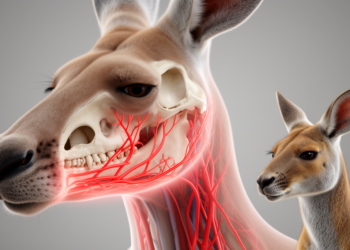
Kangaroo and wallaby facial artery map revealed in new anatomical study
Biology

Kangaroo and wallaby facial artery map revealed in new anatomical study

October 28, 2026
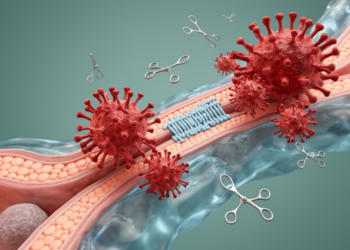
SARS-CoV-2 Spike Protein Competes with ENaC for Plasmin Cleavage, Driving Pulmonary Edema
Biology

SARS-CoV-2 Spike Protein Competes with ENaC for Plasmin Cleavage, Driving Pulmonary Edema

October 28, 2026
Next Post
Mathematical model shows spraying plus Wolbachia can suppress mosquitoes in finite time

Mathematical model shows spraying plus Wolbachia can suppress mosquitoes in finite time

  • Mothers who receive childcare support from maternal grandparents show more optimized

    Mothers who receive childcare support from maternal grandparents show more parental warmth, finds NTU Singapore study

    27656 shares
    Share 11059 Tweet 6912
  • University of Seville Breaks 120-Year-Old Mystery, Revises a Key Einstein Concept

    1061 shares
    Share 424 Tweet 265
  • Bee body mass, pathogens and local climate influence heat tolerance

    682 shares
    Share 273 Tweet 171
  • Researchers record first-ever images and data of a shark experiencing a boat strike

    546 shares
    Share 218 Tweet 137
  • Groundbreaking Clinical Trial Reveals Lubiprostone Enhances Kidney Function

    531 shares
    Share 212 Tweet 133
Science

Embark on a thrilling journey of discovery with Scienmag.com—your ultimate source for cutting-edge breakthroughs. Immerse yourself in a world where curiosity knows no limits and tomorrow’s possibilities become today’s reality!

RECENT NEWS

  • Ciprofol eases emergence agitation after laparoscopic surgery better than propofol
  • New karst-dwelling shrub Euonymus saxatilis described from Guangxi, China
  • Magnesium-Doped Bioactive Glass Hydrocolloid Dressing Associated With Faster Acute Wound Closure in Rabbit Model
  • Researchers Challenge Claim That C1 Inhibitor Beats Sebetralstat in Hereditary Angioedema

Categories

  • Agriculture
  • Anthropology
  • Archaeology
  • Athmospheric
  • Biology
  • Biotechnology
  • Blog
  • Bussines
  • Cancer
  • Chemistry
  • Climate
  • Earth Science
  • Editorial Policy
  • Marine
  • Mathematics
  • Medicine
  • Pediatry
  • Policy
  • Psychology & Psychiatry
  • Science Education
  • Science News
  • Social Science
  • Space
  • Technology and Engineering

Subscribe to Blog via Email

Enter your email address to subscribe to this blog and receive notifications of new posts by email.

Join 5,151 other subscribers

© 2025 Scienmag - Science Magazine

Welcome Back!

Login to your account below

Forgotten Password?

Retrieve your password

Please enter your username or email address to reset your password.

Log In
No Result
View All Result
  • HOME
  • SCIENCE NEWS
  • CONTACT US

© 2025 Scienmag - Science Magazine

Discover more from Science

Subscribe now to keep reading and get access to the full archive.

Continue reading