Wednesday, October 28, 2026
Science
No Result
View All Result
  • Login
  • HOME
  • SCIENCE NEWS
  • CONTACT US
  • HOME
  • SCIENCE NEWS
  • CONTACT US
No Result
View All Result
Scienmag
No Result
View All Result
Home Science News Biology

SARS-CoV-2 Spike Protein Competes with ENaC for Plasmin Cleavage, Driving Pulmonary Edema

October 28, 2026
in Biology
Kristina Jarvis
By Kristina Jarvis Scienmag Editorial Profile - Infectious Disease Medicine
Reading Time: 3 mins read
0
SARS-CoV-2 Spike Protein Competes with ENaC for Plasmin Cleavage, Driving Pulmonary Edema

SARS-CoV-2 Spike Protein Competes with ENaC for Plasmin Cleavage, Driving Pulmonary Edema

65
SHARES
587
VIEWS
Share on FacebookShare on Twitter
ADVERTISEMENT

A new study in Cell Biology and Toxicology reports a competitive mechanism by which the SARS-CoV-2 spike protein may contribute to pulmonary edema, centered on the enzyme plasmin and the epithelial sodium channel (ENaC). The research, published on 21 October 2026, was led by Tingyu Wang and Yunmei Fu, with Hongguang Nie among the senior authors.

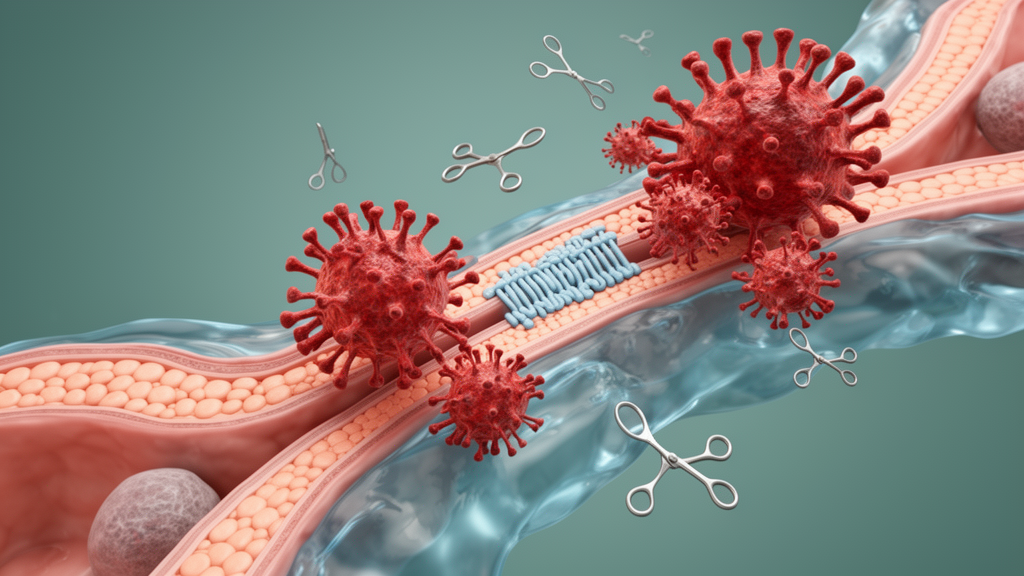
The authors begin from a structural observation: the spike protein of SARS-CoV-2 contains a polybasic cleavage site consisting of four amino acid residues, RRAR, which is strikingly identical to a cleavage site found in ENaC. Both proteins can be cleaved by plasmin, an enzyme of the fibrinolytic system. ENaC is a protein responsible for regulating fluid balance in the lungs, and dysregulation of human ENaC is directly associated with mortality resulting from pulmonary damage.

Despite this connection, the involvement of ENaC and its regulation by the fibrinolytic system during SARS-CoV-2 infection had remained elusive, according to the study. To investigate, the researchers used S plasmids and pseudovirus systems to mimic SARS-CoV-2 infection in laboratory models.

In mice expressing human angiotensin converting enzyme 2 (ACE2), the receptor used by SARS-CoV-2 to enter cells, the team observed manifestations of pulmonary edema together with dysregulation of ENaC. Mechanistic experiments then showed that both the S protein and ENaC could be cleaved by plasmin.

The key finding emerged from competition experiments. The S protein competitively inhibited the cleavage of ENaC by plasmin, while overexpression of ENaC suppressed plasmin-induced cleavage of the S protein. According to the authors, this ENaC-mediated suppression of spike cleavage impeded SARS-CoV-2 invasion, suggesting that the two proteins compete for the same enzymatic processing event.

Notably, when the researchers co-enabled the polybasic cleavage site mutated S plasmid or pseudovirus with plasmin, the downregulation of ENaC was reversed. This indicates that the polybasic cleavage site is the main point at which the competitive regulation occurs, tying the virus’s infectivity-enhancing RRAR motif directly to the disruption of sodium channel function.

In conclusion, the data suggest that a competitive mechanism of ENaC by SARS-CoV-2 via plasmin is mainly regulated at the polybasic cleavage site. The authors present this as a novel mechanism underlying SARS-CoV-2-induced pulmonary edema, offering a mechanistic explanation for how fluid balance in the lung could be disturbed during infection.

The study also identifies ENaC as a potential therapeutic target for treating SARS-CoV-2-associated respiratory failure, although the evidence comes from plasmid, pseudovirus and mouse models expressing human ACE2 rather than from human clinical trials. The article is published open access, and the version shared on 21 October 2026 is a peer-reviewed, accepted manuscript that remains subject to further edits before the final Version of Record is released.

Subject of Research: Competitive plasmin-mediated cleavage of the SARS-CoV-2 spike protein and the epithelial sodium channel ENaC as a mechanism of pulmonary edema

Article Title: Plasmin‑mediated cleavage between SARS-CoV-2 spike protein and ENaC drives pulmonary edema

Article References: Wang, T., Fu, Y., Wang, J., Zhu, Z., Ding, Y., Yu, T., & Nie, H. (2026). Plasmin‑mediated cleavage between SARS-CoV-2 spike protein and ENaC drives pulmonary edema. Cell Biology and Toxicology. https://doi.org/10.1007/s10565-026-10321-w

Image Credits: AI Generated

DOI: 10.1007/s10565-026-10321-w

Keywords: SARS-CoV-2, spike protein, ENaC, plasmin, polybasic cleavage site, pulmonary edema, ACE2, pseudovirus, fibrinolytic system, respiratory failure, mediated, cleavage

Cite Scienmag News

Kristina Jarvis. (October 28, 2026). SARS-CoV-2 Spike Protein Competes with ENaC for Plasmin Cleavage, Driving Pulmonary Edema. Scienmag. https://scienmag.com/sars-cov-2-spike-protein-competes-with-enac-for-plasmin-cleavage-driving-pulmonary-edema/

Kristina Jarvis. "SARS-CoV-2 Spike Protein Competes with ENaC for Plasmin Cleavage, Driving Pulmonary Edema." Scienmag, 28 October 2026, https://scienmag.com/sars-cov-2-spike-protein-competes-with-enac-for-plasmin-cleavage-driving-pulmonary-edema/. Accessed 28 October 2026.

Kristina Jarvis. "SARS-CoV-2 Spike Protein Competes with ENaC for Plasmin Cleavage, Driving Pulmonary Edema." Scienmag. October 28, 2026. https://scienmag.com/sars-cov-2-spike-protein-competes-with-enac-for-plasmin-cleavage-driving-pulmonary-edema/

Tags: ACE2cleavageENaCENaC regulation and lung fluid balanceEnzymatic cleavage sites in viral and human proteinsfibrinolytic systemImpact of SARS-CoV-2 on epithelial sodium channelsmechanmediatedMouse models of COVID-19 pulmonary complicationsplasminPlasmin cleavage competitionpolybasic cleavage sitepseudoviruspulmonary edemaPulmonary edema caused by viral infectionrespiratory failureRole of fibrinolytic system in COVID-19SARS-CoV-2SARS-CoV-2 spike protein and ENaC interactionspike proteinStructural similarity of spike protein and ENaC cleavage sitesViral modulation of host ion channels
Share26Tweet16
Previous Post

Survey Reveals Wide Variation in Anticoagulation After Venous Stenting

Next Post

Younger and older clear cell kidney cancers follow distinct metabolic programs

Related Posts

Vegetarian diet does not offset ABCG2 gene variant’s hyperuricemia risk in Taiwanese cohort
Biology

Vegetarian diet does not offset ABCG2 gene variant’s hyperuricemia risk in Taiwanese cohort

October 28, 2026
Short-Term CD8+ T Cell Depletion Alters Tau Pathology in Aged Alzheimer’s Model Mice
Biology

Short-Term CD8+ T Cell Depletion Alters Tau Pathology in Aged Alzheimer’s Model Mice

October 28, 2026
Popular endurance models fail to predict runners’ interval performance, study finds
Biology

Popular endurance models fail to predict runners’ interval performance, study finds

October 28, 2026
Animal markets linked to higher viral diversity and virus–host connectivity
Biology

Animal markets linked to higher viral diversity and virus–host connectivity

October 28, 2026
Optimized root-pulling force protocol speeds wheat root screening in sandy field
Biology

Optimized root-pulling force protocol speeds wheat root screening in sandy field

October 28, 2026
Dumpsites emerge as hotspots for mosquito arbovirus vectors in Thailand
Biology

Dumpsites emerge as hotspots for mosquito arbovirus vectors in Thailand

October 28, 2026
Next Post
Younger and older clear cell kidney cancers follow distinct metabolic programs

Younger and older clear cell kidney cancers follow distinct metabolic programs

  • Mothers who receive childcare support from maternal grandparents show more optimized

    Mothers who receive childcare support from maternal grandparents show more parental warmth, finds NTU Singapore study

    27656 shares
    Share 11059 Tweet 6912
  • University of Seville Breaks 120-Year-Old Mystery, Revises a Key Einstein Concept

    1061 shares
    Share 424 Tweet 265
  • Bee body mass, pathogens and local climate influence heat tolerance

    682 shares
    Share 273 Tweet 171
  • Researchers record first-ever images and data of a shark experiencing a boat strike

    546 shares
    Share 218 Tweet 137
  • Groundbreaking Clinical Trial Reveals Lubiprostone Enhances Kidney Function

    531 shares
    Share 212 Tweet 133
Science

Embark on a thrilling journey of discovery with Scienmag.com—your ultimate source for cutting-edge breakthroughs. Immerse yourself in a world where curiosity knows no limits and tomorrow’s possibilities become today’s reality!

RECENT NEWS

  • Humidity, Not Temperature, Tracks Heart Hospitalizations in Arid Iran Study
  • Hybrid roadmap and bidirectional search trims robot path planning times
  • New Interface Speeds Up Conceptual Design of Subsonic Airplanes and Gliders
  • Ginseng Compound Rg1 Extends Lifespan in Worms Through a DAF-16-Driven Mitophagy Pathway

Categories

  • Agriculture
  • Anthropology
  • Archaeology
  • Athmospheric
  • Biology
  • Biotechnology
  • Blog
  • Bussines
  • Cancer
  • Chemistry
  • Climate
  • Earth Science
  • Editorial Policy
  • Marine
  • Mathematics
  • Medicine
  • Pediatry
  • Policy
  • Psychology & Psychiatry
  • Science Education
  • Science News
  • Social Science
  • Space
  • Technology and Engineering

Subscribe to Blog via Email

Enter your email address to subscribe to this blog and receive notifications of new posts by email.

Join 5,151 other subscribers

© 2025 Scienmag - Science Magazine

Welcome Back!

Login to your account below

Forgotten Password?

Retrieve your password

Please enter your username or email address to reset your password.

Log In
No Result
View All Result
  • HOME
  • SCIENCE NEWS
  • CONTACT US

© 2025 Scienmag - Science Magazine

Discover more from Science

Subscribe now to keep reading and get access to the full archive.

Continue reading