


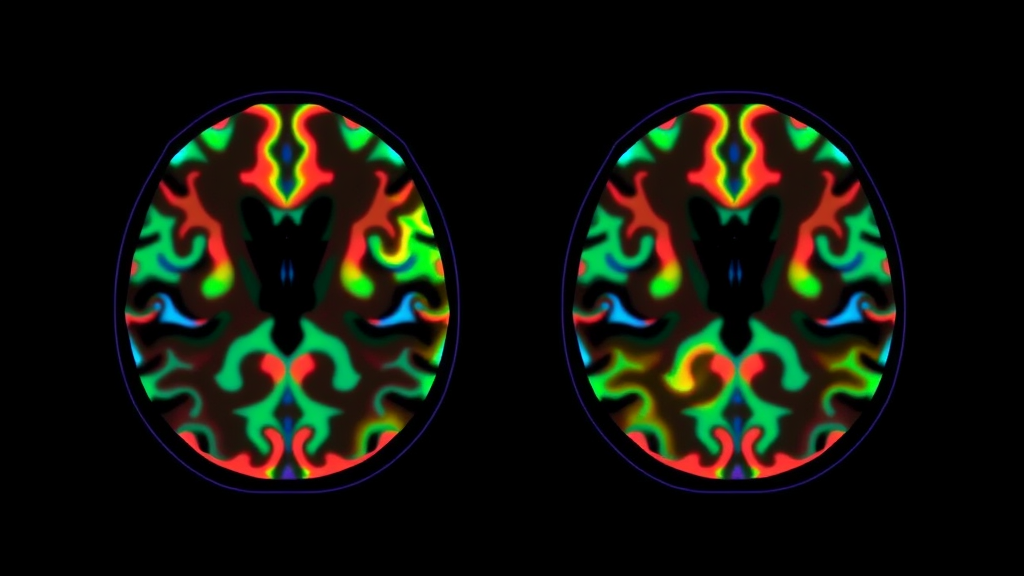
Alzheimer’s disease has long been treated as a single illness with a familiar script: plaques, tangles, and a slow erosion of memory. But a large retrospective imaging study now suggests that the disease may split into two neurochemically distinct forms depending on whether patients carry the APOE4 gene variant, the strongest genetic risk factor for late-onset Alzheimer’s. The findings, published in the European Journal of Nuclear Medicine and Molecular Imaging, indicate that cholinergic degeneration dominates the clinical picture in APOE4 carriers, while dopaminergic degeneration takes center stage in non-carriers, a distinction that could reshape how patients are stratified in clinical trials and eventually treated.
The research team, led by Sungwoo Kang and Byoung Seok Ye of Yonsei University Severance Hospital in Seoul, analyzed 387 patients with amyloid-confirmed Alzheimer’s disease spanning the full clinical spectrum from mild cognitive impairment to dementia. All participants underwent detailed neuropsychological testing, 3.0-Tesla structural MRI, amyloid PET with florbetaben, and dual-phase FP-CIT PET imaging. The cohort was divided into 205 APOE4 carriers and 182 non-carriers, and the researchers carefully excluded 58 patients who showed two or more core clinical features of Lewy body disease, such as parkinsonism, cognitive fluctuation, REM sleep behavior disorder, or recurrent visual hallucinations, to ensure the cohort remained as Alzheimer’s-consistent as possible.
Two imaging biomarkers anchored the analysis. The first was basal forebrain volume, measured from the Ch4 region corresponding to the nucleus basalis of Meynert, the principal source of acetylcholine to the cortex and a structure long known to degenerate in Alzheimer’s disease. The second was striatal dopamine transporter uptake, quantified from late-phase FP-CIT PET scans, with the posterior caudate selected as the representative dopaminergic marker because it showed the strongest relationship with basal forebrain volume. Regional brain perfusion was derived from early-phase FP-CIT PET using a data-driven normalization method called the subject residual profile, which captures each patient’s region-relative perfusion deviations without relying on a potentially disease-affected reference region such as the pons or cerebellum.
The first striking result was a clean genetic dissociation of the two neurotransmitter systems. APOE4 carriers showed significantly lower basal forebrain volume than non-carriers, consistent with decades of autopsy work linking the ε4 allele to reduced cholinergic activity in the nucleus basalis and greater loss of presynaptic cholinergic markers in the neocortex. Non-carriers, by contrast, showed lower posterior caudate dopamine transporter uptake, indicating more pronounced nigrostriatal dopaminergic degeneration. Both patient groups had reduced basal forebrain volume and striatal transporter uptake compared with 53 healthy controls, but the relative burden of damage flipped according to genotype, a pattern confirmed by statistically significant interaction terms between APOE4 status and each biomarker.
The perfusion maps told a parallel story. In APOE4 carriers, lower basal forebrain volume was associated with hypoperfusion across the temporoparietal association cortices and the posterior cingulate cortex, the classic Alzheimer’s signature, in addition to medial temporal changes seen in both groups. In non-carriers, lower dopamine transporter uptake was linked to a broader set of perfusion alterations, including frontal hypoperfusion and relative hyperperfusion in the amygdala, hippocampus, and ventral occipitotemporal regions, patterns that echo the metabolic signatures of Lewy body pathology. The researchers suggest that in carriers, Lewy-type alpha-synuclein involvement may be expressed more through cholinergic and cortical-limbic pathways, whereas in non-carriers, brainstem-predominant Lewy pathology may drive the dopaminergic signal, consistent with autopsy studies showing genotype-dependent differences in the anatomical distribution of Lewy-related pathology.
When the team connected these biomarkers to symptoms, the divergence sharpened. In APOE4 carriers, lower basal forebrain volume was associated with poorer memory performance and with more severe neuropsychiatric symptoms including hallucinations, delusions, anxiety, apathy, aberrant motor behavior, and appetite changes. Mediation analyses showed that the link between cholinergic degeneration and memory dysfunction was statistically mediated by posterior cingulate hypoperfusion, meaning the structural damage appeared to act on cognition through its effect on cortical function. After accounting for regional perfusion, direct associations remained for hallucinations, delusions, and apathy, suggesting that cholinergic loss contributes to these behavioral disturbances through mechanisms beyond cortical hypoperfusion alone.
In non-carriers, the picture was almost inverted. Lower posterior caudate dopamine transporter uptake was associated with poorer performance across all cognitive domains measured, including attention, language, visuospatial ability, memory, and executive function, and with more severe hallucinations, delusions, and anxiety. Remarkably, these associations largely persisted even after adjustment for regional perfusion, indicating that dopaminergic degeneration in this group exerts direct effects on cognition and behavior rather than acting purely through cortical metabolic decline. Mediation analyses identified significant indirect pathways through angular gyrus hypoperfusion for memory and executive function, but the direct associations remained significant alongside them. The researchers also observed a synergistic interaction in non-carriers, where the association between dopaminergic loss and delusion severity was strongest in patients who also had the smallest basal forebrain volumes.
The memory findings deserve particular attention because they challenge the assumption that memory impairment in Alzheimer’s always reflects the same circuit damage. In APOE4 carriers, memory dysfunction tracked hypoperfusion in the posterior cingulate cortex and medial temporal lobe, regions densely connected to the cholinergic basal forebrain and heavily burdened by tau in carriers. In non-carriers, memory problems correlated most strongly with parietal hypoperfusion, particularly in the angular gyrus, a region more often implicated in atypical, non-amnestic presentations. This topographic split aligns with prior imaging work showing greater medial temporal atrophy and tau accumulation in carriers versus greater frontoparietal cortical thinning and tau burden in non-carriers, and it helps explain why non-carriers more frequently present with atypical clinical syndromes.
The study’s authors are careful about its limits. The cross-sectional design cannot establish causality, and the possibility that chronic clinical dysfunction drives secondary hypoperfusion and subcortical atrophy cannot be excluded, although prior longitudinal work shows that basal forebrain degeneration precedes and predicts the cortical spread of Alzheimer’s pathology. Basal forebrain volume is also an indirect structural surrogate rather than a direct measure of cholinergic synaptic activity, though multimodal studies have validated it against vesicular acetylcholine transporter and acetylcholinesterase PET. The cohort was enriched for patients referred for FP-CIT PET, potentially inflating dopaminergic abnormalities, and tau and alpha-synuclein pathology were not directly assessed. Effect sizes were modest, and the authors emphasize the need for validation in independent cohorts with molecular biomarkers of tau, synuclein, and TDP-43 pathology.
Even with those caveats, the implications are substantial. If APOE4 genotype defines two neurochemical subtypes of amyloid-confirmed Alzheimer’s disease, then cholinergic and dopaminergic imaging markers could become powerful tools for patient stratification in anti-amyloid trials, where treatment responses have been notoriously heterogeneous. The findings also raise the prospect of genotype-guided symptomatic therapy: cholinesterase inhibitors may matter most for the basal-forebrain-dominant carrier subtype, while dopaminergic pathways may deserve greater attention in non-carriers. As the authors conclude, combining APOE4 status with neurotransmitter imaging may move the field closer to a precision medicine framework in which the neurochemical fingerprint of each patient’s disease, not just its amyloid burden, determines the therapeutic strategy.
Subject of Research: APOE4-dependent cholinergic and dopaminergic degeneration and their relationships to cognitive and neuropsychiatric symptoms across the Alzheimer's disease spectrum
Article Title: APOE4-dependent cholinergic/dopaminergic contributions to clinical symptoms across Alzheimer’s disease spectrum: A retrospective observational study
Article References: Kang, S., Jeon, S., Lee, D., Lee, H., Jeon, S.-H., Choi, M., Lee, Y.-G., Shin, N.-Y., Yun, M., & Ye, B. S. (2026). APOE4-dependent cholinergic/dopaminergic contributions to clinical symptoms across Alzheimer’s disease spectrum: A retrospective observational study. European Journal of Nuclear Medicine and Molecular Imaging. https://doi.org/10.1007/s00259-026-08165-x
Image Credits: AI Generated
DOI: 10.1007/s00259-026-08165-x
Keywords: Alzheimer's disease, APOE4, cholinergic system, dopaminergic system, basal forebrain, dopamine transporter, FP-CIT PET, brain perfusion, neuropsychiatric symptoms, memory dysfunction, Lewy body pathology, biomarkers
Cite Scienmag News
Cassandra Pierce. (September 12, 2026). APOE4 Splits Alzheimer’s Into Two Neurochemical Diseases, PET Imaging Study Reveals. Scienmag. https://scienmag.com/apoe4-splits-alzheimers-into-two-neurochemical-diseases-pet-imaging-study-reveals/
Cassandra Pierce. "APOE4 Splits Alzheimer’s Into Two Neurochemical Diseases, PET Imaging Study Reveals." Scienmag, 12 September 2026, https://scienmag.com/apoe4-splits-alzheimers-into-two-neurochemical-diseases-pet-imaging-study-reveals/. Accessed 4 October 2026.
Cassandra Pierce. "APOE4 Splits Alzheimer’s Into Two Neurochemical Diseases, PET Imaging Study Reveals." Scienmag. September 12, 2026. https://scienmag.com/apoe4-splits-alzheimers-into-two-neurochemical-diseases-pet-imaging-study-reveals/


