


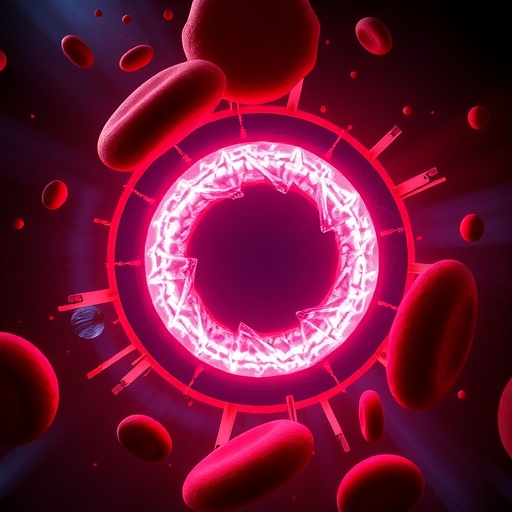
In a groundbreaking study published in Nature Microbiology, researchers have unmasked a pivotal structure in the malaria parasite Plasmodium falciparum that is critical to its survival during the blood stage of infection. This discovery centers around the apical polar ring (APR), a complex architectural feature that orchestrates the parasite’s invasion machinery and intracellular development, heralding new avenues for targeted antimalarial therapies.
Malaria remains one of the most devastating infectious diseases globally, with Plasmodium falciparum being the deadliest causative agent. The blood stage of infection, during which parasites multiply within red blood cells, is responsible for the clinical manifestations and transmission of malaria. Understanding the molecular and cellular mechanisms that enable the parasite to invade and survive inside red blood cells has been a lingering challenge for parasitologists and infectious disease researchers alike.
The APR is a ring-shaped cytoskeletal structure located at the apex of the parasite, acting as a scaffold for the assembly of specialized organelles that facilitate host cell invasion. Despite its acknowledged presence in apicomplexan parasites, its specific role in P. falciparum blood-stage development remained elusive until now. Through a combination of advanced microscopy, genetic manipulation, and biochemical assays, the researchers have demonstrated conclusively that the APR is indispensable for parasite viability during this stage.
The study employed state-of-the-art cryo-electron tomography to visualize the APR at unprecedented resolution, revealing intricate connections with the conoid—a spiral structure involved in penetrating host membranes—and other secretory organelles vital for invasion. Mutant parasites lacking key components of the APR exhibited catastrophic defects in organelle positioning and failed to engage the host cell membrane effectively, culminating in aborted invasion attempts.
Genetic disruption experiments further elucidated that the APR acts as a molecular hub, coordinating the timing and spatial deployment of invasion effectors. Loss of APR integrity led not only to physical disarray but also to impaired signaling pathways essential for triggering the secretion of adhesins and proteases from apical secretory organelles. These secretions mediate tight attachment to erythrocytes and formation of the parasitophorous vacuole, a niche where the parasite replicates safely.
Remarkably, this research highlighted the APR’s role beyond mere structural support; it functions as a dynamic platform synergizing mechanical and biochemical events. This dual function ensures that the parasite optimizes energy use during its rapid and complex invasion process. Without an intact APR, parasites fail early during their developmental cycle, unable to propagate within human hosts.
Importantly, the identification of essential APR components offers promising targets for antimalarial drug development. Compounds designed to destabilize this structure or block its assembly could disrupt the parasite’s life cycle at a stage critical for disease progression. This approach might circumvent issues of drug resistance commonly encountered with existing therapies targeting metabolic pathways.
Moreover, the findings provide new insights into the evolution of apicomplexan parasites’ invasion strategies. Comparative analyses suggest that while the APR is conserved among related species, its molecular composition has diverged, reflecting adaptation to different host environments. Understanding these evolutionary nuances could inform species-specific intervention tactics, potentially limiting cross-species transmission events.
The study also underscores the power of integrating cutting-edge imaging with functional genomics to tackle complex cellular structures within pathogens. Such multidisciplinary approaches pave the way for detailed molecular roadmaps of parasite physiology, enabling the scientific community to pinpoint vulnerabilities that have hitherto been hidden.
Despite these advances, several questions remain open. For instance, the precise molecular mechanisms by which the APR coordinates with signaling cascades and cytoskeletal rearrangements call for further exploration. Unraveling the interplay between APR and other apical organelles could reveal additional therapeutic choke points.
Furthermore, the immune implications of APR disruption are yet to be fully understood. It is conceivable that targeting this structure might expose dormant antigens or elicit immune responses that complement pharmacological effects, offering a dual mode of intervention against malaria.
Given the urgent global health burden posed by malaria, this discovery invigorates the quest for innovative treatments. By spotlighting the apical polar ring as a lynchpin in blood stage parasite biology, this research elevates our molecular understanding and opens promising experimental pathways to alleviate worldwide malaria morbidity and mortality.
Future investigations will aim to identify small molecules or biologics capable of selectively inhibiting APR assembly or function. Additionally, leveraging the APR as a vaccine antigen to boost host immunity represents a tantalizing prospect. The intricate dance of parasite invasion has now been illuminated with unprecedented clarity, marking a significant leap forward in malaria research.
The comprehensive molecular characterization of the APR in P. falciparum thus represents a paradigm shift in the field of parasitology. The detailed architecture and indispensable role of this organelle underscore its potential as a ‘silver bullet’ target, capable of crippling the parasite precisely when it threatens human health the most.
As scientists worldwide build on these findings, the battle against malaria may soon gain a powerful new ally. This study exemplifies the profound impact of fundamental cell biology in confronting one of humanity’s oldest and deadliest foes, turning microscopic discoveries into macroscopic hopes for eradication.
Cite Scienmag News
Drew Townsend. (May 14, 2026). Apical Polar Ring Crucial in Plasmodium Blood Stage. Scienmag. https://scienmag.com/apical-polar-ring-crucial-in-plasmodium-blood-stage/
Drew Townsend. "Apical Polar Ring Crucial in Plasmodium Blood Stage." Scienmag, 14 May 2026, https://scienmag.com/apical-polar-ring-crucial-in-plasmodium-blood-stage/. Accessed 3 September 2026.
Drew Townsend. "Apical Polar Ring Crucial in Plasmodium Blood Stage." Scienmag. May 14, 2026. https://scienmag.com/apical-polar-ring-crucial-in-plasmodium-blood-stage/


