

Tuesday, July 28, 2026
Science
No Result
View All Result
  • Login
  • HOME
  • SCIENCE NEWS
  • CONTACT US
  • HOME
  • SCIENCE NEWS
  • CONTACT US
No Result
View All Result
Scienmag
No Result
View All Result
Home Science News Earth Science

Ancient metasomatism may have stabilized and recycled Earth’s lithosphere

July 28, 2026
in Earth Science
Reading Time: 2 mins read
0
Ancient metasomatism may have stabilized and recycled Earth’s lithosphere

Ancient metasomatism may have stabilized and recycled Earth’s lithosphere

65
SHARES
587
VIEWS
Share on FacebookShare on Twitter
ADVERTISEMENT

A new study suggests Earth’s deep “plumbing” is strongly influenced by events that happened long ago. In a paper published in Communications Earth & Environment, researchers report that ancient metasomatic processes—chemical alteration of rocks by fluid activity—can help stabilize portions of the lithosphere while also shaping how material is later recycled back into Earth’s interior.

The team focused on lithospheric stability, the ability of Earth’s outer rigid shell to resist deformation and change over geological time. Using a combination of geochemical signals and modeling approaches, the authors connect present-day rock characteristics to earlier episodes in which fluids modified the chemistry and mineralogy of deep crust and mantle lithosphere.

Metasomatism can enrich rocks in certain elements and trigger mineral transformations that may alter their mechanical properties. If these changes create stronger or more buoyant assemblages, they could slow the breakdown of lithospheric blocks and reduce the likelihood of tectonic reworking. The study argues that this “memory” of ancient alteration persists, leaving measurable fingerprints that survive repeated tectonic episodes.

Crucially, the researchers do not treat stability and recycling as opposites. Instead, they propose a coupled system: metasomatized lithosphere may remain intact for long periods, but when it eventually destabilizes, it is more likely to undergo specific pathways of subduction-related recycling. This helps explain why some lithospheric fragments behave differently when drawn into mantle processes.

The results carry implications for interpreting tectonic histories from rock records. If fluids-driven chemical changes govern where and how lithosphere later returns to the mantle, then geochemical anomalies could serve as predictive markers for future tectonic behavior. In other words, today’s chemistry may constrain tomorrow’s dynamics.

For viral science news audiences, the headline takeaway is simple: Earth keeps long-term receipts. Ancient fluid interactions can condition deep rocks for both endurance and eventual transformation, linking the chemical evolution of lithosphere to large-scale geodynamic recycling.

By tying lithospheric fate to metasomatic ancestry, the work offers a more unified view of how chemical alteration, mechanical strength, and subduction drive Earth’s ongoing evolution.

Finally, the study provides a framework for future investigations using improved geochemical datasets and refined models of fluid flow and mantle transport, aiming to test whether similar metasomatic “stabilizers” operate across different tectonic settings.

The paper is: Bowden, Furman, Alhumimidi et al., “Lithospheric stability and recycling linked to ancient metasomatic processes,” Communications Earth & Environment (2026), https://doi.org/10.1038/s43247-026-03630-9.

Subject of Research: Lithospheric stability and mantle recycling processes linked to ancient metasomatism.

Article Title: Lithospheric stability and recycling linked to ancient metasomatic processes.

Article References: Bowden, S., Furman, T., Alhumimidi, M.S. et al. Lithospheric stability and recycling linked to ancient metasomatic processes. Commun Earth Environ 7, 622 (2026). https://doi.org/10.1038/s43247-026-03630-9

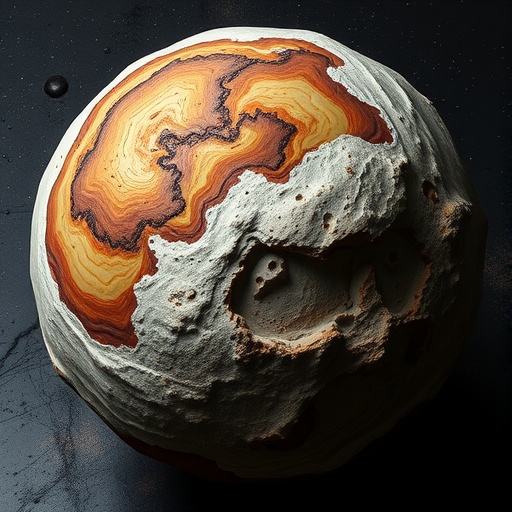
Image Credits: AI Generated

DOI: https://doi.org/10.1038/s43247-026-03630-9

Keywords:

Tags: Ancient metasomatism and lithospheric stabilitychemical alteration of rocks by fluid activitycoupling between lithospheric stability andgeochemical signals indicating historical metasomatic processesimpact of fluid-induced chemical changes on Earth’s crustinfluence of metasomatism on lithosphere mechanical propertieslong-term effects of metasomatism on tectonic stabilityrecycling of lithospheric material into Earth’s interiorrole of metasomatism in mineral transformationsstabilization of Earth’s lithosphere through metasomatic processes
Share26Tweet16
Previous Post

Bioiontronics Promises New Advances in Bioelectronic Devices

Next Post

Early Team Care and Treatment for Cardiac Dysfunction in Infants With CDH

Related Posts

Global Tidal Wetland Soil Organic Carbon Patterns and Environmental Drivers Since 2009
Earth Science

Global Tidal Wetland Soil Organic Carbon Patterns and Environmental Drivers Since 2009

July 28, 2026
Earliest Mediterranean long-distance sea routes lasted for at least a millennium
Earth Science

Earliest Mediterranean long-distance sea routes lasted for at least a millennium

July 28, 2026
Century-Long Data Shows Complex Ice-Cover Trends in the Laurentian Great Lakes
Earth Science

Century-Long Data Shows Complex Ice-Cover Trends in the Laurentian Great Lakes

July 28, 2026
Ecosystem Engineers Boosted Marine Biodiversity Across the Entire Phanerozoic
Earth Science

Ecosystem Engineers Boosted Marine Biodiversity Across the Entire Phanerozoic

July 28, 2026
Genetic Engineering in Rice After 50 Years Could Deliver Major Gains
Earth Science

Genetic Engineering in Rice After 50 Years Could Deliver Major Gains

July 28, 2026
Asteroid Impact Created Dust Cloud Insulating Earth, Frying Cretaceous Dinosaurs
Earth Science

Asteroid Impact Created Dust Cloud Insulating Earth, Frying Cretaceous Dinosaurs

July 28, 2026
Next Post
Early Team Care and Treatment for Cardiac Dysfunction in Infants With CDH

Early Team Care and Treatment for Cardiac Dysfunction in Infants With CDH

  • Mothers who receive childcare support from maternal grandparents show more

    Mothers who receive childcare support from maternal grandparents show more parental warmth, finds NTU Singapore study

    27656 shares
    Share 11059 Tweet 6912
  • University of Seville Breaks 120-Year-Old Mystery, Revises a Key Einstein Concept

    1061 shares
    Share 424 Tweet 265
  • Bee body mass, pathogens and local climate influence heat tolerance

    682 shares
    Share 273 Tweet 171
  • Researchers record first-ever images and data of a shark experiencing a boat strike

    546 shares
    Share 218 Tweet 137
  • Groundbreaking Clinical Trial Reveals Lubiprostone Enhances Kidney Function

    531 shares
    Share 212 Tweet 133
Science

Embark on a thrilling journey of discovery with Scienmag.com—your ultimate source for cutting-edge breakthroughs. Immerse yourself in a world where curiosity knows no limits and tomorrow’s possibilities become today’s reality!

RECENT NEWS

  • Study Finds Effects of Expanding Mobile Clinics for Addiction Treatment
  • Elephant Vaccine Early Results Show Protection Against Deadly Virus
  • Mechanisms Connecting Gut Microbiome to Causality in Psychiatric Disorders
  • Global Tidal Wetland Soil Organic Carbon Patterns and Environmental Drivers Since 2009

Categories

  • Agriculture
  • Anthropology
  • Archaeology
  • Athmospheric
  • Biology
  • Biotechnology
  • Blog
  • Bussines
  • Cancer
  • Chemistry
  • Climate
  • Earth Science
  • Editorial Policy
  • Marine
  • Mathematics
  • Medicine
  • Pediatry
  • Policy
  • Psychology & Psychiatry
  • Science Education
  • Social Science
  • Space
  • Technology and Engineering

Subscribe to Blog via Email

Enter your email address to subscribe to this blog and receive notifications of new posts by email.

Join 5,146 other subscribers

© 2025 Scienmag - Science Magazine

Welcome Back!

Login to your account below

Forgotten Password?

Retrieve your password

Please enter your username or email address to reset your password.

Log In
No Result
View All Result
  • HOME
  • SCIENCE NEWS
  • CONTACT US

© 2025 Scienmag - Science Magazine

Discover more from Science

Subscribe now to keep reading and get access to the full archive.

Continue reading
