


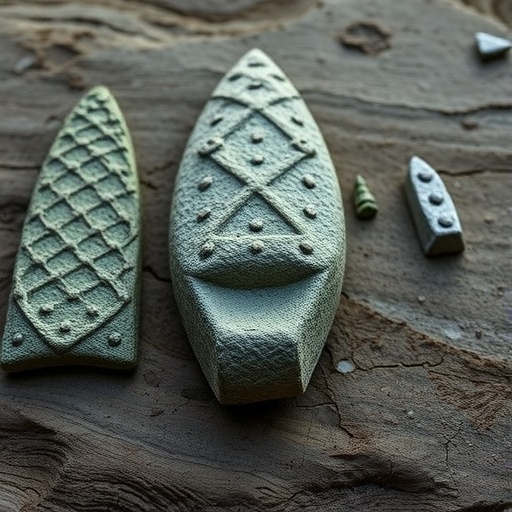
Recent archaeological findings at the Xiaoyushu Site in Heilongjiang Province, China, have revealed a wealth of lithic artifacts that provide crucial insights into the technological advancements of early human societies. This site, dating back to prehistoric times, serves as a significant window into the daily lives, subsistence strategies, and cultural practices of the people who once inhabited this region. The research conducted by Quan, Pan, and Tian, culminating in their publication in the journal Asian Archaeology, presents a comprehensive analysis of the lithic industry that flourished at this site.
The discovery of lithic artifacts at Xiaoyushu contributes to our understanding of the complex relationship between early humans and their environment. The artifacts include a diverse range of tools, such as flaked stones, scrapers, and pointed implements, which suggest that the inhabitants were skilled in stone tool technology. These tools were not merely functional; they also reflect the ingenuity and adaptability of early human societies as they modified their technological practices to meet their needs.
A closer examination of the stone tools reveals insights into the raw material selection and manufacturing techniques employed by the site’s ancient inhabitants. Researchers utilized advanced lithic analysis methods to classify the tools based on their morphology, which facilitated a better understanding of the technological choices made by these prehistoric people. The evidence indicates that the inhabitants possessed a keen knowledge of the available resources, allowing them to exploit various types of stones to produce effective tools for hunting, butchering, and processing tasks.
Another intriguing aspect of the Xiaoyushu artifacts is their spatial distribution across the site. The careful mapping of artifact locations has unveiled patterns that suggest a structured approach to tool production and usage areas. This spatial analysis complements our understanding of social organization and activity areas, shedding light on how these early human groups may have structured their daily lives. The evidence suggests that there were dedicated spaces for tool-making, which would have played an essential role in community dynamics.
In addition to the lithic tools themselves, contextual analysis of the site has uncovered other significant findings, such as evidence of habitation structures and potential food preparation areas. These elements indicate that the Xiaoyushu Site was a vibrant location where people gathered for specific purposes, reflecting social interconnectedness and collaboration among community members. The presence of food-processing evidence in conjunction with lithic artifacts provides a more complete picture of how these hunter-gatherers may have lived.
The research team also employed experimental archaeology techniques to replicate the tool-making processes observed at Xiaoyushu. By recreating the production of similar lithic tools, the researchers gained valuable insights into the practical challenges and techniques that early humans may have encountered. This hands-on approach not only enriches archaeological interpretations but also enhances our understanding of the cognitive and physical skills involved in producing stone tools.
As part of the broader context of prehistoric archaeology in Northeast Asia, findings from the Xiaoyushu Site contribute to ongoing discussions about the peopling of this area. Researchers speculate that the technological innovations highlighted in this study could have had wider implications for migrations and interactions within and beyond the region. The effective use of lithic resources and the social organization reflected in the archaeological record offer clues about the adaptability and resilience of these ancient communities.
In terms of preservation, the artifacts recovered from Xiaoyushu’s stratified deposits have been well-maintained, allowing for detailed analysis and future research opportunities. The stratigraphy of the site not only helps determine the chronological sequence of human activity but also protects these invaluable tools from environmental degradation. Moreover, the careful excavation practices employed have ensured that both the artifacts and their context remain intact, emphasizing the importance of meticulous methodologies in archaeological research.
As the findings of the Xiaoyushu Site continue to be analyzed, further research is anticipated to provide even deeper understandings of the prehistoric cultural landscape of Northeast Asia. The potential for interdisciplinary collaboration presents exciting opportunities for future studies, incorporating insights from geology, anthropology, and environmental science. Such collaborations can foster a more holistic approach to understanding the complex web of interactions between ancient humans and their surroundings.
The research undertaken at Xiaoyushu serves as a testament to the rich heritage of lithic technology that shaped human evolution. By shedding light on the manufacturing techniques, spatial patterns, and social dynamics of early human communities, this work contributes significantly to the field of archaeology. It reinforces the idea that the study of lithic artifacts is not merely an examination of tools but a lens through which we can explore the intricate fabric of human history.
In conclusion, the Xiaoyushu Site represents a pivotal discovery that enriches our understanding of prehistoric human behavior and technological development. As excavations continue and analyses advance, the insights gained from this site will undoubtedly contribute to broader discussions in the archaeological community. The innovative methodologies employed by the research team and the rich array of lithic artifacts provide a compelling narrative of human adaptation and survival in a challenging environment.
This groundbreaking work elevates the conversation about human prehistory, encouraging us to consider how the echoes of the past shape the present. The Xiaoyushu findings remind us that every artifact tells a story—a story of resilience, resourcefulness, and the enduring human spirit.
As the discipline of archaeology continues to evolve, studies like those conducted at Xiaoyushu highlight the dynamic interplay between technology and culture, prompting renewed interest in the narratives woven through the artifacts of our ancestors.
Cite Scienmag News
Courtney Benton. (January 27, 2026). Ancient Lithic Tools Discovered in Heilongjiang, China. Scienmag. https://scienmag.com/ancient-lithic-tools-discovered-in-heilongjiang-china/
Courtney Benton. "Ancient Lithic Tools Discovered in Heilongjiang, China." Scienmag, 27 January 2026, https://scienmag.com/ancient-lithic-tools-discovered-in-heilongjiang-china/. Accessed 3 September 2026.
Courtney Benton. "Ancient Lithic Tools Discovered in Heilongjiang, China." Scienmag. January 27, 2026. https://scienmag.com/ancient-lithic-tools-discovered-in-heilongjiang-china/


