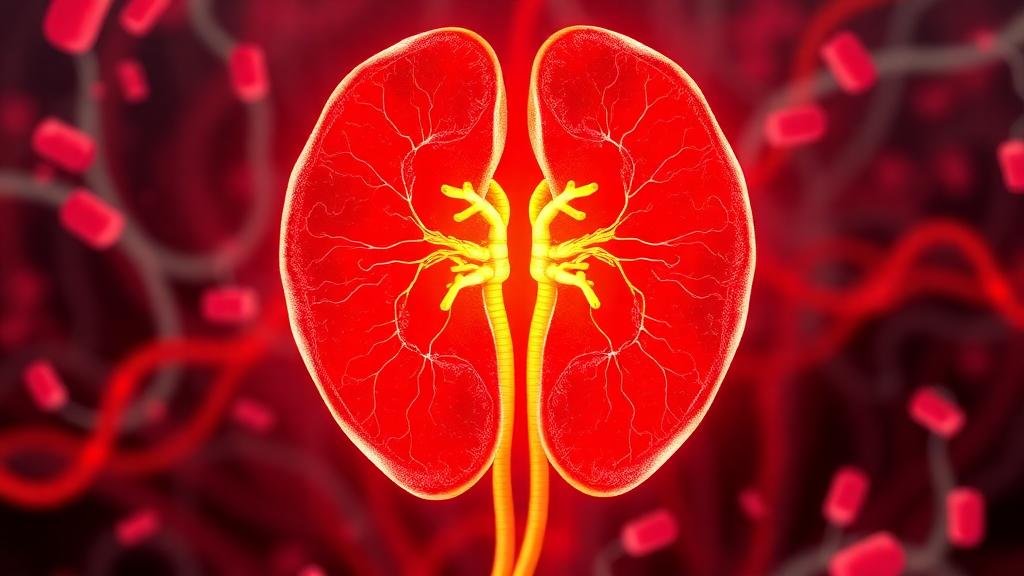
A new biological aging index built with machine learning is showing an uncanny ability to predict who will die, and when, among people living with cardiovascular-kidney-metabolic (CKM) syndrome, the increasingly common collision of heart disease, kidney dysfunction, and metabolic disorders such as obesity and diabetes. The index, dubbed CKMAI, was developed by a team led by Zhengyang Zhu and colleagues and reported in PLOS Medicine. Unlike general-purpose biological age measures, it was trained specifically on the biological pathways where the heart, kidneys, and metabolism interact and break down together. In a nationally representative sample of US adults, the new clock outperformed established aging indices at forecasting both all-cause and cardiovascular mortality, and it identified patients silently sliding toward the highest-risk form of CKM syndrome years before clinical catastrophe. The work arrives at a moment when clinicians are searching for tools that can tame the bewildering heterogeneity of a syndrome that progresses at wildly different speeds in different people.
The study drew on 6,896 adults from the National Health and Nutrition Examination Survey (NHANES) between 2005 and 2018, with survey weights applied so the findings reflect the broader US adult population. Rather than betting on a single algorithm, the researchers staged a computational tournament: a two-stage machine learning framework evaluated more than 100 candidate survival models, ranging from classical Cox regression to modern ensemble methods. The winner was chosen through Pareto front optimization, a technique borrowed from multi-objective engineering that refuses to sacrifice one performance dimension for another. Instead of picking the model with the best score on a single metric, the approach identifies models that sit on the mathematical frontier where no competitor can improve accuracy without degrading another quality such as calibration or simplicity. The eventual champion was, somewhat surprisingly, a simple Cox model, which achieved a mean concordance index of 0.893, a strikingly high figure for mortality prediction in a free-living population.
From that optimized model, the team distilled CKMAI, a single number that integrates a diverse set of inputs: clinical laboratory measurements, nutritional assessments, lifestyle factors, and social determinants of health. The philosophy is that aging in CKM syndrome is not written in any one biomarker but in the coordinated drift of dozens of variables that together describe how far along the heart-kidney-metabolic axis a person has traveled. The index was then stress-tested against three of the best-known competitors: PhenoAge, the Klemera-Doubal method (KDM), and the cardiometabolic index (CMI). Across every outcome and every time horizon, CKMAI came out ahead. For all-cause mortality, its time-dependent area under the curve reached 0.893 at three years, 0.907 at five years, and 0.890 at ten years. For cardiovascular mortality, the numbers climbed even higher, peaking at 0.937 at both five and ten years, meaning the index could discriminate between those who would and would not die of cardiovascular causes with remarkable precision.
Discrimination is only half the story, however, and the researchers went to considerable lengths to prove the index was not merely ranking people correctly but also assigning them the right absolute risks. Reclassification metrics told a consistent story: net reclassification improvement and integrated discrimination improvement were statistically significant at all time points, confirming that CKMAI moved patients into more accurate risk categories compared with existing indices. Calibration, assessed with the Greenwood-Nam-D’Agostino test, showed no significant departure between predicted and observed mortality, and decision curve analysis demonstrated superior net benefit, a measure of how much real-world clinical value a risk model delivers when used to guide decisions. In practical terms, a physician using CKMAI to decide who needs intensified intervention would make better decisions than one relying on PhenoAge, KDM, or CMI, with fewer false alarms and fewer missed high-risk patients.
One of the most intriguing findings concerns the shape of the relationship between biological aging and death. Using restricted cubic splines and two-piecewise regression, the team found that risk does not climb smoothly with CKMAI. Instead, there are inflection points: 61.587 for all-cause mortality, 60.732 for cardiovascular mortality, and 34.092 for high-risk CKM status. Below each threshold, risk rises steeply; above it, the curve flattens. This counterintuitive pattern suggests that the most dangerous phase of CKM-related aging is the transition zone, the period when a person’s index first crosses into the elevated range. Clinically, this reframes the goal of screening: the patients who most urgently need intervention may be those just approaching the threshold, not those already deep into the high-risk zone, whose trajectory may in some respects already be set.
The index also revealed a startling interaction with conventional biological age. When CKMAI and PhenoAge were analyzed together, the researchers documented a super-additive interaction, quantified by a relative excess risk due to interaction of 15.06 (95% confidence interval 8.14 to 38.44). In plain language, the combined effect of being old by both clocks is far worse than the sum of the two risks separately. A person who is chronologically aged by PhenoAge and additionally accelerated on the CKM-specific axis occupies a biological state that neither measure alone can capture. This finding offers a mechanistic clue about why CKM syndrome progresses so heterogeneously: the syndrome’s damage may compound with, rather than merely parallel, the broader aging process.
To map that heterogeneity directly, the team applied unsupervised clustering to the combined aging and metabolic data and uncovered six distinct aging-metabolic phenotypes within the population. The most alarming was a frail elderly cluster whose members faced a hazard ratio of 11.74 for mortality compared with the reference group, an eleven-fold elevation in risk. The existence of these discrete phenotypes suggests that CKM syndrome is not a single disease with a single trajectory but a family of biological states, some of which are far more lethal than others. Identifying which phenotype a patient belongs to could eventually guide how aggressively clinicians pursue kidney protection, cardiovascular risk reduction, or metabolic control.
Perhaps the most unexpected thread in the study is psychological. Using weighted bootstrap mediation analysis, the researchers found that depression partially mediates the link between CKMAI and its outcomes. The proportion of the association explained by depression was 5.6 percent for all-cause mortality, 8.2 percent for cardiovascular mortality, and 11.1 percent for high-risk CKM status. In other words, some of the excess mortality carried by an accelerated CKM aging signature travels through the mind: biological aging in this syndrome appears to foster depressive states, which in turn worsen outcomes, likely through behavioral, inflammatory, and neuroendocrine pathways. The mediation is partial, but its consistency across all three outcomes suggests that mental health may be an underappreciated lever in breaking the cycle of cardiovascular-kidney-metabolic decline.
The findings held up under scrutiny. Prespecified subgroup analyses and multiple sensitivity analyses confirmed robustness, and temporal validation within NHANES supported the model’s stability over time. A preliminary external validation in a hospital-based Chinese cohort of 261 patients also supported the index’s ability to identify high-risk CKM status, hinting at generalizability beyond the US population. The authors are candid about the study’s central limitation: CKMAI has not yet been validated in geographically independent cohorts with complete mortality follow-up, and until that happens, its performance estimates carry some uncertainty. Still, the combination of national representativeness, methodological rigor, and early external signals makes a strong case.
If the results replicate, the implications could be substantial. CKMAI is built from data that clinics already collect, bloodwork, nutrition, lifestyle, and social context, which makes it a practical, implementable tool rather than a laboratory curiosity. A single number that flags patients crossing the mortality inflection point, sorts them into one of six aging-metabolic phenotypes, and even points toward depression screening could reshape how preventive care is delivered to the millions of people whose hearts, kidneys, and metabolisms are failing together. As cardiovascular-kidney-metabolic syndrome becomes one of the defining health challenges of an aging century, an aging clock tuned to its specific biology may prove to be exactly the instrument medicine has been missing.
Subject of Research: A machine learning-derived biological aging index for mortality prediction and risk stratification in cardiovascular-kidney-metabolic syndrome
Article Title: A machine learning-derived aging index for risk stratification and mortality prediction in cardiovascular-kidney-metabolic syndrome: A retrospective cohort study
Article References: Zhu, Z., Ren, K., Wang, D., Lv, Y., Jin, H., Zhang, L., & Wang, Y. (2026). A machine learning-derived aging index for risk stratification and mortality prediction in cardiovascular-kidney-metabolic syndrome: A retrospective cohort study. PLOS Medicine, 23(10), e1005078. https://doi.org/10.1371/journal.pmed.1005078
Image Credits: AI Generated
DOI: 10.1371/journal.pmed.1005078
Keywords: biological aging, machine learning, cardiovascular-kidney-metabolic syndrome, mortality prediction, NHANES, risk stratification, PhenoAge, depression, Cox regression, epidemiology, precision medicine, PLOS Medicine
Cite Scienmag News
Beatrice Stafford. (October 10, 2026). AI Builds a New Biological Aging Clock That Predicts Death in Heart-Kidney-Metabolic Disease. Scienmag. https://scienmag.com/ai-builds-a-new-biological-aging-clock-that-predicts-death-in-heart-kidney-metabolic-disease/
Beatrice Stafford. "AI Builds a New Biological Aging Clock That Predicts Death in Heart-Kidney-Metabolic Disease." Scienmag, 10 October 2026, https://scienmag.com/ai-builds-a-new-biological-aging-clock-that-predicts-death-in-heart-kidney-metabolic-disease/. Accessed 10 October 2026.
Beatrice Stafford. "AI Builds a New Biological Aging Clock That Predicts Death in Heart-Kidney-Metabolic Disease." Scienmag. October 10, 2026. https://scienmag.com/ai-builds-a-new-biological-aging-clock-that-predicts-death-in-heart-kidney-metabolic-disease/