


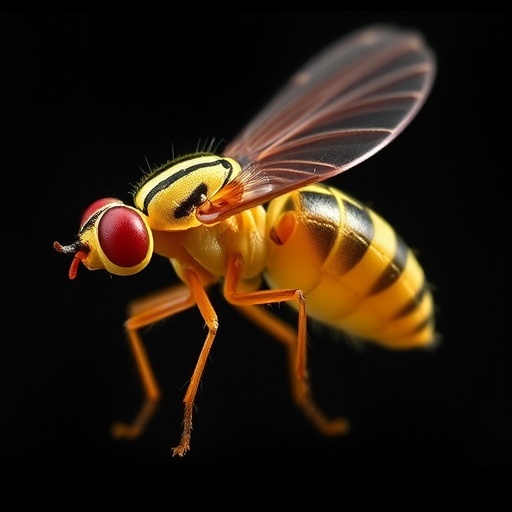
Recent advancements in the treatment of neurodegenerative diseases are capturing the attention of researchers and the public alike. Among these, Alzheimer’s disease remains a significant challenge, affecting millions of individuals worldwide. A groundbreaking study led by Afolayan and colleagues has made noteworthy progress in exploring therapeutic approaches that utilize natural compounds. This research delves deeply into the distinct oxidoreductive properties of aged garlic extract and S-allyl-cysteine, both of which have garnered interest for their potential neuroprotective effects. The study employs genetically modified Drosophila models of Alzheimer’s disease to assess the efficacy of these compounds, providing compelling insights into the mechanisms that underlie their therapeutic potential.
The use of model organisms such as Drosophila melanogaster in Alzheimer’s research has been well-established due to their genetic tractability and the evolutionary conservation of many molecular pathways. The present study capitalizes on this by employing genetically modified flies that exhibit Alzheimer’s-like symptoms, allowing researchers to effectively analyze the impact of treatment with aged garlic extract and S-allyl-cysteine on disease progression. By utilizing this model, the authors not only evaluate behavioral outcomes but also investigate the underlying biochemical changes that accompany these treatments.
Oxidative stress has long been recognized as a key contributor to the pathogenesis of Alzheimer’s disease. The accumulation of reactive oxygen species leads to cellular damage, ultimately resulting in neurodegeneration. In this context, the study investigates the oxidoreductive activities of aged garlic extract, which is rich in organosulfur compounds, and S-allyl-cysteine, a prominent derivative of garlic. These compounds are posited to exert antioxidant effects, mitigating oxidative damage and thereby preserving neuronal function. By quantifying the extent of oxidoreductive activity in the treated flies, the researchers provide substantial evidence for the protective properties of these natural products.
The findings of Afolayan et al. reveal that both aged garlic extract and S-allyl-cysteine significantly impact the overall oxidative stress levels in the Drosophila models. The treated flies demonstrated decreased levels of lipid peroxidation and improved activity of key antioxidant enzymes, such as superoxide dismutase and catalase. These results suggest that the compounds may play a critical role in enhancing the oxidative defense mechanisms in neurons, thereby contributing to neuroprotection. Furthermore, this research highlights the potential of harnessing natural compounds as a means of alleviating the pathological hallmark of Alzheimer’s disease.
In terms of behavioral assessments, the study employed various assays to determine the cognitive and locomotor functions of the treated flies. A noticeable improvement in memory and learning capabilities was observed in the Drosophila exposed to aged garlic extract and S-allyl-cysteine. This behavioral enhancement correlates with a reduction in amyloid-beta plaque formation—one of the fundamental pathological features of Alzheimer’s disease. The dual approach of combining biochemical and behavioral analyses ultimately underscores the therapeutic prospects of these compounds.
Investigating the molecular pathways through which these compounds exert their effects is paramount for understanding their mechanisms of action. The study illuminated critical signaling cascades that were activated or inhibited in response to treatment. Specifically, the researchers observed alterations in the expression of genes associated with neuroinflammation and neuronal survival, indicative of a multi-faceted approach to mitigating Alzheimer’s pathology. This exploration of gene expression patterns reveals the complexity of interactions involved in the therapeutic effects of garlic-derived compounds.
While the results of this study are promising, the authors acknowledge the need for further research to translate these findings into clinical applications. The pathways elucidated in the Drosophila model may not directly replicate the complexities of human Alzheimer’s disease. Future studies are warranted to investigate the pharmacokinetics of these compounds in humans, as well as their bioavailability and potential side effects. Nevertheless, the preliminary data offered by this research aligns with a growing body of literature that advocates for the inclusion of natural products in the therapeutic landscape of neurodegenerative diseases.
As scientists strive to develop effective treatments for Alzheimer’s disease, the importance of innovative and natural approaches cannot be overstated. The contributions of Afolayan and collaborators to this field are particularly significant, as they shed light on the powerful properties of garlic, a common kitchen staple that has been used for centuries due to its health benefits. Such findings may reshape our understanding of nutritional supplements and their roles in preventing or alleviating cognitive decline.
The potential implications of these discoveries extend beyond mere therapeutic applications; they also herald a broader discourse on dietary and lifestyle factors that influence brain health. As research continues to demonstrate the links between nutrition and neuroprotection, there is a critical need for public awareness and education regarding the benefits of natural compounds. A holistic approach that incorporates diet, exercise, and dietary supplements could be pivotal in combating Alzheimer’s disease and enhancing overall cognitive function.
Ultimately, as this field of inquiry evolves, it will be essential to engage stakeholders—from researchers to clinicians and patients—around the promising avenues presented by studies such as this one. Mobilizing support for further investigations into natural therapies could facilitate the development of effective interventions that empower individuals to take charge of their cognitive health. The blend of scientific inquiry and public engagement will be vital in the pursuit of novel strategies to address Alzheimer’s disease.
In conclusion, the research conducted by Afolayan and colleagues marks a significant step forward in our quest to understand and combat Alzheimer’s disease. By elucidating the differing oxido-reductive activities of aged garlic extract and S-allyl-cysteine, this study provides a foundation for further exploration of dietary approaches to neuroprotection. While challenges remain, the promise of utilizing natural compounds in the fight against neurodegeneration is one that warrants continued attention and exploration.
As the world increasingly acknowledges the role of lifestyle factors in chronic disease prevention, the findings of this study highlight the importance of integrating natural products into therapeutic strategies for Alzheimer’s disease. The convergence of traditional knowledge and modern science presents a unique opportunity to improve cognitive health and mitigate the impacts of neurodegeneration. Continued research will no doubt refine our understanding of these compounds and their potential to revolutionize Alzheimer’s treatment protocols in the years to come.
Afolayan, O., Nwaogu, V., Idowu, O. et al. Differential oxido-reductive activities of aged garlic extract and S-allyl-cysteine in genetically modified Drosophila model of Alzheimer’s disease.
BMC Complement Med Ther 25, 392 (2025). https://doi.org/10.1186/s12906-025-05093-5
Cite Scienmag News
Cassandra Pierce. (October 22, 2025). Aged Garlic Extract vs. S-allyl-Cysteine in Alzheimer’s Drosophila. Scienmag. https://scienmag.com/aged-garlic-extract-vs-s-allyl-cysteine-in-alzheimers-drosophila/
Cassandra Pierce. "Aged Garlic Extract vs. S-allyl-Cysteine in Alzheimer’s Drosophila." Scienmag, 22 October 2025, https://scienmag.com/aged-garlic-extract-vs-s-allyl-cysteine-in-alzheimers-drosophila/. Accessed 4 September 2026.
Cassandra Pierce. "Aged Garlic Extract vs. S-allyl-Cysteine in Alzheimer’s Drosophila." Scienmag. October 22, 2025. https://scienmag.com/aged-garlic-extract-vs-s-allyl-cysteine-in-alzheimers-drosophila/


