


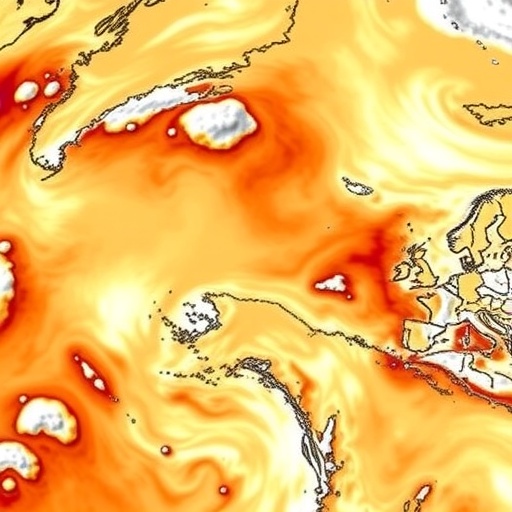
Recent research has shed light on a significant environmental interaction that has remained obscured in discussions about climate change and aerosol emissions. The study, spearheaded by a team of researchers including Yang, N., Xia, Y., and Xie, F., reveals that the reduction of aerosol emissions has led to a notable increase in temperatures in the northwestern Pacific region post-2011. This phenomenon underscores the complex interplay between air quality interventions and climatic consequences, presenting a clarion call for a nuanced understanding of global warming mechanisms.
Aerosols, which comprise tiny particles suspended in the atmosphere, play a pivotal role in influencing the Earth’s climate. They can originate from natural sources, such as volcanic eruptions and oceanic spray, or anthropogenic activities, including industrial emissions and vehicle exhaust. While aerosols are often vilified for their detrimental health impacts and contribution to haze, they also have a cooling effect on the planet due to their ability to reflect sunlight away from the Earth’s surface. Thus, a decrease in aerosol concentrations can inadvertently lead to warming, a complex narrative that this recent study has articulated.
The researchers meticulously examined data trends over the past two decades to ascertain the relationship between aerosol levels and temperature changes in the northwestern Pacific. Their findings suggest that the substantial decline in aerosols, particularly following regulatory measures aimed at improving air quality, has contributed to an accelerated warming trend in this region. This increase is particularly noteworthy as it contrasts with the global trend of a plateau in temperature rise during the same period, highlighting localized climatic variances driven by specific geographical and anthropogenic factors.
The implications of these findings are profound, suggesting that efforts to mitigate air pollution might carry unintended climatic consequences. The study posits that while reducing aerosols is pivotal for health and environmental outcomes, it concurrently demands a strategic approach to mitigate warming. This dual challenge is critical for policymakers who must balance public health priorities with the need for climate stability.
Further analysis revealed that the warming trend in the northwestern Pacific may also have ripple effects beyond the immediate region. Changes in temperature patterns can impact ocean currents, marine ecosystems, and even weather patterns across a broader geographic scope. For instance, alterations in sea surface temperatures can disrupt the delicate balance of marine life and impact fish stocks that are vital for local communities’ economies. As such, the stakes surrounding aerosol emissions transcend air quality and pose deeper questions about ecological sustainability and food security.
Understanding the relationship between aerosol reductions and subsequent warming raises the urgent need for enhanced predictive models to forecast climatic outcomes resulting from concerted air quality efforts. These models must incorporate the multifaceted interactions between aerosols, greenhouse gases, and other climate factors. It is essential to refine our approach to environmental management by integrating these considerations, which will ultimately enhance our ability to respond to climate change effectively.
The study emphasizes the necessity for interdisciplinary collaboration among scientists, policymakers, and environmental stakeholders. This collaborative effort should focus on developing strategies that mitigate the adverse effects of reducing aerosols while promoting public health. This synergy of interests could pave the way for solutions that improve air quality without exacerbating global warming concerns.
As the global community grapples with the realities of climate change, the findings from this research underscore the necessity for a holistic view of environmental policies. The simple narrative of reducing emissions to combat climate change must evolve into a framework that recognizes the diverse intersections of atmospheric chemistry and climate dynamics. By taking a more integrated stance, society can create interventions that address air quality and climate stability concurrently.
Moreover, this research invites an examination of existing regulatory frameworks governing emissions. Policymakers must consider the lingering effects of their decisions on aerosols, not just in the context of immediate health benefits but also through their long-term climatic implications. This necessity for foresight in policymaking could serve as a guiding principle as governments push forward with initiatives designed to curb pollution.
As we look ahead, the study serves as a vital reminder of the complexities underpinning climate science. It elucidates how seemingly straightforward actions against pollution can have intricately woven consequences that need to be analyzed in depth. The revelations regarding post-2011 warming in the northwestern Pacific should galvanize scientific inquiry focused on understanding regional variations within global climate dynamics.
Looking toward the future, researchers and climate scientists must prioritize the development of policies and strategies that sustain air quality improvements while simultaneously combating global warming. This dual focus will require innovative thinking, new technologies, and collaboration across disciplines and borders.
In conclusion, the exploration of the fluctuations in aerosol emissions and their subsequent climatic impact in the northwestern Pacific illustrates the need for careful consideration of the relationships between environmental interventions and climate dynamics. As we refine our understanding of these interactions, we can better equip ourselves to address the multifaceted challenge of climate change while promoting a healthier environment for all.
Harnessing the insights generated by the recently published study can serve as a springboard for deeper investigations into this pressing subject. As researchers continue to probe the layers of interaction between air quality and climate, the pursuit of actionable and sustainable solutions remains more critical than ever.
In summary, while the reduction of aerosols is a necessary step towards enhanced public health and environmental quality, it is essential that we remain vigilant about the broader climatic implications. Only by acknowledging these complexities can we hope to carve a pathway towards a sustainable future that harmonizes both human health and the health of our planet.
Yang, N., Xia, Y., Xie, F. et al. Aerosol emission reductions cause post-2011 rapid warming in the northwestern Pacific.
Commun Earth Environ (2025). https://doi.org/10.1038/s43247-025-03015-4
Cite Scienmag News
Russell Cooper. (November 25, 2025). Aerosol Cuts Trigger Rapid Warming in Northwest Pacific. Scienmag. https://scienmag.com/aerosol-cuts-trigger-rapid-warming-in-northwest-pacific/
Russell Cooper. "Aerosol Cuts Trigger Rapid Warming in Northwest Pacific." Scienmag, 25 November 2025, https://scienmag.com/aerosol-cuts-trigger-rapid-warming-in-northwest-pacific/. Accessed 5 September 2026.
Russell Cooper. "Aerosol Cuts Trigger Rapid Warming in Northwest Pacific." Scienmag. November 25, 2025. https://scienmag.com/aerosol-cuts-trigger-rapid-warming-in-northwest-pacific/


