


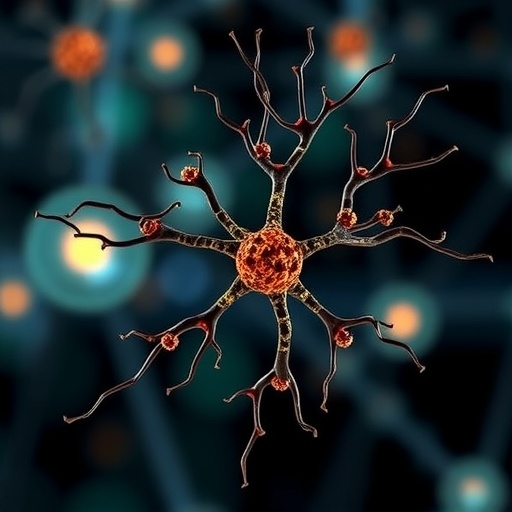
ROCHESTER, Minn. — Researchers have uncovered a previously unknown mechanism that helps aging cells drive the chronic inflammation linked to many age-related diseases. The findings reveal how dysfunctional mitochondria — the cell’s energy-producing structures — work with the cell’s epigenetic machinery to switch on inflammatory genes, opening the door to a new therapeutic approach for promoting healthier aging.
The study, published in Nature, builds upon years of research showing that senescent, or “zombie,” cells accumulate with age. While these cells no longer divide, they remain metabolically active and release a cocktail of inflammatory molecules known as the senescence-associated secretory phenotype, or SASP.
This persistent inflammation is thought to contribute to frailty, cardiovascular disease, cancer, neurodegeneration and other disorders of aging.
“For years, the field has focused on getting rid of senescent cells,” says João Passos, Ph.D., a Mayo Clinic researcher and senior author of the study conducted in collaboration with Sanford Burnham Prebys Medical Discovery Institute. “Our strategy has been different. Instead of killing the cells, we asked whether we could switch off the inflammation that makes them harmful.”
Previous work from the Passos laboratory demonstrated that damaged mitochondria leak mitochondrial DNA and RNA into the cell, activating immune pathways that trigger inflammation. The new study identifies a second, independent pathway that is equally essential.
“We found that inflammatory signaling alone isn’t enough,” says Helene Martini, Pharm.D., Ph.D., a Mayo Clinic researcher and first author of the study. “The cells also need a metabolic signal from mitochondria that changes how inflammatory genes are turned on.”
The researchers discovered that senescent cells increase production of acetyl-CoA, a molecule generated through mitochondrial metabolism. Acetyl-CoA enables epigenetic modifications — chemical changes that regulate whether genes are switched on or off without altering the DNA sequence itself. These modifications make inflammatory genes more accessible, allowing them to be robustly expressed.
In other words, mitochondrial DNA and RNA provide the inflammatory alarm, while mitochondrial metabolism grants the molecular “permission” needed to fully activate inflammatory genes.
“This is a completely new pathway,” says Dr. Martini. “We found that dysfunctional mitochondria can promote inflammation by controlling epigenetic switches that turn inflammatory genes on.”
The team also identified a promising therapeutic target: a mitochondrial citrate transporter known as SLC25A1. Blocking this transporter reduced the supply of acetyl-CoA, limiting activation of inflammatory genes even though the initial immune signals remained present. Together, these findings reveal a previously unrecognized control point that could be exploited to promote healthier aging.
The research is part of a larger effort at Mayo Clinic called the Precure Research initiative, which is focused on developing tools that empower clinicians to predict and intercept biological processes before they evolve into disease or progress into complex, hard-to-treat conditions.
Review the study for a complete list of authors, disclosures and funding.
###
About Mayo Clinic
Mayo Clinic is a nonprofit organization committed to innovation in clinical practice, education and research, and providing compassion, expertise and answers to everyone who needs healing. Visit the Mayo Clinic News Network for additional Mayo Clinic news.
Journal
Nature
Article Title
Mitochondrial metabolism and epigenetic crosstalk drive SASP
Article Publication Date
29-Jul-2026
Emily DeBoom
Mayo Clinic
deboom.emily@mayo.edu
Office: 507-284-5005
Journal
Nature
Article Title
Mitochondrial metabolism and epigenetic crosstalk drive SASP
Article Publication Date
29-Jul-2026
Cite Scienmag News
Beatrice Stafford. (July 29, 2026). Scientists identify new mitochondrial pathway linked to harmful inflammation in aging. Scienmag. https://scienmag.com/scientists-identify-new-mitochondrial-pathway-linked-to-harmful-inflammation-in-aging/
Beatrice Stafford. "Scientists identify new mitochondrial pathway linked to harmful inflammation in aging." Scienmag, 29 July 2026, https://scienmag.com/scientists-identify-new-mitochondrial-pathway-linked-to-harmful-inflammation-in-aging/. Accessed 6 September 2026.
Beatrice Stafford. "Scientists identify new mitochondrial pathway linked to harmful inflammation in aging." Scienmag. July 29, 2026. https://scienmag.com/scientists-identify-new-mitochondrial-pathway-linked-to-harmful-inflammation-in-aging/


