


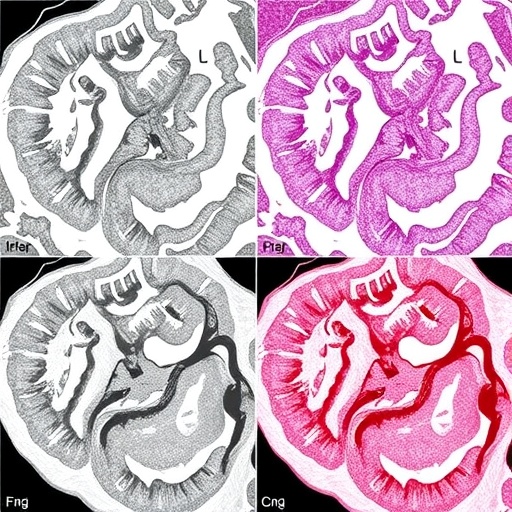
An international team of researchers has unveiled a sophisticated artificial intelligence technique designed to sharpen the analysis of colorectal cancer tissue images, one of the most stubborn computational problems in modern digital pathology. In a new peer-reviewed study published in the Journal of Big Data, scientists from the National Institute of Technology Agartala, Tripura University, North-West University, and the University of the Witwatersrand introduced CoINFOSC, an enhanced version of the weighted mean of vectors optimization algorithm, that achieves highly accurate multi-threshold segmentation of histopathological colorectal cancer images. The work addresses a pressing clinical need: colorectal cancer remains one of the most prevalent and life-threatening cancers worldwide, and early, reliable detection of cancerous regions in tissue slides can dramatically improve patient outcomes.
Image segmentation is the process by which a digital image is partitioned into meaningful regions, allowing software to separate healthy tissue, polyps, and malignant areas. In pathology, where slides are stained with multiple dyes and exhibit enormous variability in color, texture, and structure, segmentation quality directly affects how well automated systems can flag suspicious regions for a pathologist’s attention. Among the many segmentation strategies available, multi-level thresholding is particularly attractive because it is fast, simple in concept, and does not require training data. The idea is to find a set of intensity thresholds that divide the image’s histogram into distinct classes, each corresponding to a different tissue component. The catch is mathematical: as the number of thresholds grows, the number of possible combinations explodes exponentially, making the problem computationally intractable. Formally, multilevel thresholding is classified as an NP-hard problem, meaning no known algorithm can find the exact best solution in polynomial time as the problem scales.
To tame this combinatorial beast, the research team turned to metaheuristic optimization, a family of algorithms inspired by natural processes that intelligently search vast solution spaces. Their starting point was INFO, a relatively recent optimizer known formally as the weighted mean of vectors algorithm, which updates candidate solutions by exploiting the mean vectors of the population. INFO has shown promise in continuous optimization, but like all metaheuristics, it can suffer from premature convergence, where the population loses its diversity too early and the algorithm gets trapped in a suboptimal solution. This is especially damaging in image segmentation, where the threshold landscape is riddled with local optima caused by the complex, multimodal distribution of pixel intensities in stained tissue images.
CoINFOSC, the team’s contribution, bolts two complementary strategies onto the INFO framework. The first is centroid opposition-based learning, a mechanism rooted in the concept of opposite numbers. Instead of only evaluating candidate solutions at a given point in the search space, the algorithm simultaneously examines points that are, in a geometric sense, roughly opposite to them, using the population centroid as a reference. The rationale is intuitive yet powerful: if a solution is far from the true optimum, its opposite is likely to be closer, so exploring both sides of the space simultaneously doubles the chances of locating promising regions. By anchoring the opposition around the centroid rather than fixed boundaries, the method adapts to the evolving distribution of solutions and keeps the population spread across the search space, maintaining diversity precisely when conventional algorithms would begin to collapse inward.
The second enhancement is harmonic oscillation, a perturbation strategy modeled on the back-and-forth motion of oscillating systems. At various stages of the optimization, candidate solutions are nudged along oscillatory trajectories whose amplitude decreases as the search progresses. Early in the run, large oscillations allow the algorithm to leap across the search space and probe distant regions; later, the oscillations shrink, permitting fine-grained local refinement around the best solutions found so far. Together, these two mechanisms are designed to strike the critical balance between exploration, the broad survey of the search space, and exploitation, the concentrated polishing of the best candidates. It is this balance that determines whether a metaheuristic finds a genuinely excellent solution or merely an acceptable one.
The team did not simply deploy their algorithm on medical images and hope for the best. In a rigorous validation campaign, CoINFOSC was benchmarked against state-of-the-art optimizers on twenty-five unimodal and multimodal mathematical test functions, then further stress-tested on the IEEE Congress on Evolutionary Computation competition suites from 2017, at dimensions 30 and 50, and 2019. These standardized suites are the proving grounds of the optimization community, engineered to expose weaknesses such as slow convergence, sensitivity to dimensionality, and susceptibility to deception. Across these tests, CoINFOSC demonstrated superior convergence accuracy and robustness, reaching better solutions with greater consistency than its competitors, which the authors attribute to the interplay of the centroid opposition and harmonic oscillation mechanisms.
With its optimization credentials established, the algorithm was applied to its intended task: segmenting histopathological images of colorectal cancer using Kapur entropy as the objective function. Kapur’s entropy criterion selects thresholds that maximize the total entropy of the segmented classes, effectively producing partitions in which each region is as homogeneous and information-rich as possible. This criterion is well suited to pathology images because it makes no assumptions about the shapes of tissue regions and works directly on the statistical distribution of pixel intensities. Determining the optimal thresholds under Kapur entropy, however, is exactly the NP-hard search problem described above, and this is where CoINFOSC’s search prowess translates into practical benefit. The algorithm hunts down the threshold combination that maximizes entropy far more reliably than conventional techniques or rival optimizers, yielding cleaner, more diagnostically useful segmentations.
The segmentation results were quantified using an extensive battery of image quality metrics. The method achieved a peak signal-to-noise ratio of 27.72862, a structural similarity index of 0.81629, a feature similarity index of 0.93167, a universal image quality index of 0.17803, a quality index based on local variance of 0.97781, and a hybrid image quality metric score of 0.62943. Beyond these pixel- and structure-level measures, which compare the segmented output against ideal reference images, the researchers also evaluated region-based clinical metrics: the Dice coefficient and the Jaccard index, both computed against expert-annotated ground truth masks. These overlapping-region measures are the gold standard in medical image analysis because they reflect how well the algorithm’s delineation of tissue regions matches the judgment of trained human experts, the ultimate benchmark for any automated diagnostic aid.
Across all of these evaluations, CoINFOSC outperformed state-of-the-art algorithms in segmentation accuracy, robustness, and convergence speed. The authors emphasize that the high-quality segmented images produced by their method demonstrate its effectiveness in handling the specific complexities of colorectal cancer pathology slides, which are notoriously difficult due to dense cell packing, heterogeneous staining, and the subtle visual differences between benign and malignant structures. Faster and more reliable convergence also carries a practical benefit: in a clinical setting, where laboratories may process thousands of slides, even small reductions in per-image computation can compound into meaningful savings in time and computing resources, bringing automated screening closer to routine deployment.
The significance of the work extends beyond colorectal cancer. Multilevel thresholding with entropy criteria is a general-purpose segmentation approach applicable to many imaging modalities, and the architectural improvements embodied in CoINFOSC, the centroid opposition and harmonic oscillation strategies, are not specific to medical data. The same enhanced optimizer could in principle be applied to satellite imagery, industrial inspection, or any domain where fast, reliable image partitioning matters. The study also adds to a growing body of evidence that carefully engineered metaheuristics remain competitive with, and in some contexts superior to, more resource-hungry deep learning approaches, particularly when labeled training data are scarce or when the interpretability of threshold-based segmentation is valued by clinicians.
The research was carried out by Suraj Roy and Apu Kumar Saha of the Department of Mathematics at the National Institute of Technology Agartala, with Roy also affiliated with Tripura University, where he collaborated with Sharmistha Bhattacharya Halder. Absalom E. Ezugwu contributed from the Unit for Data Science and Computing at North-West University and the School of Computer Science and Applied Mathematics at the University of the Witwatersrand in South Africa. The work received no external funding and has been published open access, making the full technical details available to researchers and clinicians worldwide. As the algorithm proceeds through the standard publication pipeline, the team’s results already suggest a promising trajectory: a mathematically elegant optimization engine that could help pathologists see cancer more clearly, one threshold at a time.
Cite Scienmag News
Nathaniel Bowman. (September 6, 2026). Enhanced INFO algorithm enables multi-threshold segmentation of colorectal cancer histopathology images. Scienmag. https://scienmag.com/enhanced-info-algorithm-enables-multi-threshold-segmentation-of-colorectal-cancer-histopathology-images/
Nathaniel Bowman. "Enhanced INFO algorithm enables multi-threshold segmentation of colorectal cancer histopathology images." Scienmag, 6 September 2026, https://scienmag.com/enhanced-info-algorithm-enables-multi-threshold-segmentation-of-colorectal-cancer-histopathology-images/. Accessed 6 September 2026.
Nathaniel Bowman. "Enhanced INFO algorithm enables multi-threshold segmentation of colorectal cancer histopathology images." Scienmag. September 6, 2026. https://scienmag.com/enhanced-info-algorithm-enables-multi-threshold-segmentation-of-colorectal-cancer-histopathology-images/


