

Wednesday, July 29, 2026
Science
No Result
View All Result
  • Login
  • HOME
  • SCIENCE NEWS
  • CONTACT US
  • HOME
  • SCIENCE NEWS
  • CONTACT US
No Result
View All Result
Scienmag
No Result
View All Result
Home Science News Earth Science

LA wildfires had lasting mental health impacts for the most vulnerable residents

July 29, 2026
in Earth Science
Reading Time: 4 mins read
0
LA wildfires had lasting mental health impacts for the most vulnerable residents

LA wildfires had lasting mental health impacts for the most vulnerable residents

65
SHARES
587
VIEWS
Share on FacebookShare on Twitter
ADVERTISEMENT

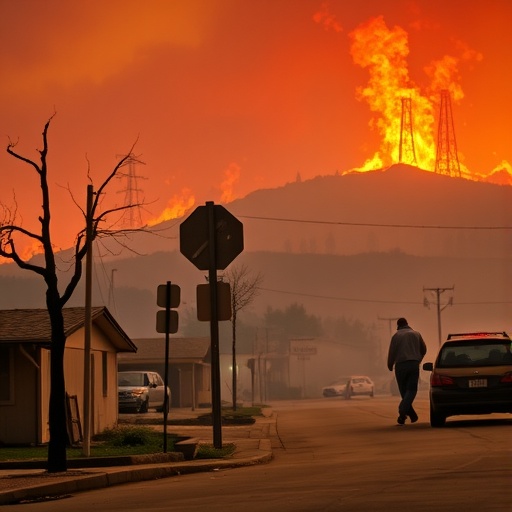
Los Angeles County residents living in evacuation warning or order zones during the 2025 wildfires experienced heightened levels of anxiety and depression almost a year later, according to new USC research. The effects were greatest among those already facing social and economic hardship.  

The January 2025 wildfires were some of the most devastating in California history, killing at least 31 people, forcing more than 200,000 residents to evacuate and causing tens of billions of dollars in damage. The fires also heightened concerns about deepening inequality in the region, with their greatest impacts in two starkly different communities: the Pacific Palisades, a predominately white and wealthy neighborhood, and Altadena, a predominately Black neighborhood with people from a range of income levels.

In a long-term study of mental health in the region, USC researchers found that Angelenos who lived in areas ordered to evacuate or prepare to evacuate experienced a 12% greater increase in self-reported symptoms of anxiety and depression in the following months, compared with Angelenos who lived elsewhere. The increase was concentrated among residents who live in low-income households, struggle with housing costs, have pre-existing mental health challenges or have limited access to recovery support such as temporary housing or financial assistance.

While white, higher-income and college-educated residents were more likely to live in an evacuation zone, residents with precarious social, financial, or housing situations experienced disproportionately greater psychological impacts from the fires.  

A growing body of research on wildfires points to potentially severe long-term mental health consequences, including elevated rates of post-traumatic stress disorder and suicide. The new study findings suggest that policies to bolster housing security and community support networks, such as local nonprofits and volunteer groups, could help reduce the mental health impacts of wildfires.  

“As cities and suburbs prepare for the growing risk of wildfires, mental health must be a critical component of their planning. Ensuring that disadvantaged populations have access to essential supports like housing or transportation can improve community resilience,” said lead author Kyla Thomas, a research scientist with the Center for Economic and Social Research (CESR) at the USC Schaeffer Institute for Public Policy & Government Service.

The study, published July 29 in JAMA Network Open, analyzed data from 1,510 L.A. County residents participating in the LABarometer survey, which is maintained by CESR and has tracked social and economic conditions in the region since 2019. Researchers examined monthly self-reported data on anxiety and depression symptoms from the year before and after the wildfires, along with a pre-fire survey on livability and affordability issues and a survey on wildfire housing impacts conducted immediately after the fires were contained. They linked participants’ responses with neighborhood data to measure how close they lived to an evacuation zone.

Previous studies on wildfires’ mental health impacts have typically measured psychological distress in the aftermath of a wildfire disaster. By continuously tracking individuals over an extensive period before and after the wildfires, the study provides stronger evidence that the fires were responsible for worsening mental health symptoms.

About the study

The other authors are Evan Sandlin, Marco Angrisani, Jiyoon Kim and Margaret Gatz, all from USC.


Journal

JAMA Network Open

DOI

10.1001/jamanetworkopen.2026.26014

Article Title

Social Vulnerability, Wildfire Exposure, and Mental Health

Article Publication Date

29-Jul-2026


Media Contact

Jason Millman
University of Southern California
jmillman@usc.edu
Cell: 213-821-0099


Journal
JAMA Network Open
DOI
10.1001/jamanetworkopen.2026.26014

Journal

JAMA Network Open

DOI

10.1001/jamanetworkopen.2026.26014

Article Title

Social Vulnerability, Wildfire Exposure, and Mental Health

Article Publication Date

29-Jul-2026


Tags

  • /Physical sciences/Earth sciences/Natural disasters/Wildfires
  • /Social sciences/Psychological science/Clinical psychology/Mental health
  • /Social sciences/Psychological science/Clinical psychology/Mental health/Psychological stress
  • /Social sciences/Psychological science/Personality psychology/Emotions/Anxiety
  • /Social sciences/Social research/Social surveys
  • /Physical sciences/Earth sciences/Natural disasters
Tags: addressing mental health needsCommunity resilience and mental health post-wildfiresImpact of wildfires on low-income communities in LALong-term emotional effects of 2025 LA wildfiresLong-term trauma from California wildfiresLos Angeles County evacuation psychological effectsMental health challenges among vulnerable wildfire residentsPsychological consequences of evacuation during California wildfiresSocioeconomic disparities in wildfire recoveryUSC study on wildfire-induced anxiety and depressionWildfire disaster mental health disparitiesWildfire mental health impacts
Share26Tweet16
Previous Post

Suicide deaths in South Korea could shift toward older, never-married, tertiary-educated men

Next Post

Just launched: VALOR’s open-access knowledge hub for pollinator conservation

Related Posts

Health and economic impacts of improved air quality from transitioning global shipping energy to hydrogen
Earth Science

Health and economic impacts of improved air quality from transitioning global shipping energy to hydrogen

July 29, 2026
Ancient Shipwreck Cargo Uncovers Unexpected 1600s Global Trade Secrets
Earth Science

Ancient Shipwreck Cargo Uncovers Unexpected 1600s Global Trade Secrets

July 29, 2026
Hybrid bioelectrochemical system boosts C, N, and P removal for negative carbon wastewater
Earth Science

Hybrid bioelectrochemical system boosts C, N, and P removal for negative carbon wastewater

July 29, 2026
6.5 Million Americans Reside in Landslide Hazard Zones
Earth Science

6.5 Million Americans Reside in Landslide Hazard Zones

July 29, 2026
Widespread Tropical Cyclones During the Late Paleozoic Ice Age
Earth Science

Widespread Tropical Cyclones During the Late Paleozoic Ice Age

July 29, 2026
Extended Autumn Growing Season Drives Major Increases in Earth Greening
Earth Science

Extended Autumn Growing Season Drives Major Increases in Earth Greening

July 29, 2026
Next Post
Just launched: VALOR’s open-access knowledge hub for pollinator conservation

Just launched: VALOR's open-access knowledge hub for pollinator conservation

  • Mothers who receive childcare support from maternal grandparents show more

    Mothers who receive childcare support from maternal grandparents show more parental warmth, finds NTU Singapore study

    27656 shares
    Share 11059 Tweet 6912
  • University of Seville Breaks 120-Year-Old Mystery, Revises a Key Einstein Concept

    1061 shares
    Share 424 Tweet 265
  • Bee body mass, pathogens and local climate influence heat tolerance

    682 shares
    Share 273 Tweet 171
  • Researchers record first-ever images and data of a shark experiencing a boat strike

    546 shares
    Share 218 Tweet 137
  • Groundbreaking Clinical Trial Reveals Lubiprostone Enhances Kidney Function

    531 shares
    Share 212 Tweet 133
Science

Embark on a thrilling journey of discovery with Scienmag.com—your ultimate source for cutting-edge breakthroughs. Immerse yourself in a world where curiosity knows no limits and tomorrow’s possibilities become today’s reality!

RECENT NEWS

  • Global crop models underestimate how rice responds to extreme heat
  • Earliest siphuncle-bearing cephalopod from the early Cambrian
  • B cell CD19 is transferred between immune cells in mice and humans
  • Internet users are crabbier, more stressed, and more tempted than the rest of us

Categories

  • Agriculture
  • Anthropology
  • Archaeology
  • Athmospheric
  • Biology
  • Biotechnology
  • Blog
  • Bussines
  • Cancer
  • Chemistry
  • Climate
  • Earth Science
  • Editorial Policy
  • Marine
  • Mathematics
  • Medicine
  • Pediatry
  • Policy
  • Psychology & Psychiatry
  • Science Education
  • Social Science
  • Space
  • Technology and Engineering

Subscribe to Blog via Email

Enter your email address to subscribe to this blog and receive notifications of new posts by email.

Join 5,147 other subscribers

© 2025 Scienmag - Science Magazine

Welcome Back!

Login to your account below

Forgotten Password?

Retrieve your password

Please enter your username or email address to reset your password.

Log In
No Result
View All Result
  • HOME
  • SCIENCE NEWS
  • CONTACT US

© 2025 Scienmag - Science Magazine

Discover more from Science

Subscribe now to keep reading and get access to the full archive.

Continue reading
