


Organ transplantation has long been the definitive treatment for end-stage organ failure, but its reach has always been constrained by a stubborn shortage of usable donor organs. For more than half a century, the standard of preservation has barely changed: organs are flushed with cold solution and stored on ice, a technique known as static cold storage. Cooling slows cellular metabolism and delays injury, but it does not prevent it. During cold ischemia, residual metabolic activity progressively depletes adenosine triphosphate, the cell’s energy currency, while toxic byproducts accumulate and cellular homeostasis breaks down. When the organ is reconnected to a recipient’s blood supply, this metabolic debt comes due in the form of ischemia-reperfusion injury, a cascade of oxidative stress, mitochondrial dysfunction, endothelial damage, and inflammatory activation that contributes to both early and long-term allograft dysfunction.
Those limitations were tolerable when donor pools consisted mostly of young, healthy donors. They are far less tolerable today. The modern era of extended criteria donors and donation after circulatory death, or DCD, has brought organs into the pipeline that are far more susceptible to ischemic insult, with unpredictable post-transplant outcomes. A new review published in Frontiers in Transplantation by a team of transplant surgeons at the University of California San Diego synthesizes the rapid advances in ex vivo machine perfusion, the technology that is shifting the field from passive preservation toward active organ support, evaluation, resuscitation, and repair. The authors argue that machine perfusion represents nothing less than a paradigm shift, one with the potential to expand the donor pool and improve graft outcomes across kidney, liver, and pancreas transplantation.
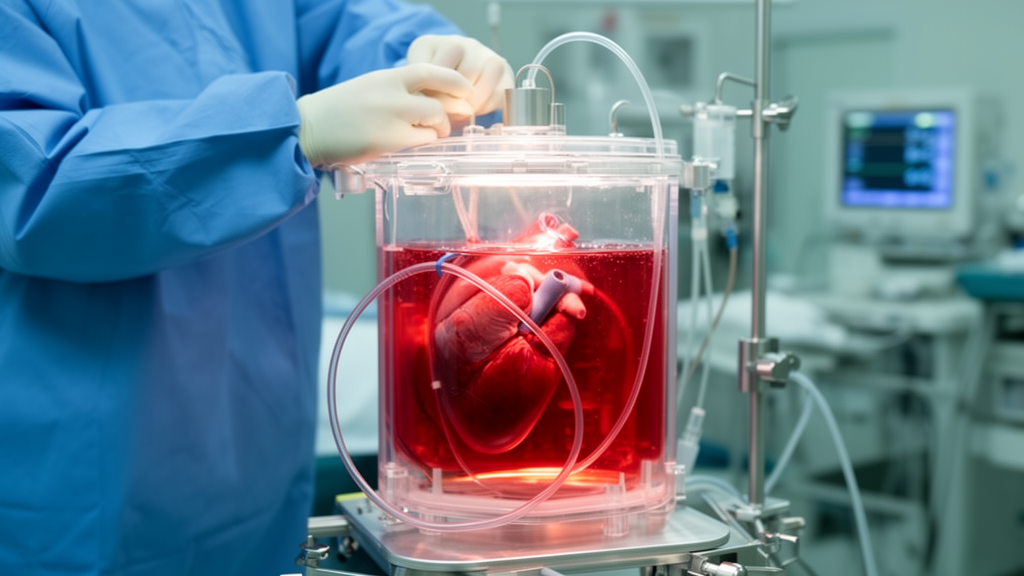
Machine perfusion works by actively circulating perfusate through an organ under controlled conditions, maintaining microvascular patency, clearing toxic metabolites from tissue, preserving endothelial cell integrity, and providing real-time hemodynamic data such as vascular flow and resistance. Conceptually, it transforms the organ from a static object in a cooler into a dynamic system that can be evaluated and potentially treated before implantation. The field has organized itself around distinct temperature-based strategies, each with different physiologic goals. Hypothermic machine perfusion, or HMP, preserves organs at 4 to 12 degrees Celsius while providing continuous perfusion, preserving mitochondrial activity, maintaining cellular ATP levels, limiting endothelial damage, and attenuating reactive oxygen species and damage-associated molecular patterns. In liver allografts, hypothermic oxygenated machine perfusion, known as HOPE, perfuses the organ with oxygenated preservation solution, while dual hypothermic oxygenated machine perfusion, or DHOPE, simultaneously perfuses both the hepatic artery and portal vein to protect the biliary tree.
At the other end of the temperature spectrum, normothermic machine perfusion, or NMP, maintains organs at physiologic temperature of 34 to 37 degrees Celsius, supporting active cellular metabolism. By delivering oxygen, nutrients, and metabolic substrates under near-physiologic conditions, NMP enables real-time assessment of organ viability and function, extends preservation times, and permits transportation across longer distances with greater logistical flexibility. Between the two extremes, subnormothermic machine perfusion and controlled oxygenated rewarming, or COR, transition organs gradually from hypothermic to warmer conditions between 20 and 34 degrees Celsius. By restoring mitochondrial activity in a controlled manner, these intermediate strategies reduce the metabolic stress of abrupt reperfusion. COR is increasingly used in the clinical back-to-base protocol that combines DHOPE with NMP, restoring mitochondrial function and minimizing ischemia-reperfusion injury after static cold storage during transport to the recipient hospital.
In kidney transplantation, HMP is the most widely adopted perfusion strategy in clinical practice, with studies demonstrating reduced risk of delayed graft function and improved graft survival, particularly for higher-risk grafts. The benefits have driven formal national adoption across several European countries. The Netherlands demonstrated that national implementation reduced delayed graft function rates from 43.7 percent to 38.2 percent. Belgium’s 2022 national mandate, standardizing HMP for all extended criteria and DCD kidneys, not only increased rates of DCD transplantation but generated over 3.5 million euros in healthcare cost savings through reduced dialysis utilization. Switzerland has similarly established HMP as the standard of care for DCD and older donors after brain death. In the United States, national adoption has not occurred, yet approximately 53 percent of deceased donor kidneys are placed on HMP, with significant variation across transplant centers and organ procurement organizations. That inconsistency likely leaves clinical and economic benefits unrealized for a meaningful proportion of higher-risk grafts.
The rising rate of deceased donor kidney discard, exceeding 28 percent in recent years, has been a major driving factor for the search for better assessment tools. Kidney allograft evaluation has historically relied on donor history, pre-recovery function, and frozen-section biopsy, which correlates poorly with post-transplant allograft function. Machine perfusion parameters such as renal blood flow and vascular resistance offer more dynamic information. A 2009 randomized trial of 672 kidneys found that HMP significantly reduced delayed graft function and improved one-year, three-year, and ten-year graft survival compared to static cold storage. Elevated initial and terminal renal resistance of 0.4 mmHg/mL/min or higher, and lower baseline arterial flow below 100 mL/min, predict increased rates of delayed graft function, while terminal renal resistance is associated with five-year graft survival, particularly for moderate and high-KDPI grafts. No single HMP parameter should drive organ discard, the authors caution; HMP parameters should continue to be combined with clinical variables to guide decision-making.
Centralized assessment centers are emerging as a powerful new platform for rescuing declined kidneys. Between 2024 and 2025, 158 deceased donor kidneys declined for transplantation after exhausting standard allocation were evaluated with subnormothermic acellular machine perfusion at the first centralized kidney Assessment and Repair Center in the United States. Using a non-blood-based, oxygenated perfusate, the kidneys were rewarmed from 8 to 35 degrees Celsius and assessed for transplant suitability over 120 minutes. Ninety percent were subsequently reallocated and transplanted across 12 U.S. transplant centers, with total preservation times extending to 68 hours. In July 2026, a separate report described 104 declined kidneys rescued following two hours of normothermic machine perfusion at a centralized perfusion service, of which 90 percent were transplanted and which demonstrated lower rates of delayed graft function than non-perfused kidneys transplanted at the same centers during the study period. Kidney NMP itself is emerging as an investigational approach, with the phase 1 NKP1 trial demonstrating safety and feasibility with 100 percent 30-day graft survival, and emerging biomarkers such as glutathione S-transferase, liver-type fatty acid binding protein, interleukin-18, and lactate dehydrogenase in perfusate strongly associated with post-transplant outcomes.
Liver transplantation has emerged as the leading domain for innovation in machine perfusion, driven by the organ’s susceptibility to ischemia-reperfusion injury and the need to safely expand utilization of higher-risk grafts. Liver allografts from DCD donors are associated with increased risk of non-anastomotic biliary strictures due to biliary ischemia-reperfusion injury. Machine perfusion is increasingly integrated into clinical practice for extended preservation, organ conditioning and repair, and viability assessment. In 2023, 12.5 percent of all livers and over 37 percent of DCD livers underwent machine perfusion preservation prior to transplant. The 2021 multicenter randomized controlled trial comparing HOPE with static cold storage in DCD livers found that HOPE significantly reduced non-anastomotic biliary strictures, lowered the risk of post-reperfusion syndrome, and decreased early allograft dysfunction. In early 2026, HOPE received FDA clearance for commercial use in the United States following the Bridge to Hope trial, which associated HOPE with reduced early allograft dysfunction, shorter hospital length of stay, and less severe biopsy-proven rejection compared to static cold storage liver allografts.
The evidence for normothermic machine perfusion in liver transplantation is equally convincing. The Consortium for Organ Preservation in Europe, the first multicenter trial comparing NMP to standard cold storage across seven European transplant centers in 2016, demonstrated that NMP was associated with 50 percent lower levels of graft injury, 50 percent lower rate of organ discard, and 54 percent longer average preservation time, with no difference in patient or graft survival or biliary complications. The 2016 to 2018 VITTAL trial evaluated 31 discarded livers from UK transplant centers that met high-risk criteria, perfusing them on NMP and transplanting those that met viability criteria, with 82 percent five-year patient survival and 72 percent five-year graft survival. NMP has even been used to extend preservation times to up to 68 hours of ex vivo perfusion followed by transplantation without graft rejection or bile injury at one-year follow-up. Two U.S.-based multicenter randomized controlled trials, the PROTECT trial using the TransMedics Organ Care System Liver across 20 programs and a second trial using the OrganOx Metra device across 15 programs, further demonstrated reduced early allograft dysfunction, reduced ischemic biliary complications, and increased organ utilization from DCD donors, with the greatest benefit for marginal donors.
Emerging directions suggest the field is only beginning to realize its potential. The isolated organ on machine perfusion is an ideal platform for therapeutic intervention, including mesenchymal stem cells, extracellular vesicles, gene therapy, and pharmacologic agents delivered directly to the perfusate to reduce inflammation and ischemia-reperfusion injury while minimizing off-target effects. In porcine models, anti-inflammatory therapy reduced the inflammatory response of cytokines such as tumor necrosis factor and interleukin-6, while defatting agents added to the perfusate of steatotic livers on NMP led to significant reduction of hepatocellular lipid content, prompting the ongoing DeFat randomized clinical trial in the UK. Fibrinolytic treatment of livers on perfusion with alteplase and fresh frozen plasma led to increased D-dimer release in perfusate, suggesting clearance of occult fibrin, and eight of the nine alteplase-treated and transplanted livers were free of cholangiopathy. Artificial intelligence and machine learning are being rapidly adopted as well, with recent studies showing AI can predict graft failure after liver transplantation and predict progression of DCD donors to reduce futile procurement rates. As the field evolves, the authors emphasize that refining perfusion protocols, improving composite viability assessment, and determining the timing of therapeutic interventions will be essential to achieving routine, safe, and equitable adoption of machine perfusion in transplantation.
Subject of Research: Machine perfusion advances reshape abdominal organ transplantation
Article Title: Advancements in ex vivo machine perfusion for abdominal organ transplantation
Article References: Olaso, D. G., Bendersky, V. A., Alexander, W. D., Brubaker, A. L., Than, P. A., & Schnickel, G. T. (2026). Advancements in ex vivo machine perfusion for abdominal organ transplantation. Frontiers in Transplantation, 5, Article 1919998. https://doi.org/10.3389/frtra.2026.1919998
Image Credits: AI Generated
DOI: 10.3389/frtra.2026.1919998
Keywords: Advancements, vivo, machine, perfusion, abdominal, organ, transplantation, scientific research
Cite Scienmag News
Drew Townsend. (October 17, 2026). Advancements in ex vivo machine perfusion for abdominal organ transplantation. Scienmag. https://scienmag.com/advancements-in-ex-vivo-machine-perfusion-for-abdominal-organ-transplantation/
Drew Townsend. "Advancements in ex vivo machine perfusion for abdominal organ transplantation." Scienmag, 17 October 2026, https://scienmag.com/advancements-in-ex-vivo-machine-perfusion-for-abdominal-organ-transplantation/. Accessed 17 October 2026.
Drew Townsend. "Advancements in ex vivo machine perfusion for abdominal organ transplantation." Scienmag. October 17, 2026. https://scienmag.com/advancements-in-ex-vivo-machine-perfusion-for-abdominal-organ-transplantation/


