


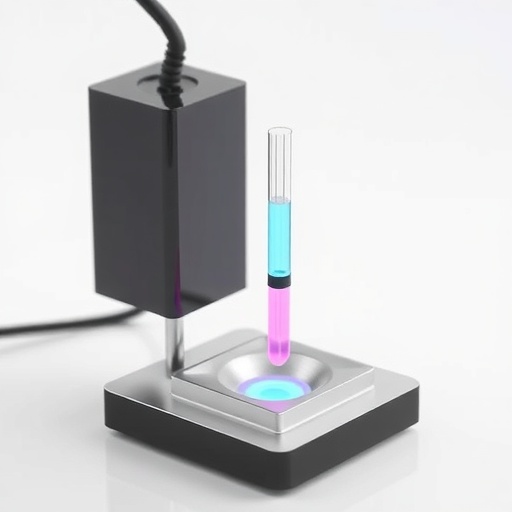
Acoustics is moving beyond concert halls and medical imaging suites to become a potential tool for manipulating living matter itself. A new review in Nature Reviews Bioengineering examines how acoustofluidics—an emerging technology that combines sound waves with fluidic systems—could help transform laboratory demonstrations into clinically useful devices for diagnostics, therapy and physiological monitoring. The field uses engineered acoustic fields to move, concentrate, separate or position cells, extracellular vesicles, biomolecules and even tissue samples without direct physical contact.
The central appeal of acoustofluidics lies in its ability to control biological material through mechanical forces generated by sound. In a typical device, piezoelectric transducers convert electrical signals into high-frequency vibrations that travel through a microfluidic channel. These vibrations can form standing waves or generate acoustic streaming, a fluid motion driven by sound-induced stresses. Cells and particles experience acoustic radiation forces that depend on their size, density, compressibility and the properties of the surrounding fluid. By tuning frequency, pressure and channel geometry, researchers can guide specific biological components with considerable precision.
This contact-free approach could overcome several limitations of conventional biomedical handling methods. Centrifugation, filtration and magnetic separation often require labels, substantial sample preparation or physical contact with collection surfaces. Acoustofluidic systems, by contrast, can manipulate native samples while reducing the risk of contamination, mechanical damage and unwanted activation of sensitive cells. The technology can also operate with very small sample volumes, making it attractive for liquid biopsies, rare-cell analysis and decentralized testing where blood or other biological fluids must be processed quickly.
One major healthcare workflow identified in the review is the isolation and manipulation of biomarkers. Acoustic fields can concentrate cells, bacteria, extracellular vesicles and other particles from complex fluids, potentially improving the detection of disease-associated signals. Extracellular vesicles are especially interesting because they carry proteins, lipids and nucleic acids released by cells, offering molecular clues about cancer, infection and other diseases. Acoustofluidic enrichment could help researchers recover these vesicles without relying exclusively on antibodies or high-speed centrifuges, although specificity, throughput and standardized performance remain important technical challenges.
The same principles are being explored for point-of-care diagnostics. A compact acoustofluidic cartridge could, in principle, accept a patient sample, separate relevant targets, mix reagents and prepare material for optical, electrical or molecular analysis. Integrating these steps into a single platform would be essential for use outside specialized laboratories. The review emphasizes that proof-of-concept devices are not enough: clinically relevant systems must deliver reproducible results across different samples, operators and manufacturing batches. They must also be simple to use, resistant to clogging and compatible with established diagnostic workflows.
Acoustofluidics may also influence therapeutic medicine by enabling the controlled handling of cells and biological agents before or during treatment. Acoustic forces could assist in cell sorting, concentration and formulation, potentially supporting cell-based therapies or the preparation of therapeutic materials. In vivo applications represent an even more demanding frontier. Acoustic fields could be designed to influence particles, fluids or tissues inside the body, but safety depends on controlling energy deposition, heating, cavitation and unintended mechanical effects. Any therapeutic use would require careful validation of dose, targeting, tissue response and long-term biological consequences.
The review further highlights wearable and implantable acoustic systems as a route toward continuous physiological monitoring. Flexible acoustic components could be integrated into devices that interact with skin, blood vessels or implanted tissues. Such systems might eventually monitor changes in fluid composition, pressure or cellular behavior while reducing the need for repeated blood draws or hospital-based measurements. Engineering these platforms requires more than miniaturizing a laboratory chip. Devices must remain stable during movement, operate with limited power, resist biofouling and maintain reliable acoustic coupling between hard electronics, soft tissue and biological fluids.
Despite rapid progress, the path to clinical translation remains difficult. Many acoustofluidic studies are built around custom components, specialized laboratory equipment and device geometries that are difficult to reproduce at scale. Small changes in channel dimensions, transducer placement, material properties or operating frequency can alter acoustic fields and therefore change biological performance. Standardized components, reference protocols and agreed reporting methods will be necessary to compare results between laboratories and determine whether a device performs consistently under clinically realistic conditions.
Regulation presents another major obstacle. Acoustofluidic products may combine fluidic cartridges, electronic drivers, software, sensors and biological processing steps, creating complex questions about classification and quality control. Developers will need to demonstrate not only analytical accuracy, but also manufacturing consistency, electrical and biological safety, sterilization compatibility and robustness in real-world use. The review argues that translation should be considered from the beginning of device development, with clinicians, engineers, manufacturers and regulatory specialists working together rather than treating approval as a final hurdle.
By organizing the field around biomarker manipulation, point-of-care diagnostics, in vivo therapeutics, wearable and implantable systems, and complete laboratory-to-clinic translation pathways, the authors present acoustofluidics as more than a collection of clever microfluidic experiments. Its future will depend on whether researchers can turn precise acoustic control into dependable, integrated and clinically meaningful systems. If those challenges are addressed, sound-driven manipulation could become an important layer of medical technology, quietly moving biological material through diagnostic cartridges, therapeutic platforms and monitoring devices without ever touching it directly.
Cite Scienmag News
Ophelia Keating. (August 10, 2026). Acoustofluidics Brings Sound-Based Fluid Control Closer to Clinical Medicine. Scienmag. https://scienmag.com/acoustofluidics-brings-sound-based-fluid-control-closer-to-clinical-medicine/
Ophelia Keating. "Acoustofluidics Brings Sound-Based Fluid Control Closer to Clinical Medicine." Scienmag, 10 August 2026, https://scienmag.com/acoustofluidics-brings-sound-based-fluid-control-closer-to-clinical-medicine/. Accessed 3 September 2026.
Ophelia Keating. "Acoustofluidics Brings Sound-Based Fluid Control Closer to Clinical Medicine." Scienmag. August 10, 2026. https://scienmag.com/acoustofluidics-brings-sound-based-fluid-control-closer-to-clinical-medicine/


