


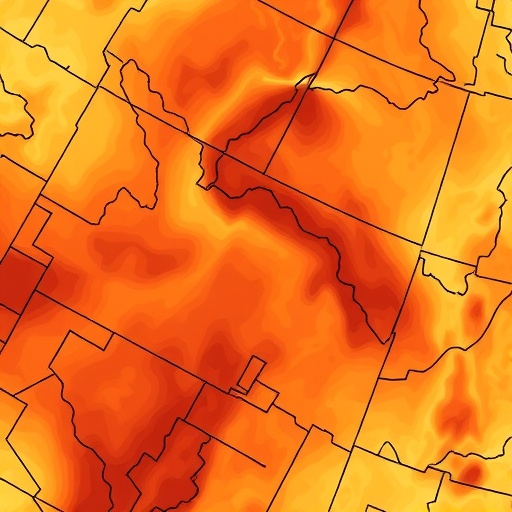
In the compelling frontier of climate science, researchers have grappled with the formidable challenge of predicting soil moisture droughts on subseasonal time scales. Achieving forecast skill at these extended horizons has eluded conventional models due to the inherent complexity of land-atmosphere interactions and the chaotic nature of weather systems. Now, a groundbreaking study published in Nature Communications ushers in a transformative deep learning-dynamic modeling framework that promises unprecedented skill in subseasonal soil moisture drought forecasts.
Soil moisture plays a pivotal role in terrestrial ecosystems, agriculture, and hydrological cycles. Persistent deficits can precipitate severe drought conditions, undermining crop yields, exacerbating wildfire risks, and disrupting water supplies across large geographic expanses. Early and skillful forecasts of soil moisture deficits are thus critical for proactive drought mitigation strategies, resource management, and policy planning. Historically, however, predicting soil moisture weeks to months ahead has suffered from notable uncertainty due to limitations in process understanding and model resolution.
The research team, led by Lesinger and Tian, pioneered an approach that harnesses the complementary strengths of deep learning and dynamic Earth system models. Dynamic models simulate physical processes governing climate variables but often struggle with parameterization errors and computational constraints. Deep learning, by contrast, excels at detecting intricate nonlinear patterns from vast datasets but lacks explicit physical interpretability. By integrating these paradigms, the authors developed hybrid models capturing both the mechanistic and data-driven subtleties controlling soil moisture variability on subseasonal scales.
A core breakthrough resides in the model architecture itself. The researchers designed a novel hybrid neural network framework that assimilates outputs from atmospheric circulation models together with observed soil moisture records. Training on extensive historical datasets spanning multiple decades enabled the model to learn latent spatiotemporal dependencies otherwise elusive to standard statistical or purely mechanistic methods. This synergy significantly enhanced lead-time skill and predictive reliability at forecast horizons extending up to six weeks.
Benchmarking experiments demonstrated remarkable improvements over prevailing subseasonal forecasting systems. In particular, the hybrid model captured emerging drought onset signals well ahead of traditional forecasts, improving anomaly correlation scores by upwards of 20%. Crucially, skill gains extended to diverse climatic regions, including drought-prone agricultural zones and semi-arid ecosystems, bolstering the model’s generalizability and operational promise.
Meteorologically, drought persistence is governed by complex soil–atmosphere feedback loops modulated by precipitation variability, evapotranspiration rates, and temperature anomalies. The novel deep learning-dynamic approach effectively deciphers these intertwined influences by encoding temporal memory and spatial heterogeneity in soil moisture patterns. This nuanced understanding enables early detection of subtle moisture trends that often presage longer-term drought development, creating vital lead-time for adaptive measures.
Moreover, interpretability analyses shed light on how the hybrid model weighs various predictors, revealing that antecedent rainfall deficits and upward shifts in surface temperature anomalies prominently inform subseasonal drought forecasts. These insights harmonize well with known physical drought drivers, lending credibility and scientific rigor to the model’s predictive rationale. In addition, the approach dynamically adjusts to evolving climatic baselines imposed by ongoing anthropogenic climate change, an increasingly important capability.
The potential real-world applications of this research are vast and impactful. Agricultural stakeholders could leverage the skillful forecasts to optimize irrigation schedules, safeguard crop resilience, and minimize economic losses. Governments and water management authorities may deploy the model outputs to inform reservoir releases, drought warning systems, and emergency preparedness. In fire-prone landscapes, better foresight of soil moisture deficits directly correlates with wildfire risk reduction, enabling more focused mitigation efforts.
Technologically, this work exemplifies a new paradigm for Earth system forecasting that judiciously melds physics-based modeling with artificial intelligence. Rather than treating deep learning as a black-box replacement, the researchers harnessed it as a complementary tool enriching mechanistic understanding. This philosophy paves the way for future innovations that might incorporate other environmental variables, such as vegetation health or snowpack dynamics, into integrated subseasonal prediction frameworks.
Challenges remain, of course. The model’s dependency on high-quality observational data could limit applicability in regions with sparse soil moisture monitoring infrastructure. Efforts to incorporate remote sensing data and enhance data assimilation techniques are underway to address these gaps. Furthermore, continual model retraining and validation will be essential to maintain forecast skill amidst evolving climate variability and extremes.
This advance heralds a decisive step toward closing the prediction gap at subseasonal time scales, a frontier where enhanced forecast skill has long been a scientific and societal aspiration. The ability to predict drought conditions weeks in advance, as demonstrated by Lesinger and Tian, opens new horizons for climate resilience and resource sustainability worldwide. Their study also energizes interdisciplinary collaborations among hydrologists, meteorologists, machine learning experts, and stakeholders aiming to translate scientific breakthroughs into actionable knowledge.
As climate extremes intensify with global warming, innovative predictive tools such as this deep learning-dynamic hybrid model become indispensable in navigating uncertainty. This research exemplifies how the confluence of data science and domain expertise can unlock new predictive capabilities unattainable by either approach in isolation. Future work may extend these methods across other hydrometeorological extremes, refining early warning systems to safeguard human and ecological systems.
In summary, the fusion of deep learning with physical modeling provides a powerful, skillful approach to forecast soil moisture droughts on subseasonal scales. Through rigorous training, validation, and interpretability efforts, the study demonstrates that hybrid models can reveal precursors to drought development weeks in advance with high confidence. This work is poised to revolutionize drought prediction and management, equipping societies to face the increasing challenges posed by a changing climate with foresight and precision.
Cite Scienmag News
Blake Davidson. (August 12, 2025). Accurate Subseasonal Soil Moisture Drought Forecasts via Deep Learning. Scienmag. https://scienmag.com/accurate-subseasonal-soil-moisture-drought-forecasts-via-deep-learning/
Blake Davidson. "Accurate Subseasonal Soil Moisture Drought Forecasts via Deep Learning." Scienmag, 12 August 2025, https://scienmag.com/accurate-subseasonal-soil-moisture-drought-forecasts-via-deep-learning/. Accessed 3 September 2026.
Blake Davidson. "Accurate Subseasonal Soil Moisture Drought Forecasts via Deep Learning." Scienmag. August 12, 2025. https://scienmag.com/accurate-subseasonal-soil-moisture-drought-forecasts-via-deep-learning/


