


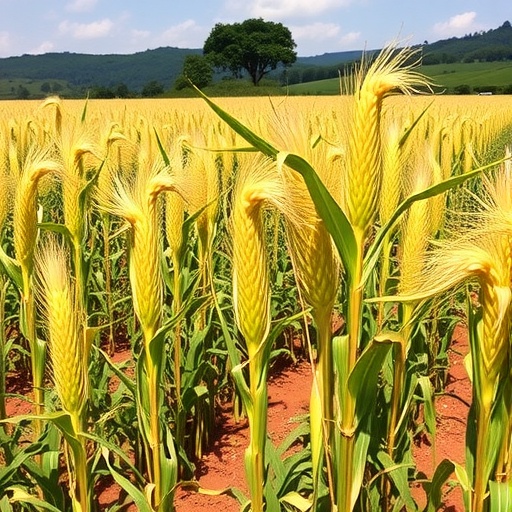
As the agricultural landscape continues to evolve, the focus on maize production in Tanzania reveals a complex interaction between climate, geography, and human efforts. The newly published study by Nassary and Magubika underscores significant spatiotemporal trends in maize production that merit serious consideration from policy makers, agronomists, and food security advocates alike. This research illuminates seasonal variability and production yields, providing a comprehensive understanding of the factors that influence the success of maize farming in Tanzania.
Maize serves as a staple crop not only in Tanzania but across much of Sub-Saharan Africa. The importance of this crop cannot be overstated, as it provides sustenance and economic stability for millions of households. The study employs advanced analytical techniques to dissect the variations in maize yield over time, offering a granular view of agricultural performance and the challenges farmers face. Through meticulous data collection from climatic and agricultural datasets, the authors paint a vivid picture of maize production trends over the years.
One of the noteworthy findings of this research is the identification of specific climatic patterns that significantly impact maize yields. Variations in rainfall and temperature are pivotal components influencing agricultural productivity. The study identifies periods of drought and flooding that have historically disrupted the growth of maize, causing farmers to grapple with unpredictability in their harvests. The implications extend beyond immediate crop yields, affecting food security and economic stability for rural communities that rely heavily on maize cultivation.
Moreover, the authors highlight the geographic disparities within Tanzania regarding maize production. Certain regions demonstrate remarkable resilience and adaptability, while others struggle to maintain consistent output. This disparity often correlates with access to resources such as advanced agricultural techniques, irrigation facilities, and local agricultural policies that prioritize certain regions over others. By mapping out these areas, the study provides valuable insight for targeted interventions aimed at bolstering the agricultural sector.
The research delves into the socio-economic factors that exacerbate agricultural challenges. Smallholder farmers, who make up a significant portion of Tanzania’s agricultural labor force, often lack access to the latest farming techniques and technologies. The authors argue that the adoption of modern agricultural practices could potentially mitigate the adverse effects of climatic variability. Therefore, investment in education and resource allocation is crucial for improving maize production in vulnerable areas.
Nassary and Magubika also address the role of climate change in the agricultural sector. With shifting weather patterns and an increase in extreme weather events, farmers must adapt to the new normal. The study underscores the urgency for comprehensive climate strategies that resonate with local agricultural practices. Integrating climate-smart agriculture into the farming calendar can empower farmers to withstand unpredictable weather, thereby ensuring that maize remains a reliable food source in Tanzania.
Further, the role of government policy in shaping maize production cannot be overlooked. The authors advocate for policies that support sustainable farming practices while providing a safety net for farmers facing climate-related challenges. Collaborations between governmental organizations, NGOs, and local communities can create a synergistic approach to addressing food security, ultimately resulting in enhanced resilience within the agricultural sector.
As the discussion on maize production illustrates, agricultural practices must evolve in tandem with environmental realities. Innovations in crop resilience and agricultural methods must be prioritized if farmers are to thrive in an increasingly unpredictable climate landscape. The call to action is clear: both public and private sectors must rally together to support research and implement strategies that deliver tangible benefits to farmers.
The findings from this research are not just of academic interest; they possess practical implications that can shape the future of agricultural production in Tanzania. Understanding spatiotemporal trends in maize yields allows for informed decision-making at multiple levels, ensuring that best practices can be promoted and replicated where they show promise. In doing so, stakeholders will contribute to the overarching goals of food security and economic well-being for millions of Tanzanians who depend on maize.
It is also crucial to consider the myriad of interconnected global forces impacting local agriculture. International markets, global warming, and migratory patterns of pests and diseases all contribute to the challenges faced by local farmers. Future research, as indicated by the authors, should aim to understand these connections better, providing a more holistic perspective of agricultural production.
The authors conclude with a call for sustained research and dialogue among experts, policymakers, and practitioners to navigate the complexities of agricultural resilience and sustainability. Efforts must be directed toward creating sustainable agricultural policies, improving farmer education, and facilitating access to advanced agricultural technologies. The time for action is now, and it is essential that all stakeholders collaborate to ensure that maize production remains robust, adaptable, and resilient in the face of an uncertain future.
Ultimately, the study by Nassary and Magubika serves as a critical reminder of the intricate relationship between agriculture, climate, and society. By unraveling the spatiotemporal trends in maize production, the authors not only highlight urgent issues but also open the door for innovative solutions that can lead the way toward a more food-secure Tanzania.
Nassary, E.K., Magubika, A.J. Spatiotemporal trends in maize production and seasonal variability in Tanzania.
Discov Agric 3, 160 (2025). https://doi.org/10.1007/s44279-025-00260-1
Cite Scienmag News
Alan Morgan. (September 17, 2025). Maize Production Trends and Seasonality in Tanzania. Scienmag. https://scienmag.com/maize-production-trends-and-seasonality-in-tanzania/
Alan Morgan. "Maize Production Trends and Seasonality in Tanzania." Scienmag, 17 September 2025, https://scienmag.com/maize-production-trends-and-seasonality-in-tanzania/. Accessed 31 August 2026.
Alan Morgan. "Maize Production Trends and Seasonality in Tanzania." Scienmag. September 17, 2025. https://scienmag.com/maize-production-trends-and-seasonality-in-tanzania/


