Wednesday, October 28, 2026
Science
No Result
View All Result
  • Login
  • HOME
  • SCIENCE NEWS
  • CONTACT US
  • HOME
  • SCIENCE NEWS
  • CONTACT US
No Result
View All Result
Scienmag
No Result
View All Result
Home Science News Biotechnology

Two-Stage Fermentation Turns Spent Coffee Grounds into Yeast Biomass and Active Hydrogenases

October 28, 2026
in Biology, Biotechnology
Gregory Coleman
By Gregory Coleman Scienmag Editorial Profile - Synthetic Biology
Reading Time: 3 mins read
0
Two-Stage Fermentation Turns Spent Coffee Grounds into Yeast Biomass and Active Hydrogenases

Two-Stage Fermentation Turns Spent Coffee Grounds into Yeast Biomass and Active Hydrogenases

65
SHARES
587
VIEWS
Share on FacebookShare on Twitter
ADVERTISEMENT

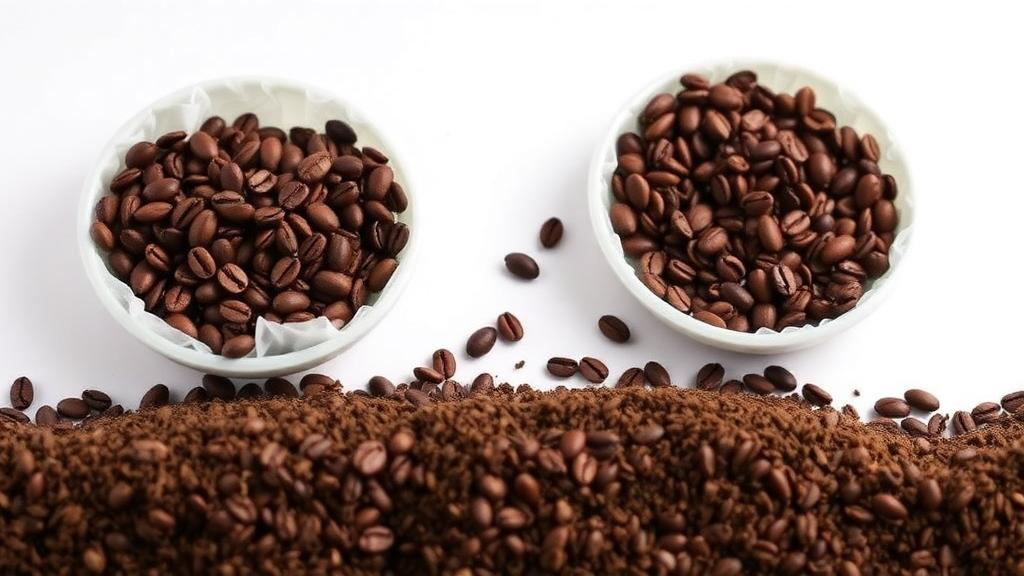
Researchers have developed a two-stage fermentation process that converts spent coffee grounds into a usable feedstock, first growing yeast on hydrolyzed coffee waste and then using the leftover medium to cultivate Escherichia coli and generate catalytically active [NiFe]-hydrogenases.

Spent coffee grounds, an abundant byproduct of coffee production, were first processed by thermal and acid hydrolysis to release fermentable sugars. When the yeast Saccharomyces cerevisiae ATCC 13007 was grown on these hydrolysates at different substrate concentrations, acid hydrolysis clearly outperformed thermal treatment in supporting yeast growth. The team selected a non-diluted hydrolysate from 10% acid-hydrolyzed spent coffee grounds as the optimal substrate for the first fermentation stage.

Performance in that stage was strong. Within 24 hours, the yeast consumed essentially all of the available glucose, roughly 150 millimolar, and produced about 240 millimolar of ethanol, which the authors interpret as evidence of efficient fermentative metabolism and carbon conversion from the coffee waste into a valuable product.

The yeast cultivation also substantially changed the chemistry of the remaining liquid. Total carbon in the hydrolysate rose from 0.1 to between 4.4 and 5.0 grams per liter, and the carbon-to-nitrogen ratio shifted dramatically, from 1:7 in the initial hydrolysate to 16:1 in the cell-free supernatant, where yeast cells had been removed, and 4:1 in the lysed cell supernatant, produced by disrupting the yeast cells. These altered media then served as the growth substrate for the second stage of the process.

In the second stage, the researchers used these residual media to cultivate E. coli BW25113 and to analyze hydrogenase activity. The lysed cell supernatant, diluted twofold, gave the best results on both counts: the highest biomass formation, at 0.58 grams of cell dry weight per liter, and the highest hydrogenase activity, measured at 110 to 120 milliunits per milligram after dilution. The cell-free supernatant, by contrast, supported lower bacterial growth and lower enzyme activity. The authors attribute the superior performance of the lysed cell supernatant to its more favorable carbon-to-nitrogen ratio and to improved nutrient availability released by breaking open the yeast cells.

Importantly, the hydrogenase activity measured was hydrogen-oxidizing activity, which confirmed that the enzymes produced were catalytically active [NiFe]-hydrogenases. According to the authors, this demonstrates that the two-stage approach can generate functional hydrogenases with potential applications in bioenergy and aerobic biocatalysis, alongside the microbial biomass produced in the second stage.

Overall, the study presents yeast-pretreated spent coffee ground hydrolysate as a substrate that supports ethanol production, bacterial biomass formation, and sustainable hydrogenase generation within a single integrated workflow. The work was carried out on laboratory strains in controlled cultures, and the reported outcomes are specific to the strains, hydrolysate preparations and dilutions tested. The article was published as an open-access paper on 9 October 2026, and the version shared at publication is subject to further editorial edits before the final version of record appears.

Subject of Research: Bioconversion of spent coffee grounds via two-stage fermentation with Saccharomyces cerevisiae and Escherichia coli

Article Title: Bioconversion of coffee waste via two-stage fermentation using Saccharomyces cerevisiae and Escherichia coli

Article References: Patvakanyan, N., Shirvanyan, A., Vanyan, L., Vassilian, A., Yegizbay, K., Poladyan, A., Bekbayev, K., & Trchounian, K. (2026). Bioconversion of coffee waste via two-stage fermentation using Saccharomyces cerevisiae and Escherichia coli. AMB Express. https://doi.org/10.1186/s13568-026-02126-1

Image Credits: AI Generated

DOI: 10.1186/s13568-026-02126-1

Keywords: spent coffee grounds, bioconversion, two-stage fermentation, Saccharomyces cerevisiae, Escherichia coli, hydrogenase, ethanol, hydrolysate, waste valorization, biomass, bioenergy, AMB Express

Cite Scienmag News

Gregory Coleman. (October 28, 2026). Two-Stage Fermentation Turns Spent Coffee Grounds into Yeast Biomass and Active Hydrogenases. Scienmag. https://scienmag.com/two-stage-fermentation-turns-spent-coffee-grounds-into-yeast-biomass-and-active-hydrogenases/

Gregory Coleman. "Two-Stage Fermentation Turns Spent Coffee Grounds into Yeast Biomass and Active Hydrogenases." Scienmag, 28 October 2026, https://scienmag.com/two-stage-fermentation-turns-spent-coffee-grounds-into-yeast-biomass-and-active-hydrogenases/. Accessed 28 October 2026.

Gregory Coleman. "Two-Stage Fermentation Turns Spent Coffee Grounds into Yeast Biomass and Active Hydrogenases." Scienmag. October 28, 2026. https://scienmag.com/two-stage-fermentation-turns-spent-coffee-grounds-into-yeast-biomass-and-active-hydrogenases/
Tags: active hydrogenase enzyme synthesisAMB Expressbio-based hydrogen productionbioconversionbioconversion of spent coffee groundsbioenergybiomassconversion of coffee waste into biofuelsEscherichia coliEscherichia coli cultivation for hydrogenasesethanolethanol production from coffee byproductshydrogenasehydrolysatehydrolyzed coffee waste sugarsmicrobial cultivation on coffee wasteSaccharomyces cerevisiaespent coffee groundsspent coffee grounds fermentationsustainable waste valorization in coffee industrytwo-stage fermentationtwo-stage fermentation processwaste valorizationyeast biomass production from coffee waste
Share26Tweet16
Previous Post

Automated hand hygiene monitoring shows high specificity but uncertain accuracy in review

Next Post

Isotopes Reveal Three Hidden Pathways Feeding Shallow Groundwater in Inner Mongolia

Related Posts

Antibody therapies target Andes virus through neutralization and Fc-mediated protection
Biology

Antibody therapies target Andes virus through neutralization and Fc-mediated protection

October 28, 2026
Ancient Immune Checkpoint in Zebrafish Reveals How Bacteria Hijack T Cell Metabolism
Biology

Ancient Immune Checkpoint in Zebrafish Reveals How Bacteria Hijack T Cell Metabolism

October 28, 2026
Environment, lifestyle and stress shape skin pigmentation through epigenetic changes
Biology

Environment, lifestyle and stress shape skin pigmentation through epigenetic changes

October 28, 2026
Only Two Soil Cleanup Approaches Actually Work in the Field, Review Finds
Biology

Only Two Soil Cleanup Approaches Actually Work in the Field, Review Finds

October 28, 2026
Micro- and Nanoplastics May Harm Oocytes Through Oxidative Stress and Endocrine Disruption, Review Finds
Biology

Micro- and Nanoplastics May Harm Oocytes Through Oxidative Stress and Endocrine Disruption, Review Finds

October 28, 2026
Fungi linked to dying spruce forests in Kyrgyzstan’s mountains
Biology

Fungi linked to dying spruce forests in Kyrgyzstan’s mountains

October 28, 2026
Next Post
Isotopes Reveal Three Hidden Pathways Feeding Shallow Groundwater in Inner Mongolia

Isotopes Reveal Three Hidden Pathways Feeding Shallow Groundwater in Inner Mongolia

  • Mothers who receive childcare support from maternal grandparents show more optimized

    Mothers who receive childcare support from maternal grandparents show more parental warmth, finds NTU Singapore study

    27656 shares
    Share 11059 Tweet 6912
  • University of Seville Breaks 120-Year-Old Mystery, Revises a Key Einstein Concept

    1061 shares
    Share 424 Tweet 265
  • Bee body mass, pathogens and local climate influence heat tolerance

    682 shares
    Share 273 Tweet 171
  • Researchers record first-ever images and data of a shark experiencing a boat strike

    546 shares
    Share 218 Tweet 137
  • Groundbreaking Clinical Trial Reveals Lubiprostone Enhances Kidney Function

    531 shares
    Share 212 Tweet 133
Science

Embark on a thrilling journey of discovery with Scienmag.com—your ultimate source for cutting-edge breakthroughs. Immerse yourself in a world where curiosity knows no limits and tomorrow’s possibilities become today’s reality!

RECENT NEWS

  • EGFR feedback blockade boosts pan-RAS inhibitor RMC-6236 in cholangiocarcinoma models
  • Stent-assisted coiling improves aneurysm occlusion but raises ischemic risk in meta-analysis
  • Rural businesses adopt microfinance through mixed paths, not fear of debt alone
  • Three Decades of German Nitrate Rules Have Failed to Clean Up Groundwater

Categories

  • Agriculture
  • Anthropology
  • Archaeology
  • Athmospheric
  • Biology
  • Biotechnology
  • Blog
  • Bussines
  • Cancer
  • Chemistry
  • Climate
  • Earth Science
  • Editorial Policy
  • Marine
  • Mathematics
  • Medicine
  • Pediatry
  • Policy
  • Psychology & Psychiatry
  • Science Education
  • Science News
  • Social Science
  • Space
  • Technology and Engineering

Subscribe to Blog via Email

Enter your email address to subscribe to this blog and receive notifications of new posts by email.

Join 5,151 other subscribers

© 2025 Scienmag - Science Magazine

Welcome Back!

Login to your account below

Forgotten Password?

Retrieve your password

Please enter your username or email address to reset your password.

Log In
No Result
View All Result
  • HOME
  • SCIENCE NEWS
  • CONTACT US

© 2025 Scienmag - Science Magazine

Discover more from Science

Subscribe now to keep reading and get access to the full archive.

Continue reading