Thursday, October 29, 2026
Science
No Result
View All Result
  • Login
  • HOME
  • SCIENCE NEWS
  • CONTACT US
  • HOME
  • SCIENCE NEWS
  • CONTACT US
No Result
View All Result
Scienmag
No Result
View All Result
Home Science News Biology

TRIM29 drives liver cancer growth by tagging DAPK3 for destruction

October 28, 2026
in Biology, Medicine
Nathaniel Bowman
By Nathaniel Bowman Scienmag Editorial Profile - Precision Oncology
Reading Time: 2 mins read
0
TRIM29 drives liver cancer growth by tagging DAPK3 for destruction

TRIM29 drives liver cancer growth by tagging DAPK3 for destruction

65
SHARES
587
VIEWS
Share on FacebookShare on Twitter
ADVERTISEMENT

The research team, led by Yi Guo and Shi Zuo with colleagues at several institutions, found that TRIM29 was upregulated in human hepatocellular carcinoma specimens compared with normal tissue, and that higher levels of the protein correlated with poor survival in patients with the disease. TRIM29 belongs to the tripartite motif family of E3 ubiquitin ligases, enzymes that attach ubiquitin tags to other proteins to control their fate inside cells.

In laboratory experiments using the hepatocellular carcinoma cell lines MHCC97H and Hep3B, TRIM29 acted as an oncogene: it enhanced cell proliferation and inhibited apoptosis, the programmed cell death process that normally eliminates damaged or abnormal cells. When researchers depleted TRIM29, cell survival dropped and apoptosis increased.

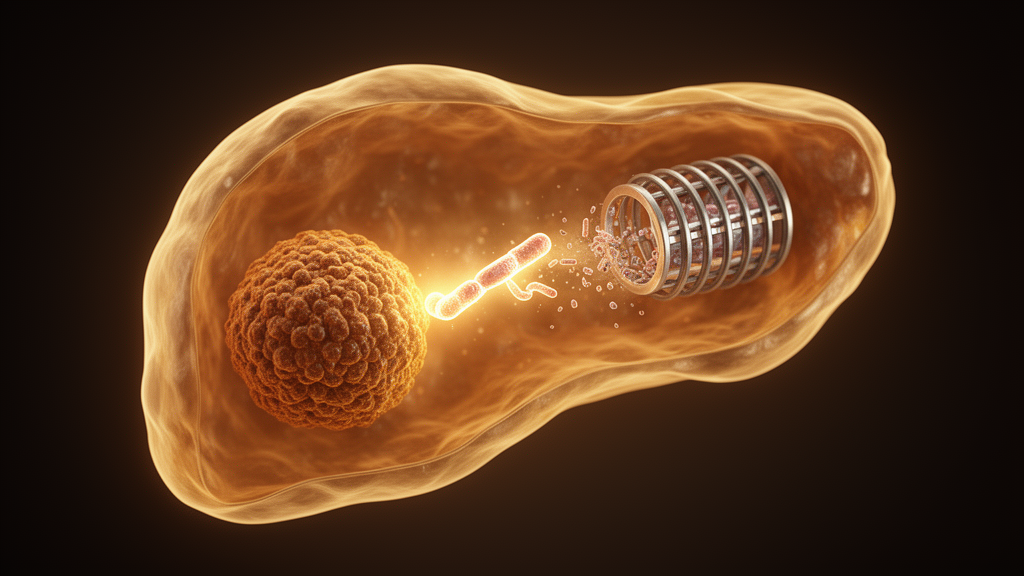
The study showed that TRIM29 directly interacts with DAPK3 and promotes its K48-linked ubiquitination, a specific molecular tag that directs proteins to the proteasome, the cell’s protein-degradation machinery, for destruction. The researchers identified lysine 261 on DAPK3 as the site through which this ubiquitination occurs, leading to proteasomal degradation of the kinase.

Crucially, the team demonstrated that the reduction in cell survival and the increase in apoptosis caused by TRIM29 depletion could be reversed by simultaneously downregulating DAPK3. This rescue experiment supports the conclusion that DAPK3 is a functional target of TRIM29 in the pathway driving tumour cell growth and survival.

The findings also have implications for hepatocellular carcinoma treatment. In cell line experiments, TRIM29 negatively regulated the apoptotic response induced by sorafenib, and its depletion promoted drug sensitization, suggesting that the protein contributes to treatment resistance through its suppression of apoptosis.

Overall, the authors conclude that TRIM29 promotes proliferation and inhibits apoptosis in hepatocellular carcinoma through ubiquitination-mediated degradation of DAPK3, positioning the protein both as a promising therapeutic target and as a candidate biomarker for prognosis. Because the work relies on human tissue comparisons, cell line experiments and mechanistic assays, further studies would be needed to establish clinical utility in patients.

Subject of Research: The role of the E3 ubiquitin ligase TRIM29 in promoting hepatocellular carcinoma progression through degradation of DAPK3.

Article Title: TRIM29 promotes hepatocellular carcinoma progression by inducing K48-linked ubiquitination and degradation of DAPK3

Article References: Guo, Y., Yuan, J., Hu, C., Xiao, B., Zhao, Q., Zhang, S., Wang, Z., Qiu, P., & Zuo, S. (2026). TRIM29 promotes hepatocellular carcinoma progression by inducing K48-linked ubiquitination and degradation of DAPK3. Cell Death Discovery. https://doi.org/10.1038/s41420-026-03346-x

Image Credits: AI Generated

DOI: 10.1038/s41420-026-03346-x

Keywords: TRIM29, DAPK3, hepatocellular carcinoma, ubiquitination, E3 ubiquitin ligase, proteasomal degradation, apoptosis, sorafenib, liver cancer, biomarker, cell proliferation, promotes

Cite Scienmag News

Nathaniel Bowman. (October 28, 2026). TRIM29 drives liver cancer growth by tagging DAPK3 for destruction. Scienmag. https://scienmag.com/trim29-drives-liver-cancer-growth-by-tagging-dapk3-for-destruction/

Nathaniel Bowman. "TRIM29 drives liver cancer growth by tagging DAPK3 for destruction." Scienmag, 28 October 2026, https://scienmag.com/trim29-drives-liver-cancer-growth-by-tagging-dapk3-for-destruction/. Accessed 29 October 2026.

Nathaniel Bowman. "TRIM29 drives liver cancer growth by tagging DAPK3 for destruction." Scienmag. October 28, 2026. https://scienmag.com/trim29-drives-liver-cancer-growth-by-tagging-dapk3-for-destruction/


Tags: apoptosisbiomarkercell proliferationDAPK3E3 ubiquitin ligasehepatocellular carcinomaliver cancerPromotesproteasomal degradationsorafenibTRIM29ubiquitination
Share26Tweet16
Previous Post

Neural Network Method Pinpoints Landslide Loads on Buried Pipelines

Next Post

Carbon fiber and boron nitride team up to push PEEK composites to ultra-low friction

Related Posts

Humans kill most cougars in five-year Alberta tracking study of 80 big cats
Biology

Humans kill most cougars in five-year Alberta tracking study of 80 big cats

October 29, 2026
Breathing by the numbers: bedside lung mechanics reshape ARDS ventilation
Medicine

Breathing by the numbers: bedside lung mechanics reshape ARDS ventilation

October 29, 2026
Trial to Test Whether Interactive Exercise Eases Autism Symptoms in Children
Psychology & Psychiatry

Trial to Test Whether Interactive Exercise Eases Autism Symptoms in Children

October 29, 2026
Three Decades of Plant Discoveries Reveal Ukraine’s Flora Is Far From Fully Known
Biology

Three Decades of Plant Discoveries Reveal Ukraine’s Flora Is Far From Fully Known

October 29, 2026
Stiffer Arteries Track With Poorer Fitness in Cardiac Rehabilitation Patients
Medicine

Stiffer Arteries Track With Poorer Fitness in Cardiac Rehabilitation Patients

October 29, 2026
Sexual Dysfunction Common and Tied to Poor Quality of Life in Men with Type 2 Diabetes
Medicine

Sexual Dysfunction Common and Tied to Poor Quality of Life in Men with Type 2 Diabetes

October 29, 2026
Next Post
Carbon fiber and boron nitride team up to push PEEK composites to ultra-low friction

Carbon fiber and boron nitride team up to push PEEK composites to ultra-low friction

  • Mothers who receive childcare support from maternal grandparents show more optimized

    Mothers who receive childcare support from maternal grandparents show more parental warmth, finds NTU Singapore study

    27656 shares
    Share 11059 Tweet 6912
  • University of Seville Breaks 120-Year-Old Mystery, Revises a Key Einstein Concept

    1061 shares
    Share 424 Tweet 265
  • Bee body mass, pathogens and local climate influence heat tolerance

    682 shares
    Share 273 Tweet 171
  • Researchers record first-ever images and data of a shark experiencing a boat strike

    546 shares
    Share 218 Tweet 137
  • Groundbreaking Clinical Trial Reveals Lubiprostone Enhances Kidney Function

    531 shares
    Share 212 Tweet 133
Science

Embark on a thrilling journey of discovery with Scienmag.com—your ultimate source for cutting-edge breakthroughs. Immerse yourself in a world where curiosity knows no limits and tomorrow’s possibilities become today’s reality!

RECENT NEWS

  • Sentinel-2 and Google Earth Engine track flood damage in Himalayan river
  • Ancient DNA solves 150-year mystery of Europe’s extinct giant crane
  • Research report: The effects of socioscientific issue-based education on science teachers’ cognitive structures, affective tendencies and scientific thinking habits
  • Humans kill most cougars in five-year Alberta tracking study of 80 big cats

Categories

  • Agriculture
  • Anthropology
  • Archaeology
  • Athmospheric
  • Biology
  • Biotechnology
  • Blog
  • Bussines
  • Cancer
  • Chemistry
  • Climate
  • Earth Science
  • Editorial Policy
  • Marine
  • Mathematics
  • Medicine
  • Pediatry
  • Policy
  • Psychology & Psychiatry
  • Science Education
  • Science News
  • Social Science
  • Space
  • Technology and Engineering

Subscribe to Blog via Email

Enter your email address to subscribe to this blog and receive notifications of new posts by email.

Join 5,151 other subscribers

© 2025 Scienmag - Science Magazine

Welcome Back!

Login to your account below

Forgotten Password?

Retrieve your password

Please enter your username or email address to reset your password.

Log In
No Result
View All Result
  • HOME
  • SCIENCE NEWS
  • CONTACT US

© 2025 Scienmag - Science Magazine

Discover more from Science

Subscribe now to keep reading and get access to the full archive.

Continue reading