Wednesday, October 28, 2026
Science
No Result
View All Result
  • Login
  • HOME
  • SCIENCE NEWS
  • CONTACT US
  • HOME
  • SCIENCE NEWS
  • CONTACT US
No Result
View All Result
Scienmag
No Result
View All Result
Home Science News Cancer

Computational agent pinpoints ADAM17 as drug target in biliary tract cancer

October 28, 2026
in Cancer, Medicine
Nathaniel Bowman
By Nathaniel Bowman Scienmag Editorial Profile - Precision Oncology
Reading Time: 2 mins read
0
Computational agent pinpoints ADAM17 as drug target in biliary tract cancer

Computational agent pinpoints ADAM17 as drug target in biliary tract cancer

65
SHARES
587
VIEWS
Share on FacebookShare on Twitter
ADVERTISEMENT

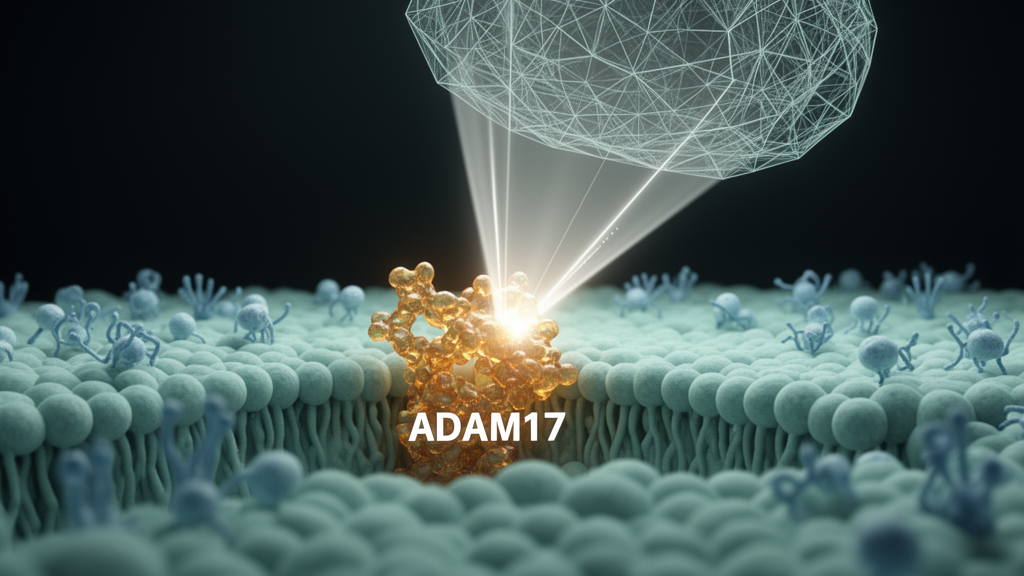
Researchers have built an artificial intelligence framework that scans multi-omics data to nominate druggable targets, and it has flagged a cell-surface protein called ADAM17 as a leading candidate against biliary tract cancer, a disease with few effective broad-spectrum therapies. The team, publishing in Cellular Oncology, paired the computational search with laboratory tests of antibody-drug conjugates and CAR-T cells directed at the target.

The framework, named ACT-Target, integrates several layers of evidence: multi-omics data, checks that a candidate protein sits on the cell surface, safety profiling, and structural developability assessments. Its purpose is to overcome the limitations of conventional target discovery by systematically prioritizing therapeutic candidates before any wet-lab work begins.

Benchmarking was performed with a time-split design, meaning the system was evaluated on whether it could recover targets that were validated only later. In that test, ACT-Target prospectively recovered 12 of 18 future solid-tumor ADC and CAR-T targets while introducing no unsafe false positives, according to the study’s abstract.

When applied to a tumor-only multi-omics cohort, the agent ranked ADAM17 first, citing its balanced omics support, surface accessibility, and compatibility with both antibody-drug conjugate and CAR-T modalities. The authors emphasize that this dual-modality compatibility was a key reason the protein rose to the top of the candidate list.

To confirm the computational nomination, the researchers examined ADAM17 expression in biliary tract cancer tissues using immunohistochemistry. The histological analysis confirmed significant upregulation of the protein in tumor tissues compared with normal controls, supporting its status as a prevalent target in this cancer type.

The team then generated novel murine monoclonal antibodies against human ADAM17. Three lead antibodies exhibited sub-nanomolar affinities and strict target specificity, with no cross-reactivity reported. These antibodies were engineered into two therapeutic formats: antibody-drug conjugates carrying the payload MMAE, and chimeric antigen receptor T cells.

In laboratory dish experiments, both the ADAM17-directed antibody-drug conjugates and the CAR-T cells induced potent, specific cytotoxicity against biliary tract cancer cells. In mouse models, the treatments profoundly inhibited tumor growth while showing preclinical tolerability, the abstract reports.

The authors caution that these are preclinical findings. The safety profile described is based on animal and in vitro testing, and the study concludes that the strategy warrants further translational evaluation for advanced disease rather than implying immediate clinical availability. The article itself is being shared early as a peer-reviewed accepted manuscript, subject to further edits before the final version of record.

If validated in subsequent studies, the approach could offer a versatile dual-modality strategy for biliary tract cancer, a malignancy that currently lacks effective, broad-spectrum therapeutic targets.

Subject of Research: Computational target discovery identifying ADAM17 as a therapeutic target in biliary tract cancer

Article Title: Modality-aware computational agent identifies ADAM17 as a novel therapeutic target in biliary tract cancer

Article References: Che, Y., Wang, G., Chen, H., Gao, Q., & Xu, Y. (2026). Modality-aware computational agent identifies ADAM17 as a novel therapeutic target in biliary tract cancer. Cellular Oncology. https://doi.org/10.1007/s13402-026-01314-2

Image Credits: AI Generated

DOI: 10.1007/s13402-026-01314-2

Keywords: biliary tract cancer, ADAM17, ACT-Target, multi-omics, antibody-drug conjugates, CAR-T cells, target discovery, immunohistochemistry, monoclonal antibodies, preclinical study, Modality-aware, computational

Cite Scienmag News

Nathaniel Bowman. (October 28, 2026). Computational agent pinpoints ADAM17 as drug target in biliary tract cancer. Scienmag. https://scienmag.com/computational-agent-pinpoints-adam17-as-drug-target-in-biliary-tract-cancer/


Nathaniel Bowman. "Computational agent pinpoints ADAM17 as drug target in biliary tract cancer." Scienmag, 28 October 2026, https://scienmag.com/computational-agent-pinpoints-adam17-as-drug-target-in-biliary-tract-cancer/. Accessed 28 October 2026.

Nathaniel Bowman. "Computational agent pinpoints ADAM17 as drug target in biliary tract cancer." Scienmag. October 28, 2026. https://scienmag.com/computational-agent-pinpoints-adam17-as-drug-target-in-biliary-tract-cancer/

Tags: ACT-TargetADAM17ADAM17 as therapeutic targetAI-driven drug target identificationantibody-drug conjugatesantibody-drug conjugates for cancerbenchmarking of AI target discovery systemsbiliary tract cancerbiliary tract cancer treatmentCAR T cellsCAR-T cell therapy targeting surface proteinscomputationalcomputational framework for target discoveryimmunohistochemistrymodality-awaremonoclonal antibodiesmulti-omicsmulti-omics data analysis in cancerpreclinical studysafety profiling of drug targetsstructural developability assessmentssystematic prioritization of cancer therapeutic candidatestarget discoverytumor-only multi-omics cohort analysis
Share26Tweet16
Previous Post

Chinese-Australian Wine Exporters Faced a Decade of Bilateral Shocks, Study Finds

Next Post

ICU patients with healthcare-associated infections cost nearly four and a half times more in Türkiye

Related Posts

Systematic review maps end-of-life psychosocial and spiritual needs in physical disability
Medicine

Systematic review maps end-of-life psychosocial and spiritual needs in physical disability

October 28, 2026
Text Message Campaign Reached Only a Third of Patients Overdue for Colorectal Cancer Screening
Medicine

Text Message Campaign Reached Only a Third of Patients Overdue for Colorectal Cancer Screening

October 28, 2026
FOXO1 Emerges as Candidate Regulator and Biomarker in Hip Dysplasia
Medicine

FOXO1 Emerges as Candidate Regulator and Biomarker in Hip Dysplasia

October 28, 2026
Regulators, developers and clinicians in Shenzhen voice concerns over medical AI governance
Medicine

Regulators, developers and clinicians in Shenzhen voice concerns over medical AI governance

October 28, 2026
Modified One-Layer Vasovasostomy Matches Gold Standard in Vasectomy Reversal
Medicine

Modified One-Layer Vasovasostomy Matches Gold Standard in Vasectomy Reversal

October 28, 2026
Small Bone Window Surgery Completely Obliterates Rare C1 Dural Fistulas
Medicine

Small Bone Window Surgery Completely Obliterates Rare C1 Dural Fistulas

October 28, 2026
Next Post
ICU patients with healthcare-associated infections cost nearly four and a half times more in Türkiye

ICU patients with healthcare-associated infections cost nearly four and a half times more in Türkiye

  • Mothers who receive childcare support from maternal grandparents show more optimized

    Mothers who receive childcare support from maternal grandparents show more parental warmth, finds NTU Singapore study

    27656 shares
    Share 11059 Tweet 6912
  • University of Seville Breaks 120-Year-Old Mystery, Revises a Key Einstein Concept

    1061 shares
    Share 424 Tweet 265
  • Bee body mass, pathogens and local climate influence heat tolerance

    682 shares
    Share 273 Tweet 171
  • Researchers record first-ever images and data of a shark experiencing a boat strike

    546 shares
    Share 218 Tweet 137
  • Groundbreaking Clinical Trial Reveals Lubiprostone Enhances Kidney Function

    531 shares
    Share 212 Tweet 133
Science

Embark on a thrilling journey of discovery with Scienmag.com—your ultimate source for cutting-edge breakthroughs. Immerse yourself in a world where curiosity knows no limits and tomorrow’s possibilities become today’s reality!

RECENT NEWS

  • Systematic review maps end-of-life psychosocial and spiritual needs in physical disability
  • Text Message Campaign Reached Only a Third of Patients Overdue for Colorectal Cancer Screening
  • FOXO1 Emerges as Candidate Regulator and Biomarker in Hip Dysplasia
  • Regulators, developers and clinicians in Shenzhen voice concerns over medical AI governance

Categories

  • Agriculture
  • Anthropology
  • Archaeology
  • Athmospheric
  • Biology
  • Biotechnology
  • Blog
  • Bussines
  • Cancer
  • Chemistry
  • Climate
  • Earth Science
  • Editorial Policy
  • Marine
  • Mathematics
  • Medicine
  • Pediatry
  • Policy
  • Psychology & Psychiatry
  • Science Education
  • Science News
  • Social Science
  • Space
  • Technology and Engineering

Subscribe to Blog via Email

Enter your email address to subscribe to this blog and receive notifications of new posts by email.

Join 5,151 other subscribers

© 2025 Scienmag - Science Magazine

Welcome Back!

Login to your account below

Forgotten Password?

Retrieve your password

Please enter your username or email address to reset your password.

Log In
No Result
View All Result
  • HOME
  • SCIENCE NEWS
  • CONTACT US

© 2025 Scienmag - Science Magazine

Discover more from Science

Subscribe now to keep reading and get access to the full archive.

Continue reading