

Tuesday, October 27, 2026
Science
No Result
View All Result
  • Login
  • HOME
  • SCIENCE NEWS
  • CONTACT US
  • HOME
  • SCIENCE NEWS
  • CONTACT US
No Result
View All Result
Scienmag
No Result
View All Result
Home Science News Medicine

Stress-triggered mitochondrial protein aggregates relay quality-control signals to the ER

October 27, 2026
in Medicine, Technology and Engineering
Denise Maddox
By Denise Maddox Scienmag Editorial Profile - Mechanical Engineering
Reading Time: 3 mins read
0
Stress-triggered mitochondrial protein aggregates relay quality-control signals to the ER

Stress-triggered mitochondrial protein aggregates relay quality-control signals to the ER

65
SHARES
587
VIEWS
Share on FacebookShare on Twitter
ADVERTISEMENT

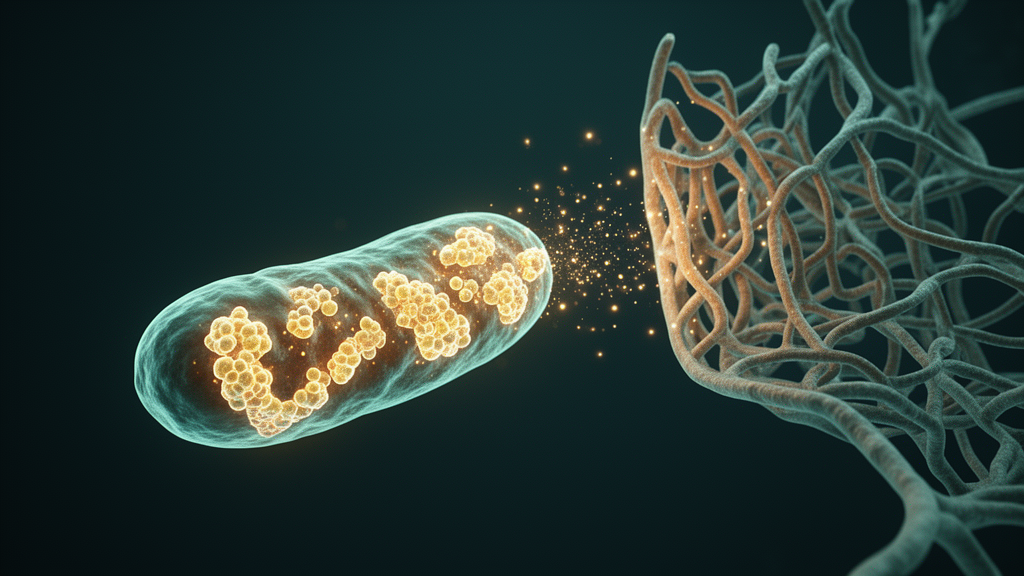
Under proteostatic stress, mitochondria can package damaged proteins into discrete aggregates that act as signalling hubs rather than passive debris. A study published in Nature on 21 October 2026 describes these structures, named stress-induced mitochondrial protein aggregates (SIMPAs), and reports that they coordinate a quality-control response that spans two organelles. According to the authors, SIMPAs form in a spatially confined manner, activating specific quality-control mechanisms locally without perturbing the mitochondrial network as a whole.

Mitochondria are bound by a double membrane and are semiautonomous organelles, features that the researchers note make them highly vulnerable to both global and internal proteostatic stress. Multiple surveillance mechanisms operating at proteostatic and inter-organellar levels are known to help maintain mitochondrial integrity and cellular health, but the precise ways in which proteostatic damage relays stress signals across organelles — and how the quality surveillance machinery coordinates these functions — had remained unknown, the team writes.

To characterize SIMPAs, the researchers combined quantitative proteomics with correlative light–electron microscopy. This analysis indicated that SIMPAs mediate inter-organellar communication through mitochondria–endoplasmic reticulum contact sites, also known as mitochondrial-associated membranes. In other words, the aggregates appear to concentrate at the junctions where the two organelles meet, providing a physical platform for cross-compartment signalling.

Mechanistically, the study identifies the protein GRP75 as a central coordinator. The authors report that GRP75 coordinates SIMPA biogenesis and focally activates endoplasmic reticulum unfolded protein response pathways via the mitochondria–ER contact sites, directing the targeted clearance of SIMPAs. This links a mitochondrial protein-aggregation event to a recognized ER stress-response programme at a defined subcellular location.

Functionally, the team examined the pathway in both cellular models and liver disease models. They report that the GRP75-dependent SIMPA signalling cascade attenuates mitochondrial stress and preserves mitochondrial integrity under proteotoxic stress. In the disease models, the authors further report that enhanced expression of GRP75 alleviates disease pathology by promoting SIMPA clearance, as summarized in the figure describing that experiment.

Taken together, the authors propose that SIMPAs, functioning as protein condensates, serve as a central cross-compartment communication hub for mitochondrial quality control, supporting cellular and organismal fitness. The work was carried out by a large team including Fan Yu, Lingyu Jiang, Jia Xiao and Quan Chen, among many co-authors listed on the paper.

The findings add a spatial dimension to how cells handle damaged mitochondrial proteins: rather than dispersing stress signals throughout the organelle, the cell appears to sequester damage into aggregates that recruit quality-control machinery at specific contact points with the endoplasmic reticulum. As with any study of this scope, the reported mechanisms were characterized in the cellular and liver disease models described, and the authors frame the pathway as one that attenuates mitochondrial stress under proteotoxic conditions rather than as a validated therapeutic intervention.

Subject of Research: Mitochondrial protein aggregates and GRP75-dependent inter-organellar quality control under proteostatic stress

Article Title: GRP75-dependent SIMPA mediates inter-organellar quality control

Article References: Yu, F., Jiang, L., Liu, H., Yang, S., Yuan, Y., Jin, H., Liu, J., Liu, X., Dong, Y., Ren, D., Kang, J., Huang, Y., Meng, Q., Bai, F., Li, Y., Li, S., Liu, H., Zhao, W., Xiao, J., & Chen, Q. (2026). GRP75-dependent SIMPA mediates inter-organellar quality control. Nature. https://doi.org/10.1038/s41586-026-10733-y

Image Credits: AI Generated

DOI: 10.1038/s41586-026-10733-y

Keywords: mitochondria, proteostasis, SIMPAs, GRP75, endoplasmic reticulum, mitochondria-associated membranes, unfolded protein response, quality control, protein aggregates, liver disease models, GRP75-dependent, SIMPA

Cite Scienmag News

Denise Maddox. (October 27, 2026). Stress-triggered mitochondrial protein aggregates relay quality-control signals to the ER. Scienmag. https://scienmag.com/stress-triggered-mitochondrial-protein-aggregates-relay-quality-control-signals-to-the-er/


Denise Maddox. "Stress-triggered mitochondrial protein aggregates relay quality-control signals to the ER." Scienmag, 27 October 2026, https://scienmag.com/stress-triggered-mitochondrial-protein-aggregates-relay-quality-control-signals-to-the-er/. Accessed 27 October 2026.

Denise Maddox. "Stress-triggered mitochondrial protein aggregates relay quality-control signals to the ER." Scienmag. October 27, 2026. https://scienmag.com/stress-triggered-mitochondrial-protein-aggregates-relay-quality-control-signals-to-the-er/

Tags: cellular stress surveillance systemsendoplasmic reticulumGRP75GRP75-dependentinter-organellar communicationliver disease modelsmitochondriamitochondria-associated membranesmitochondria-endoplasmic reticulum interactionmitochondrial protein aggregatesmitochondrial protein aggregation mechanismsmitochondrial quality control signalsmitochondrial-ER contact sitesorganelle-specific stress signalingprotein aggregatesproteostasisproteostatic stress responsequality controlSIMPASIMPAsstress-induced mitochondrial protein aggregatesunfolded protein response
Share26Tweet16
Previous Post

Borneo’s Forest Frontier Faces a $74 Billion Carbon Bill by 2050

Next Post

High-Risk NIPT Results Confirmed in Only Half of 1,326 Pregnancies, Study Finds

Related Posts

MicroRNA changes persist in newborn blood after neonatal encephalopathy
Technology and Engineering

MicroRNA changes persist in newborn blood after neonatal encephalopathy

October 27, 2026
Frontiers Retracts Corrigendum on ABTL0812 in Glioblastoma Over Image Concerns
Medicine

Frontiers Retracts Corrigendum on ABTL0812 in Glioblastoma Over Image Concerns

October 27, 2026
Research report: Long-term electoral participation among Swedish survivors of the 2004 Indian Ocean tsunami
Technology and Engineering

Research report: Long-term electoral participation among Swedish survivors of the 2004 Indian Ocean tsunami

October 27, 2026
Obesity May Harm Sperm Motility Through a STAT3/MTND4 Mitochondrial Pathway in Mice
Medicine

Obesity May Harm Sperm Motility Through a STAT3/MTND4 Mitochondrial Pathway in Mice

October 27, 2026
AI model designs working proteins from plain-language descriptions
Medicine

AI model designs working proteins from plain-language descriptions

October 27, 2026
New index reveals where industrial fleets put small-scale fisheries most at risk
Medicine

New index reveals where industrial fleets put small-scale fisheries most at risk

October 27, 2026
Next Post
High-Risk NIPT Results Confirmed in Only Half of 1,326 Pregnancies, Study Finds

High-Risk NIPT Results Confirmed in Only Half of 1,326 Pregnancies, Study Finds

  • Mothers who receive childcare support from maternal grandparents show more optimized

    Mothers who receive childcare support from maternal grandparents show more parental warmth, finds NTU Singapore study

    27656 shares
    Share 11059 Tweet 6912
  • University of Seville Breaks 120-Year-Old Mystery, Revises a Key Einstein Concept

    1061 shares
    Share 424 Tweet 265
  • Bee body mass, pathogens and local climate influence heat tolerance

    682 shares
    Share 273 Tweet 171
  • Researchers record first-ever images and data of a shark experiencing a boat strike

    546 shares
    Share 218 Tweet 137
  • Groundbreaking Clinical Trial Reveals Lubiprostone Enhances Kidney Function

    531 shares
    Share 212 Tweet 133
Science

Embark on a thrilling journey of discovery with Scienmag.com—your ultimate source for cutting-edge breakthroughs. Immerse yourself in a world where curiosity knows no limits and tomorrow’s possibilities become today’s reality!

RECENT NEWS

  • MicroRNA changes persist in newborn blood after neonatal encephalopathy
  • High-Risk NIPT Results Confirmed in Only Half of 1,326 Pregnancies, Study Finds
  • Stress-triggered mitochondrial protein aggregates relay quality-control signals to the ER
  • Borneo’s Forest Frontier Faces a $74 Billion Carbon Bill by 2050

Categories

  • Agriculture
  • Anthropology
  • Archaeology
  • Athmospheric
  • Biology
  • Biotechnology
  • Blog
  • Bussines
  • Cancer
  • Chemistry
  • Climate
  • Earth Science
  • Editorial Policy
  • Marine
  • Mathematics
  • Medicine
  • Pediatry
  • Policy
  • Psychology & Psychiatry
  • Science Education
  • Science News
  • Social Science
  • Space
  • Technology and Engineering

Subscribe to Blog via Email

Enter your email address to subscribe to this blog and receive notifications of new posts by email.

Join 5,151 other subscribers

© 2025 Scienmag - Science Magazine

Welcome Back!

Login to your account below

Forgotten Password?

Retrieve your password

Please enter your username or email address to reset your password.

Log In
No Result
View All Result
  • HOME
  • SCIENCE NEWS
  • CONTACT US

© 2025 Scienmag - Science Magazine

Discover more from Science

Subscribe now to keep reading and get access to the full archive.

Continue reading