Tuesday, October 27, 2026
Science
No Result
View All Result
  • Login
  • HOME
  • SCIENCE NEWS
  • CONTACT US
  • HOME
  • SCIENCE NEWS
  • CONTACT US
No Result
View All Result
Scienmag
No Result
View All Result
Home Science News Technology and Engineering

Research report: Long-term electoral participation among Swedish survivors of the 2004 Indian Ocean tsunami

October 27, 2026
in Technology and Engineering
Violet Maxwell
By Violet Maxwell Scienmag Editorial Profile - Natural Hazards
Reading Time: 2 mins read
0
Research report: Long-term electoral participation among Swedish survivors of the 2004 Indian Ocean tsunami

Research report: Long-term electoral participation among Swedish survivors of the 2004 Indian Ocean tsunami

65
SHARES
587
VIEWS
Share on FacebookShare on Twitter
ADVERTISEMENT

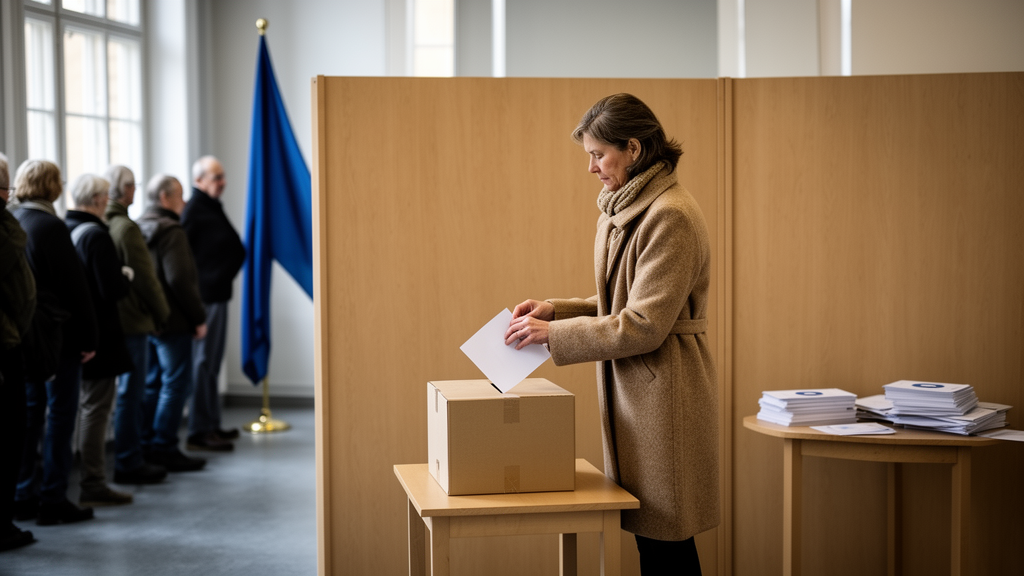
Swedish tourists who survived the 2004 Indian Ocean tsunami did not withdraw from politics after the disaster. Instead, they turned out to vote at slightly but persistently higher rates than comparable citizens for at least 14 years, according to a study published in Nature Communications.

The researchers followed approximately 16,000 Swedish tourists who were exposed to the tsunami and returned home to communities that were themselves untouched by the disaster. Because these survivors faced no destruction of local infrastructure and no added cost of voting, the case isolates the motivational effects of disaster exposure from the practical barriers that usually depress participation after catastrophes.

The team linked a survivor registry to population-wide Swedish administrative data covering up to 7 million citizens and used entropy balancing to compare survivors with matched, non-exposed voters over 25 years. Exposed individuals were 1.4 percentage points more likely to vote in both 2010 and 2018, a modest gap the authors describe as persistent rather than fading with time.

The effect was unevenly distributed. The gap in turnout was more than twice as large among survivors who lost family members in the tsunami. Mobilization was strongest among people who were between 16 and 25 years old at the time of exposure, a pattern the researchers note is consistent with what political habit formation would predict.

A follow-up survey conducted in 2023, with 3,956 respondents and between 3,198 and 3,625 participants per analysis after item non-response, provided descriptive evidence that survivors still evaluated the government’s crisis response negatively many years later. Their partisan sympathies had also shifted away from the party that was in government at the time of the disaster.

The authors conclude that failed crisis management may have lasting consequences for turnout and potentially for party choice, and that the electoral stakes of disaster response extend beyond the disaster zone itself. Because the survey component is descriptive, the partisan findings should be read as survivors’ reported evaluations rather than causal estimates, while the turnout results rest on the register-based comparison of survivors and matched non-exposed citizens.

Subject of Research: Long-term electoral participation and partisan attitudes among Swedish survivors of the 2004 Indian Ocean tsunami

Article Title: Long-term electoral participation among Swedish survivors of the 2004 Indian Ocean tsunami

Article References: Ekholm, K., Eriksson, L. M., & Vernby, K. (2026). Long-term electoral participation among Swedish survivors of the 2004 Indian Ocean tsunami. Nature Communications, 17(1), Article 11038. https://doi.org/10.1038/s41467-026-78593-8

Image Credits: AI Generated

DOI: 10.1038/s41467-026-78593-8

Keywords: tsunami, electoral participation, voter turnout, Sweden, disaster exposure, political behavior, crisis management, entropy balancing, habit formation, survivors, Long-term, electoral

Cite Scienmag News

Violet Maxwell. (October 27, 2026). Research report: Long-term electoral participation among Swedish survivors of the 2004 Indian Ocean tsunami. Scienmag. https://scienmag.com/research-report-long-term-electoral-participation-among-swedish-survivors-of-the-2004-indian-ocean-tsunami/


Violet Maxwell. "Research report: Long-term electoral participation among Swedish survivors of the 2004 Indian Ocean tsunami." Scienmag, 27 October 2026, https://scienmag.com/research-report-long-term-electoral-participation-among-swedish-survivors-of-the-2004-indian-ocean-tsunami/. Accessed 27 October 2026.

Violet Maxwell. "Research report: Long-term electoral participation among Swedish survivors of the 2004 Indian Ocean tsunami." Scienmag. October 27, 2026. https://scienmag.com/research-report-long-term-electoral-participation-among-swedish-survivors-of-the-2004-indian-ocean-tsunami/
Tags: crisis managementdemographic differences in electoral response to disastersdisaster exposureeffects of trauma on political participationelectoralelectoral behavior and disaster resilienceelectoral participationentropy balancingentropy balancing in social science researchhabit formationimpact of disaster exposure on voting behaviorinfluence of family loss on voter turnoutlong-termLong-term electoral participation after natural disasterslong-term political mobilization following the 2004 Indian Ocean tsunamilongitudinal study of disaster survivors in Swedenmethodology for analyzing voter turnout in disaster-affected populationspersistent increase in voter turnout post-disasterpolitical behaviorsurvivorsSwedenSwedish tsunami survivors political engagementtsunamivoter turnout
Share26Tweet16
Previous Post

Obesity May Harm Sperm Motility Through a STAT3/MTND4 Mitochondrial Pathway in Mice

Next Post

Frontiers Retracts Corrigendum on ABTL0812 in Glioblastoma Over Image Concerns

Related Posts

Human-inspired AI model sharpens sound localization while keeping the network compact
Technology and Engineering

Human-inspired AI model sharpens sound localization while keeping the network compact

October 27, 2026
WEE1 kinase guards quiescent cells’ path back into the cell cycle
Medicine

WEE1 kinase guards quiescent cells’ path back into the cell cycle

October 27, 2026
Astrocyte Subtype Marked by CD51 Drives Synapse Formation and Stroke Recovery in Mice
Medicine

Astrocyte Subtype Marked by CD51 Drives Synapse Formation and Stroke Recovery in Mice

October 27, 2026
Retuning Synaptic Dynamics Restores Memory Signals in Alzheimer’s Model
Medicine

Retuning Synaptic Dynamics Restores Memory Signals in Alzheimer’s Model

October 27, 2026
Phase Arrangement Alone Changes Oxidation Rate of a High-Entropy Alloy by Nearly Fourfold
Technology and Engineering

Phase Arrangement Alone Changes Oxidation Rate of a High-Entropy Alloy by Nearly Fourfold

October 27, 2026
Scoping review finds markerless surgical tool tracking in open surgery still at proof-of-concept stage
Technology and Engineering

Scoping review finds markerless surgical tool tracking in open surgery still at proof-of-concept stage

October 27, 2026
Next Post
Frontiers Retracts Corrigendum on ABTL0812 in Glioblastoma Over Image Concerns

Frontiers Retracts Corrigendum on ABTL0812 in Glioblastoma Over Image Concerns

  • Mothers who receive childcare support from maternal grandparents show more optimized

    Mothers who receive childcare support from maternal grandparents show more parental warmth, finds NTU Singapore study

    27656 shares
    Share 11059 Tweet 6912
  • University of Seville Breaks 120-Year-Old Mystery, Revises a Key Einstein Concept

    1061 shares
    Share 424 Tweet 265
  • Bee body mass, pathogens and local climate influence heat tolerance

    682 shares
    Share 273 Tweet 171
  • Researchers record first-ever images and data of a shark experiencing a boat strike

    546 shares
    Share 218 Tweet 137
  • Groundbreaking Clinical Trial Reveals Lubiprostone Enhances Kidney Function

    531 shares
    Share 212 Tweet 133
Science

Embark on a thrilling journey of discovery with Scienmag.com—your ultimate source for cutting-edge breakthroughs. Immerse yourself in a world where curiosity knows no limits and tomorrow’s possibilities become today’s reality!

RECENT NEWS

  • Physicists image 120-year-old Thomson charge puzzle in helium droplets
  • Attention is guided by memory, learning and flexible templates, review argues
  • Fifty Years of Plant Mapping Show Biodiversity Hotspots in Southwest Germany Are Eroding
  • Silicon–graphite composite anodes made with scalable powder process hit near 600 mAh/g

Categories

  • Agriculture
  • Anthropology
  • Archaeology
  • Athmospheric
  • Biology
  • Biotechnology
  • Blog
  • Bussines
  • Cancer
  • Chemistry
  • Climate
  • Earth Science
  • Editorial Policy
  • Marine
  • Mathematics
  • Medicine
  • Pediatry
  • Policy
  • Psychology & Psychiatry
  • Science Education
  • Science News
  • Social Science
  • Space
  • Technology and Engineering

Subscribe to Blog via Email

Success! An email was just sent to confirm your subscription. Please find the email now and click 'Confirm Follow' to start subscribing.

Join 5,151 other subscribers

© 2025 Scienmag - Science Magazine

Welcome Back!

Login to your account below

Forgotten Password?

Retrieve your password

Please enter your username or email address to reset your password.

Log In
No Result
View All Result
  • HOME
  • SCIENCE NEWS
  • CONTACT US

© 2025 Scienmag - Science Magazine