Tuesday, October 27, 2026
Science
No Result
View All Result
  • Login
  • HOME
  • SCIENCE NEWS
  • CONTACT US
  • HOME
  • SCIENCE NEWS
  • CONTACT US
No Result
View All Result
Scienmag
No Result
View All Result
Home Science News Technology and Engineering

MicroRNA changes persist in newborn blood after neonatal encephalopathy

October 27, 2026
in Technology and Engineering
Harold Sullivan
By Harold Sullivan Scienmag Editorial Profile - Maternal and Child Health
Reading Time: 3 mins read
0
MicroRNA changes persist in newborn blood after neonatal encephalopathy

MicroRNA changes persist in newborn blood after neonatal encephalopathy

65
SHARES
587
VIEWS
Share on FacebookShare on Twitter
ADVERTISEMENT

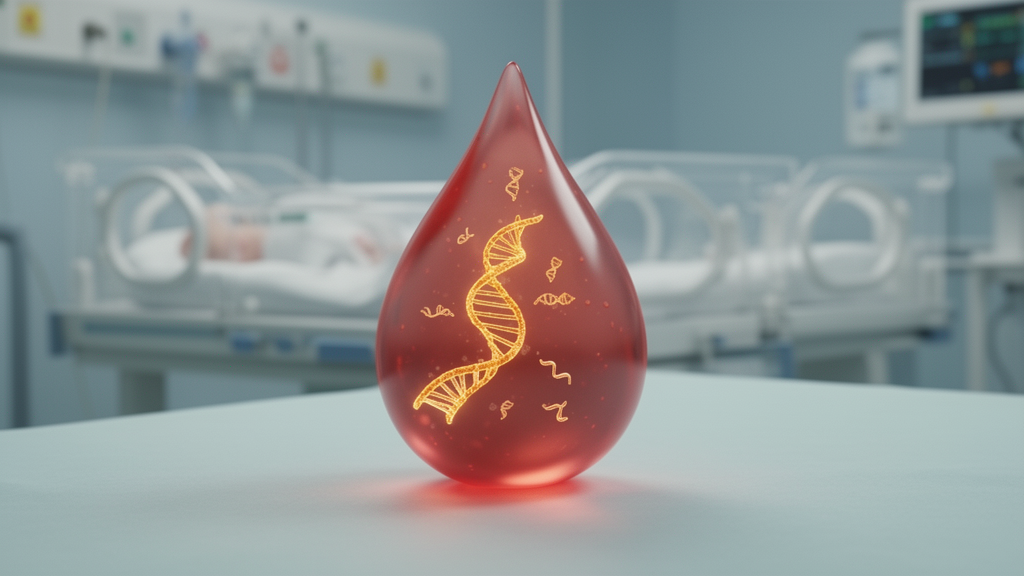
Babies with neonatal encephalopathy, a serious brain condition around the time of birth, carry distinctive changes in their blood microRNA levels that persist for at least the first 48 hours after delivery, according to a study published in Pediatric Research. The finding, reported by researchers working at Cork University Maternity Hospital, suggests that these molecular signatures could eventually support earlier bedside detection of the condition through minimally invasive sampling.

Neonatal encephalopathy affects term infants and is associated with severe neurological morbidity, yet reliable biochemical markers for early diagnosis and timely intervention remain lacking. Earlier work by the same research community had identified altered microRNA expression in umbilical cord blood from affected infants. The new study asked a clinically important follow-up question: do those alterations remain detectable after birth, in whole blood drawn from the newborn, where they could inform care decisions in the crucial first days of life?

The research team recruited term infants with neonatal encephalopathy and matched healthy controls, all born at Cork University Maternity Hospital between 2017 and 2020. Rather than relying on conventional venous blood draws, the investigators used dried blood spot microsampling, collecting whole blood within the first 6 hours after delivery, again at 24 hours, and once more at 48 hours. The severity of encephalopathy in each affected infant was graded as mild, moderate or severe using the modified Sarnat staging system assessed at one hour of age.

In the laboratory, the team measured 19 candidate microRNAs together with three housekeeping microRNAs used for normalization, applying the 2−ΔΔCt quantification method across all infants.

In total, 66 neonates were included in the analysis: 53 with encephalopathy, comprising 25 mild, 22 moderate and 6 severe cases, and 13 controls. Across the three postnatal timepoints, 105 whole blood samples were collected and analyzed, giving the study a longitudinal view of how the microRNA signal behaved over the first two days of life rather than a single snapshot.

Comparing infants with neonatal encephalopathy against controls at the earliest timepoint confirmed alteration of eight microRNAs, including one, miR-205-5p, newly identified in this postnatal context. When the researchers then tracked the encephalopathy group across all three timepoints, they found that four microRNAs remained persistently altered from 0 to 48 hours after birth. The persistence of the signal is the study’s central observation: the molecular differences are not confined to cord blood at delivery but continue to be measurable in the newborn’s circulating blood.

The authors also examined expression patterns by disease severity, contrasting mild cases with moderate and severe cases against healthy controls, and the published figures present these group-level comparisons at the first timepoint.

The researchers emphasize that the alterations were detectable through less invasive methods, and they describe the microRNA profiles as showing promise as potential markers for rapid detection of neonatal encephalopathy at the bedside. Building on the previous cord blood findings, the postnatal results extend the window in which such a signature could be sought, spanning the first two days after birth. Because the analysis involved a modest number of infants from a single maternity hospital, and the datasets are available only from the corresponding author on reasonable request, broader validation in independent cohorts would be needed before any clinical use. For now, the study establishes that the postnatal microRNA signal exists, persists, and can be captured with a simple microsampling approach.

Subject of Research: Persistent postnatal microRNA expression changes in neonatal encephalopathy detected via dried blood spot sampling

Article Title: Persistent postnatal alterations in microRNA expression in neonatal encephalopathy

Article References: Walls, E. A., O’Sullivan, M. P., Garvey, A. A., Pavel, A. M., Dempsey, E. M., Boylan, G. B., & Murray, D. M. (2026). Persistent postnatal alterations in microRNA expression in neonatal encephalopathy. Pediatric Research. https://doi.org/10.1038/s41390-026-05262-3

Image Credits: AI Generated

DOI: 10.1038/s41390-026-05262-3

Keywords: neonatal encephalopathy, microRNA, biomarkers, dried blood spot, newborns, Pediatric Research, Sarnat staging, cord blood, gene expression, Cork University Maternity Hospital, Persistent, postnatal

Cite Scienmag News

Harold Sullivan. (October 27, 2026). MicroRNA changes persist in newborn blood after neonatal encephalopathy. Scienmag. https://scienmag.com/microrna-changes-persist-in-newborn-blood-after-neonatal-encephalopathy/

Harold Sullivan. "MicroRNA changes persist in newborn blood after neonatal encephalopathy." Scienmag, 27 October 2026, https://scienmag.com/microrna-changes-persist-in-newborn-blood-after-neonatal-encephalopathy/. Accessed 27 October 2026.

Harold Sullivan. "MicroRNA changes persist in newborn blood after neonatal encephalopathy." Scienmag. October 27, 2026. https://scienmag.com/microrna-changes-persist-in-newborn-blood-after-neonatal-encephalopathy/

Tags: bedside detection of neonatal conditionsBiomarkerscord bloodCork University Maternity Hospitaldried blood spotdried blood spot microsampling in infantsearly detection of neonatal brain injuryearly diagnosis of neonatal encephalopathygene expressionmicroRNAmicroRNA blood analysis in newbornsmicroRNA signature in newborn bloodminimally invasive neonatal diagnosticsmolecular markers for neonatal brain injuryneonatal blood microRNA profilingneonatal encephalopathyNeonatal Encephalopathy biomarkersneonatal neurological morbidity markersnewbornspediatric researchPersistentpostnatalpostnatal microRNA persistenceSarnat staging
Share26Tweet16
Previous Post

High-Risk NIPT Results Confirmed in Only Half of 1,326 Pregnancies, Study Finds

Next Post

Gut Dysbiosis Linked to Chronic Endometritis Remains a Hypothesis, Review Finds

Related Posts

Stool biomarkers distinguish confirmed necrotizing enterocolitis in preterm infants
Technology and Engineering

Stool biomarkers distinguish confirmed necrotizing enterocolitis in preterm infants

October 27, 2026
Human-inspired AI model sharpens sound localization while keeping the network compact
Technology and Engineering

Human-inspired AI model sharpens sound localization while keeping the network compact

October 27, 2026
WEE1 kinase guards quiescent cells’ path back into the cell cycle
Medicine

WEE1 kinase guards quiescent cells’ path back into the cell cycle

October 27, 2026
Astrocyte Subtype Marked by CD51 Drives Synapse Formation and Stroke Recovery in Mice
Medicine

Astrocyte Subtype Marked by CD51 Drives Synapse Formation and Stroke Recovery in Mice

October 27, 2026
Retuning Synaptic Dynamics Restores Memory Signals in Alzheimer’s Model
Medicine

Retuning Synaptic Dynamics Restores Memory Signals in Alzheimer’s Model

October 27, 2026
Phase Arrangement Alone Changes Oxidation Rate of a High-Entropy Alloy by Nearly Fourfold
Technology and Engineering

Phase Arrangement Alone Changes Oxidation Rate of a High-Entropy Alloy by Nearly Fourfold

October 27, 2026
Next Post
Gut Dysbiosis Linked to Chronic Endometritis Remains a Hypothesis, Review Finds

Gut Dysbiosis Linked to Chronic Endometritis Remains a Hypothesis, Review Finds

  • Mothers who receive childcare support from maternal grandparents show more optimized

    Mothers who receive childcare support from maternal grandparents show more parental warmth, finds NTU Singapore study

    27656 shares
    Share 11059 Tweet 6912
  • University of Seville Breaks 120-Year-Old Mystery, Revises a Key Einstein Concept

    1061 shares
    Share 424 Tweet 265
  • Bee body mass, pathogens and local climate influence heat tolerance

    682 shares
    Share 273 Tweet 171
  • Researchers record first-ever images and data of a shark experiencing a boat strike

    546 shares
    Share 218 Tweet 137
  • Groundbreaking Clinical Trial Reveals Lubiprostone Enhances Kidney Function

    531 shares
    Share 212 Tweet 133
Science

Embark on a thrilling journey of discovery with Scienmag.com—your ultimate source for cutting-edge breakthroughs. Immerse yourself in a world where curiosity knows no limits and tomorrow’s possibilities become today’s reality!

RECENT NEWS

  • Stool biomarkers distinguish confirmed necrotizing enterocolitis in preterm infants
  • Ventilation Choices Reshaped Heart Catheterization Results in an Infant with Lung Disease
  • Detox Enzyme Inducibility May Explain Why Two Brine Shrimp Species Differ in Phenanthrene Tolerance
  • Employers in Latin America screen for customer service and communication, not digital skills

Categories

  • Agriculture
  • Anthropology
  • Archaeology
  • Athmospheric
  • Biology
  • Biotechnology
  • Blog
  • Bussines
  • Cancer
  • Chemistry
  • Climate
  • Earth Science
  • Editorial Policy
  • Marine
  • Mathematics
  • Medicine
  • Pediatry
  • Policy
  • Psychology & Psychiatry
  • Science Education
  • Science News
  • Social Science
  • Space
  • Technology and Engineering

Subscribe to Blog via Email

Enter your email address to subscribe to this blog and receive notifications of new posts by email.

Join 5,151 other subscribers

© 2025 Scienmag - Science Magazine

Welcome Back!

Login to your account below

Forgotten Password?

Retrieve your password

Please enter your username or email address to reset your password.

Log In
No Result
View All Result
  • HOME
  • SCIENCE NEWS
  • CONTACT US

© 2025 Scienmag - Science Magazine

Discover more from Science

Subscribe now to keep reading and get access to the full archive.

Continue reading