

Tuesday, October 27, 2026
Science
No Result
View All Result
  • Login
  • HOME
  • SCIENCE NEWS
  • CONTACT US
  • HOME
  • SCIENCE NEWS
  • CONTACT US
No Result
View All Result
Scienmag
No Result
View All Result
Home Science News Technology and Engineering

Sleep efficiency, not sleep length, tracks autonomic recovery in elite female footballers

October 27, 2026
in Technology and Engineering
Denise Maddox
By Denise Maddox Scienmag Editorial Profile - Mechanical Engineering
Reading Time: 3 mins read
0
Sleep efficiency, not sleep length, tracks autonomic recovery in elite female footballers

Sleep efficiency, not sleep length, tracks autonomic recovery in elite female footballers

65
SHARES
587
VIEWS
Share on FacebookShare on Twitter
ADVERTISEMENT

Fourteen weeks of daily monitoring in an Italian Serie A women’s football squad have revealed a subtle but important split in how sleep relates to recovery: how continuously players slept predicted their autonomic recovery, while how long they slept shaped only how recovered they felt. The study, published in Scientific Reports, followed fifteen elite players across a competitive season using wrist-worn actigraphy, morning heart rate variability recordings and brief daily questionnaires, offering an ecologically grounded picture of the sleep–recovery relationship in elite female athletes. The autonomic marker at the centre of the analysis was the natural logarithm of the root mean square of successive differences in heart beat intervals, abbreviated LnRMSSD, measured each morning from a one-minute seated recording.

Because the researchers collected these measures in the players’ everyday environment during a competitive season rather than in a laboratory, the dataset reflects real-world conditions. When the team analysed the data with linear mixed-effects models, a statistical approach that accounts for the many repeated observations nested within each player, sleep efficiency emerged as a significant positive predictor of LnRMSSD, with an estimated coefficient of 0.008 and a p-value of 0.014. Total sleep time, by contrast, showed no significant independent association with LnRMSSD in the simultaneous model, with an estimated coefficient of −0.051 and a p-value of 0.158.

Duration was not irrelevant, however. When players slept longer than their own usual amount, they reported higher subjective sleep quality, with an estimated coefficient of 0.199 and a p-value below 0.001, and greater perceived recovery, with an estimated coefficient of 0.305 and a p-value of 0.003. In other words, the perceptual layer of recovery responded to sleep extension even though the physiological marker did not.

The authors interpret this divergence as a caution against reading any single metric as a proxy for recovery as a whole, since objective autonomic state and an athlete’s own sense of readiness can move along different tracks. Match days left a distinct imprint on both subjective measures. Compared with training and rest days, players reported lower sleep quality on match days, with an estimated coefficient of −0.314 and a p-value of 0.007, and substantially lower perceived recovery, with an estimated coefficient of −1.583 and a p-value below 0.001.

The study’s design carries clear strengths and boundaries. Monitoring fifteen players from a single Serie A club over fourteen weeks provides dense, repeated, real-world data, and the mixed-effects modelling respects the structure of that data. At the same time, the sample comes from one team in one league, the associations are observational rather than causal, and the one-minute morning HRV recording is a brief snapshot of a dynamic physiological system.

The findings should therefore be read as evidence about how sleep and recovery markers co-vary in this setting, not as prescriptions for interventions. For practitioners, the practical message is that recovery monitoring in elite female football should not rest on one number. A player whose sleep efficiency is dipping may be accumulating autonomic strain even if her total sleep time looks adequate, while another who sleeps longer than usual may feel refreshed without any measurable change in her HRV. The authors argue that monitoring systems should encompass multifaceted and integrated strategies that account for different dimensions of fitness and performance, combining objective actigraphy, autonomic markers and the athlete’s own perception of sleep and recovery.

Subject of Research: Sleep and recovery monitoring in elite female football players

Article Title: Multidimensional recovery monitoring in elite female football: an ecological understanding of sleep–recovery relationship

Article References: Di Pinto, G., Marcelli, L., Colombo, A., Bertollo, M., Sartor, F., di Fronso, S., & Curzi, D. (2026). Multidimensional recovery monitoring in elite female football: an ecological understanding of sleep–recovery relationship. Scientific Reports. https://doi.org/10.1038/s41598-026-76175-8

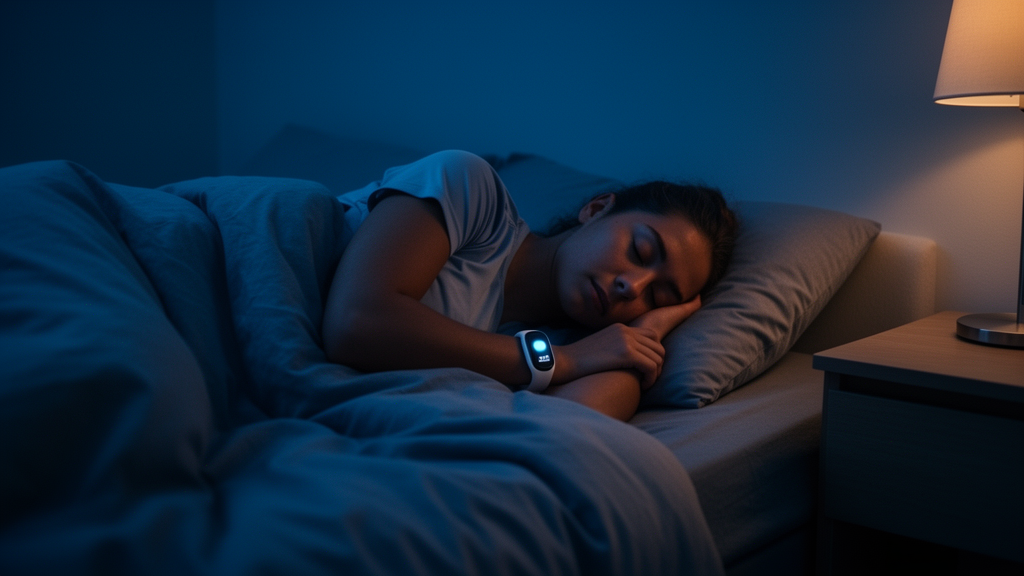
Image Credits: AI Generated

DOI: 10.1038/s41598-026-76175-8

Keywords: sleep efficiency, heart rate variability, LnRMSSD, elite female football, recovery monitoring, actigraphy, Serie A, autonomic recovery, match days, mixed-effects models, sports science, Multidimensional

Cite Scienmag News

Denise Maddox. (October 27, 2026). Sleep efficiency, not sleep length, tracks autonomic recovery in elite female footballers. Scienmag. https://scienmag.com/sleep-efficiency-not-sleep-length-tracks-autonomic-recovery-in-elite-female-footballers/


Denise Maddox. "Sleep efficiency, not sleep length, tracks autonomic recovery in elite female footballers." Scienmag, 27 October 2026, https://scienmag.com/sleep-efficiency-not-sleep-length-tracks-autonomic-recovery-in-elite-female-footballers/. Accessed 27 October 2026.

Denise Maddox. "Sleep efficiency, not sleep length, tracks autonomic recovery in elite female footballers." Scienmag. October 27, 2026. https://scienmag.com/sleep-efficiency-not-sleep-length-tracks-autonomic-recovery-in-elite-female-footballers/

Tags: actigraphyautonomic nervous system recoveryautonomic recoveryautonomic recovery biomarkers in female athletesecological validity in sports scienceelite female footballheart rate variabilityheart rate variability in sportslinear mixed-effects models in athlete researchLnRMSSDmatch daysmixed-effects modelsMultidimensionalreal-world sleep and recovery assessmentrecovery monitoringseason-long athlete recovery studiesSerie Asleep and athletic performancesleep efficiencySleep efficiency in elite female footballerssleep monitoring technology in sportssleep quality versus sleep durationsports sciencewrist actigraphy for athlete monitoring
Share26Tweet16
Previous Post

AI Scheduler Learns Offline to Meet Conflicting LLM Latency Goals

Next Post

Resistance-Based Features Boost Machine Learning Fault Detection in Power Grids

Related Posts

Resistance-Based Features Boost Machine Learning Fault Detection in Power Grids
Technology and Engineering

Resistance-Based Features Boost Machine Learning Fault Detection in Power Grids

October 27, 2026
AI Scheduler Learns Offline to Meet Conflicting LLM Latency Goals
Technology and Engineering

AI Scheduler Learns Offline to Meet Conflicting LLM Latency Goals

October 27, 2026
AI-Supported Training Linked to Better Recruitment Skills in Education Graduates
Technology and Engineering

AI-Supported Training Linked to Better Recruitment Skills in Education Graduates

October 27, 2026
Long Hours in Hot or Cold Workplaces Show No Clear Link to Depressive Symptoms in Korean Workers
Technology and Engineering

Long Hours in Hot or Cold Workplaces Show No Clear Link to Depressive Symptoms in Korean Workers

October 27, 2026
FTO Variant rs9939609 Tied to Type 2 Diabetes and Obesity Risk in Thai Adults
Technology and Engineering

FTO Variant rs9939609 Tied to Type 2 Diabetes and Obesity Risk in Thai Adults

October 27, 2026
New AI framework fuses visible and infrared images for sharper object detection
Technology and Engineering

New AI framework fuses visible and infrared images for sharper object detection

October 27, 2026
Next Post
Resistance-Based Features Boost Machine Learning Fault Detection in Power Grids

Resistance-Based Features Boost Machine Learning Fault Detection in Power Grids

  • Mothers who receive childcare support from maternal grandparents show more optimized

    Mothers who receive childcare support from maternal grandparents show more parental warmth, finds NTU Singapore study

    27656 shares
    Share 11059 Tweet 6912
  • University of Seville Breaks 120-Year-Old Mystery, Revises a Key Einstein Concept

    1061 shares
    Share 424 Tweet 265
  • Bee body mass, pathogens and local climate influence heat tolerance

    682 shares
    Share 273 Tweet 171
  • Researchers record first-ever images and data of a shark experiencing a boat strike

    546 shares
    Share 218 Tweet 137
  • Groundbreaking Clinical Trial Reveals Lubiprostone Enhances Kidney Function

    531 shares
    Share 212 Tweet 133
Science

Embark on a thrilling journey of discovery with Scienmag.com—your ultimate source for cutting-edge breakthroughs. Immerse yourself in a world where curiosity knows no limits and tomorrow’s possibilities become today’s reality!

RECENT NEWS

  • Rainfall at Collapse Tells Only Half the Story of Failing Rock Slopes
  • Resistance-Based Features Boost Machine Learning Fault Detection in Power Grids
  • Sleep efficiency, not sleep length, tracks autonomic recovery in elite female footballers
  • AI Scheduler Learns Offline to Meet Conflicting LLM Latency Goals

Categories

  • Agriculture
  • Anthropology
  • Archaeology
  • Athmospheric
  • Biology
  • Biotechnology
  • Blog
  • Bussines
  • Cancer
  • Chemistry
  • Climate
  • Earth Science
  • Editorial Policy
  • Marine
  • Mathematics
  • Medicine
  • Pediatry
  • Policy
  • Psychology & Psychiatry
  • Science Education
  • Science News
  • Social Science
  • Space
  • Technology and Engineering

Subscribe to Blog via Email

Enter your email address to subscribe to this blog and receive notifications of new posts by email.

Join 5,151 other subscribers

© 2025 Scienmag - Science Magazine

Welcome Back!

Login to your account below

Forgotten Password?

Retrieve your password

Please enter your username or email address to reset your password.

Log In
No Result
View All Result
  • HOME
  • SCIENCE NEWS
  • CONTACT US

© 2025 Scienmag - Science Magazine

Discover more from Science

Subscribe now to keep reading and get access to the full archive.

Continue reading