

Tuesday, October 27, 2026
Science
No Result
View All Result
  • Login
  • HOME
  • SCIENCE NEWS
  • CONTACT US
  • HOME
  • SCIENCE NEWS
  • CONTACT US
No Result
View All Result
Scienmag
No Result
View All Result
Home Science News Technology and Engineering

Long Hours in Hot or Cold Workplaces Show No Clear Link to Depressive Symptoms in Korean Workers

October 27, 2026
in Technology and Engineering
Glenn Wilkins
By Glenn Wilkins Scienmag Editorial Profile - Clinical Psychology
Reading Time: 2 mins read
0
Long Hours in Hot or Cold Workplaces Show No Clear Link to Depressive Symptoms in Korean Workers

Long Hours in Hot or Cold Workplaces Show No Clear Link to Depressive Symptoms in Korean Workers

65
SHARES
587
VIEWS
Share on FacebookShare on Twitter
ADVERTISEMENT

A nationwide analysis of more than 29,000 South Korean employees has found no clear association between the amount of time workers report spending in hot or cold workplace conditions and screen-positive depressive symptoms, according to a cross-sectional study published in Scientific Reports. Researchers drew on the fifth Korean Working Conditions Survey, conducted in 2017, which included 30,108 paid employees; the primary complete-case analysis covered 29,413 participants. Workplace temperature exposure was operationalized as self-reported time spent in heat or cold, categorized as none, low, intermediate, or high.

Depressive symptoms were screened using the WHO-5 well-being index, with a score of 28 or below defining screen-positive symptoms. The survey-weighted prevalence of screen-positive depressive symptoms was 11.07 percent across the analyzed sample. The team used survey-weighted modified Poisson regression with respondent-level empirical sandwich covariance to estimate prevalence ratios and 95 percent confidence intervals, adjusting for a range of covariates in their primary model.

In that primary adjusted model, the patterns across exposure categories were non-monotonic, meaning the estimated associations did not rise steadily with increasing exposure time. Compared with workers reporting no exposure, the adjusted prevalence ratio for high heat exposure time was 1.04 (95 percent confidence interval 0.88 to 1.24), and for high cold exposure time it was 1.15 (95 percent confidence interval 0.95 to 1.39). Because both confidence intervals included the null value of one, the study could not rule out the absence of any association at the highest exposure levels.

The authors emphasize that these findings warrant cautious interpretation for precisely this reason. Formal interaction tests found no evidence that sex or broad occupational group modified the relationship between temperature exposure and depressive symptoms, suggesting the broadly null pattern held across these subgroups in this dataset. The study's design imposes an important limitation: as a cross-sectional survey capturing exposure and outcome at the same time, it cannot establish causal relationships.

The authors note that prior research in this area has been limited, particularly by small samples, which makes this large nationwide dataset a meaningful contribution despite its null-to-weak findings. They conclude that workplace thermal comfort remains relevant to worker well-being and call for prospective studies with objective exposure measurements to clarify whether abnormal workplace temperatures affect mental health over time.

Subject of Research: Association between self-reported workplace heat and cold exposure and depressive symptoms among Korean employees

Article Title: Self-reported workplace heat and cold exposure time and WHO-5 screen-positive depressive symptoms among Korean employees: a nationwide cross-sectional study

Article References: Kim, S.-K., Kim, J.-Y., Kim, J., Yoon, J.-H., & Yong, S. Y. (2026). Self-reported workplace heat and cold exposure time and WHO-5 screen-positive depressive symptoms among Korean employees: a nationwide cross-sectional study. Scientific Reports. https://doi.org/10.1038/s41598-026-76782-5

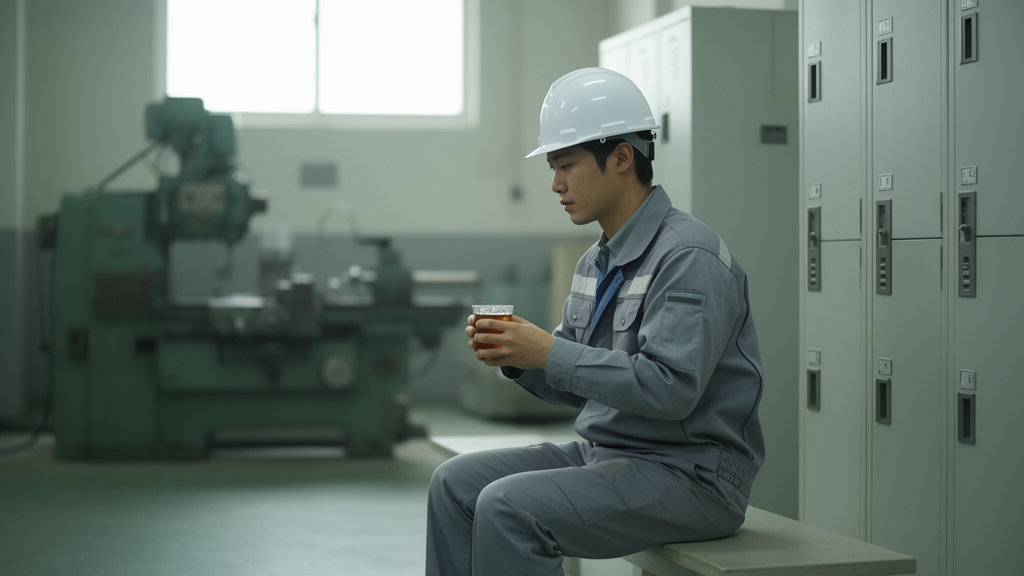
Image Credits: AI Generated

DOI: 10.1038/s41598-026-76782-5

Keywords: occupational health, heat exposure, cold exposure, depressive symptoms, WHO-5, Korean Working Conditions Survey, cross-sectional study, workplace thermal comfort, mental health, epidemiology, Self-reported, workplace

Cite Scienmag News

Glenn Wilkins. (October 27, 2026). Long Hours in Hot or Cold Workplaces Show No Clear Link to Depressive Symptoms in Korean Workers. Scienmag. https://scienmag.com/long-hours-in-hot-or-cold-workplaces-show-no-clear-link-to-depressive-symptoms-in-korean-workers/


Glenn Wilkins. "Long Hours in Hot or Cold Workplaces Show No Clear Link to Depressive Symptoms in Korean Workers." Scienmag, 27 October 2026, https://scienmag.com/long-hours-in-hot-or-cold-workplaces-show-no-clear-link-to-depressive-symptoms-in-korean-workers/. Accessed 27 October 2026.

Glenn Wilkins. "Long Hours in Hot or Cold Workplaces Show No Clear Link to Depressive Symptoms in Korean Workers." Scienmag. October 27, 2026. https://scienmag.com/long-hours-in-hot-or-cold-workplaces-show-no-clear-link-to-depressive-symptoms-in-korean-workers/

Tags: cold exposurecross-sectional occupational health researchcross-sectional studydepressive symptomsdepressive symptoms and mental healthemployment conditions and mental healthepidemiologyheat and cold stress impactheat exposureKorean workers health studyKorean Working Conditions SurveyMental healthoccupational healthoccupational health policy implicationsself-reportedsurvey-weighted regression analysistemperature exposure and depression riskWHO-5WHO-5 well-being indexWorkplaceworkplace environmental conditionsworkplace temperature exposureworkplace temperature exposure assessmentworkplace thermal comfort
Share26Tweet16
Previous Post

FTO Variant rs9939609 Tied to Type 2 Diabetes and Obesity Risk in Thai Adults

Next Post

AI-Supported Training Linked to Better Recruitment Skills in Education Graduates

Related Posts

AI-Supported Training Linked to Better Recruitment Skills in Education Graduates
Technology and Engineering

AI-Supported Training Linked to Better Recruitment Skills in Education Graduates

October 27, 2026
FTO Variant rs9939609 Tied to Type 2 Diabetes and Obesity Risk in Thai Adults
Technology and Engineering

FTO Variant rs9939609 Tied to Type 2 Diabetes and Obesity Risk in Thai Adults

October 27, 2026
New AI framework fuses visible and infrared images for sharper object detection
Technology and Engineering

New AI framework fuses visible and infrared images for sharper object detection

October 27, 2026
Research report: SLAM Project – Long-Term Ecological Study of the Impacts of Climate Change in the natural forest of Azores: VII – Long-term arthropod monitoring in Graciosa Island
Biology

Research report: SLAM Project – Long-Term Ecological Study of the Impacts of Climate Change in the natural forest of Azores: VII – Long-term arthropod monitoring in Graciosa Island

October 27, 2026
Hybrid retrieval and verification framework cuts hallucinations in medical AI
Technology and Engineering

Hybrid retrieval and verification framework cuts hallucinations in medical AI

October 27, 2026
Fractal Fingerprints of Chinese Mainland Seismicity Reveal Deep Tectonic Controls
Technology and Engineering

Fractal Fingerprints of Chinese Mainland Seismicity Reveal Deep Tectonic Controls

October 27, 2026
Next Post
AI-Supported Training Linked to Better Recruitment Skills in Education Graduates

AI-Supported Training Linked to Better Recruitment Skills in Education Graduates

  • Mothers who receive childcare support from maternal grandparents show more optimized

    Mothers who receive childcare support from maternal grandparents show more parental warmth, finds NTU Singapore study

    27656 shares
    Share 11059 Tweet 6912
  • University of Seville Breaks 120-Year-Old Mystery, Revises a Key Einstein Concept

    1061 shares
    Share 424 Tweet 265
  • Bee body mass, pathogens and local climate influence heat tolerance

    682 shares
    Share 273 Tweet 171
  • Researchers record first-ever images and data of a shark experiencing a boat strike

    546 shares
    Share 218 Tweet 137
  • Groundbreaking Clinical Trial Reveals Lubiprostone Enhances Kidney Function

    531 shares
    Share 212 Tweet 133
Science

Embark on a thrilling journey of discovery with Scienmag.com—your ultimate source for cutting-edge breakthroughs. Immerse yourself in a world where curiosity knows no limits and tomorrow’s possibilities become today’s reality!

RECENT NEWS

  • AI-Supported Training Linked to Better Recruitment Skills in Education Graduates
  • Long Hours in Hot or Cold Workplaces Show No Clear Link to Depressive Symptoms in Korean Workers
  • FTO Variant rs9939609 Tied to Type 2 Diabetes and Obesity Risk in Thai Adults
  • New AI framework fuses visible and infrared images for sharper object detection

Categories

  • Agriculture
  • Anthropology
  • Archaeology
  • Athmospheric
  • Biology
  • Biotechnology
  • Blog
  • Bussines
  • Cancer
  • Chemistry
  • Climate
  • Earth Science
  • Editorial Policy
  • Marine
  • Mathematics
  • Medicine
  • Pediatry
  • Policy
  • Psychology & Psychiatry
  • Science Education
  • Science News
  • Social Science
  • Space
  • Technology and Engineering

Subscribe to Blog via Email

Enter your email address to subscribe to this blog and receive notifications of new posts by email.

Join 5,151 other subscribers

© 2025 Scienmag - Science Magazine

Welcome Back!

Login to your account below

Forgotten Password?

Retrieve your password

Please enter your username or email address to reset your password.

Log In
No Result
View All Result
  • HOME
  • SCIENCE NEWS
  • CONTACT US

© 2025 Scienmag - Science Magazine

Discover more from Science

Subscribe now to keep reading and get access to the full archive.

Continue reading