

Monday, October 26, 2026
Science
No Result
View All Result
  • Login
  • HOME
  • SCIENCE NEWS
  • CONTACT US
  • HOME
  • SCIENCE NEWS
  • CONTACT US
No Result
View All Result
Scienmag
No Result
View All Result
Home Science News Chemistry

Engineered enzymes flip a molecular switch to control ester bond placement

October 26, 2026
in Chemistry
Bethany Barker
By Bethany Barker Scienmag Editorial Profile - Catalysis
Reading Time: 3 mins read
0
Engineered enzymes flip a molecular switch to control ester bond placement

Engineered enzymes flip a molecular switch to control ester bond placement

65
SHARES
587
VIEWS
Share on FacebookShare on Twitter
ADVERTISEMENT

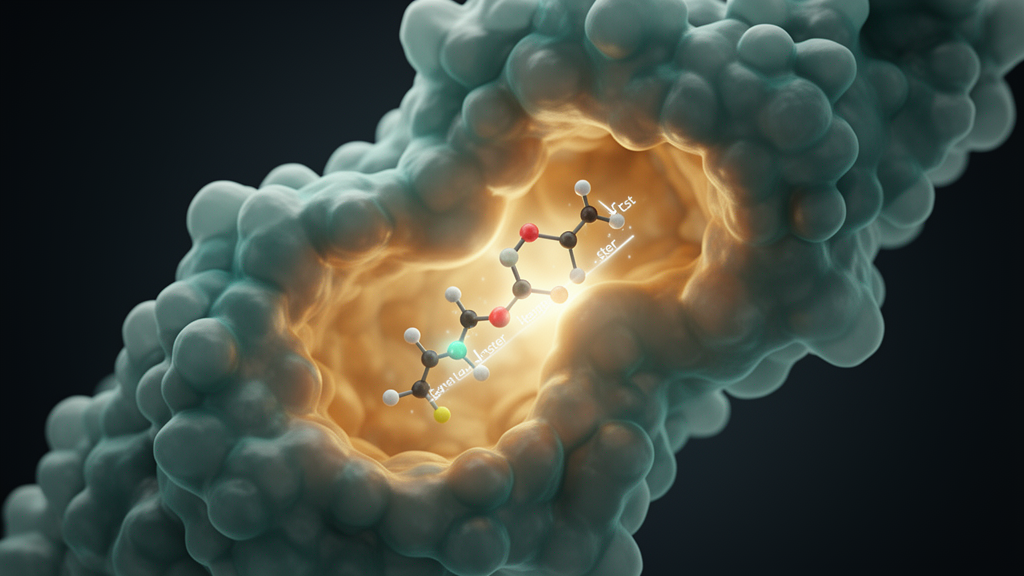
Chemists have long struggled to attach ester bonds to exactly the right spot on a molecule, especially when the reaction site is a bulky secondary alcohol sitting alongside a more reactive primary one. A team led by Xiaoguang Lei reports in Nature Chemistry that it has addressed this selectivity problem by reprogramming an ordinary metabolic enzyme into a family of ester-forming catalysts, using a small molecule as a switch to dictate which alcohol gets acylated. The starting point was an aldehyde dehydrogenase, a classical hydride-transfer enzyme that normally oxidizes aldehydes rather than building esters.

Through structure-guided protein engineering, the researchers reshaped the enzyme so that it could perform oxidative esterification, joining an alcohol and a carboxyl substrate while the oxidation chemistry supplies the driving force. They named the resulting catalysts OxiEs, for oxidative ester synthases. The engineering produced two complementary catalyst classes with divergent preferences.

The first class, called OxiEs1, depends on imidazole and favours primary alcohols, the easier and more reactive targets that conventional chemistry already handles reasonably well. The second class, OxiEs2, works without imidazole and shows exclusive selectivity for sterically demanding secondary alcohols, precisely the substrates that have made regioselective esterification such a formidable challenge. The most striking finding is mechanistic.

Imidazole, a small nitrogen-containing molecule, acts as a molecular switch that allosterically tunes the geometry of the active site. When imidazole is present, the enzyme's architecture favours primary alcohols; when it is absent, the reshaped active site accommodates and selectively acylates secondary alcohols instead. In other words, a single protein scaffold can be steered between two opposite regioselectivities by controlling one small effector molecule.

This switchable control matters because esters are everywhere. The ester bond underpins pharmaceuticals, agrochemicals, polymers and many functional materials, and installing it at the correct hydroxyl group in a multifunctional molecule often determines whether a synthesis route succeeds. The engineered enzymes demonstrate a broad substrate scope, acylating a wide range of secondary alcohols directly and with high selectivity.

According to the authors, the platform also extends beyond regioselectivity: the catalysts can control enantioselectivity, distinguishing between mirror-image forms of chiral substrates, and they support redox-neutral synthesis, in which the overall oxidation state of the product is balanced rather than requiring external oxidants or reductants. The practical credentials of the method rest on scale. The team prepared valuable ester products on gram scale under mild, sustainable conditions, an important benchmark for enzymatic chemistry moving from demonstration to application.

The authors present the work as establishing a strategy for regioselective control in esterification, transforming a classical hydride-transfer enzyme into a tunable platform for ester bond formation under gentle reaction conditions. Conceptually, the work shows that one protein scaffold can be redirected between primary and secondary alcohol substrates by adjusting a single allosteric input, an approach the authors describe as a general route to regioselective control in esterification. The imidazole-switch principle offers a concrete design rule for programming where, and on which functional group, an engineered enzyme builds an ester bond.

Subject of Research: Engineering aldehyde dehydrogenases into oxidative ester synthases with imidazole-controlled regioselectivity

Article Title: Enzymatic oxidative esterification with an unconventional regioselective control

Article References: Qiu, X., Hu, K., Yang, J., Li, P., Zhong, J., Dong, H., Han, Y., & Lei, X. (2026). Enzymatic oxidative esterification with an unconventional regioselective control. Nature Chemistry. https://doi.org/10.1038/s41557-026-02288-2

Image Credits: AI Generated

DOI: 10.1038/s41557-026-02288-2

Keywords: biocatalysis, enzyme engineering, regioselectivity, esterification, aldehyde dehydrogenase, Nature Chemistry, green chemistry, Enzymatic, oxidative, unconventional, regioselective, control

Cite Scienmag News

Bethany Barker. (October 26, 2026). Engineered enzymes flip a molecular switch to control ester bond placement. Scienmag. https://scienmag.com/engineered-enzymes-flip-a-molecular-switch-to-control-ester-bond-placement/

Bethany Barker. "Engineered enzymes flip a molecular switch to control ester bond placement." Scienmag, 26 October 2026, https://scienmag.com/engineered-enzymes-flip-a-molecular-switch-to-control-ester-bond-placement/. Accessed 26 October 2026.

Bethany Barker. "Engineered enzymes flip a molecular switch to control ester bond placement." Scienmag. October 26, 2026. https://scienmag.com/engineered-enzymes-flip-a-molecular-switch-to-control-ester-bond-placement/


Tags: aldehyde dehydrogenasealdehyde dehydrogenase as ester synthasebiocatalysisbiocatalysis for complex molecule synthesisControldevelopment of OxiEs1 and OxiEs2 ester synthasesEnzymaticenzyme engineeringEnzyme engineering for selective ester bond formationesterificationgreen chemistrymetabolic enzyme reprogrammingNature Chemistryovercoming regioselectivity challenges in esterificationoxidativeoxidative esterification catalysisregioselectiveregioselective ester bond placementregioselectivityselective esterification of primary vs secondary alcoholssmall molecule switches in enzyme activitystructure-guided protein engineeringswitch-controlled enzyme catalysisunconventional
Share26Tweet16
Previous Post

AI Screening of Routine Chest X-Rays for Osteoporosis Is Cost-Effective Only If Patients Follow Through

Next Post

Early prophylactic hydrocortisone fails to prevent lung disease in extremely preterm infants

Related Posts

Chip-Based Electrophoresis Spots SARS-CoV-2 Antigen in Under 30 Seconds
Chemistry

Chip-Based Electrophoresis Spots SARS-CoV-2 Antigen in Under 30 Seconds

October 26, 2026
Temperature Drives Fish Spoilage via Protein and Microbial Shifts
Chemistry

Temperature Drives Fish Spoilage via Protein and Microbial Shifts

October 26, 2026
Dye-and-chelator bilayer electrode detects diazinon pesticide in fruit samples
Chemistry

Dye-and-chelator bilayer electrode detects diazinon pesticide in fruit samples

October 26, 2026
Double-layer curtain canopies shield Syrah grapes from extreme desert heat and lift wine quality
Chemistry

Double-layer curtain canopies shield Syrah grapes from extreme desert heat and lift wine quality

October 25, 2026
Organic acids can keep apple base wine stable before distillation, but timing and acid type decide the flavor
Chemistry

Organic acids can keep apple base wine stable before distillation, but timing and acid type decide the flavor

October 25, 2026
Iron–Tea Polyphenol Coatings Tune Biodegradable Membranes That Keep Cherries Fresh
Chemistry

Iron–Tea Polyphenol Coatings Tune Biodegradable Membranes That Keep Cherries Fresh

October 25, 2026
Next Post
Early prophylactic hydrocortisone fails to prevent lung disease in extremely preterm infants

Early prophylactic hydrocortisone fails to prevent lung disease in extremely preterm infants

  • Mothers who receive childcare support from maternal grandparents show more optimized

    Mothers who receive childcare support from maternal grandparents show more parental warmth, finds NTU Singapore study

    27656 shares
    Share 11059 Tweet 6912
  • University of Seville Breaks 120-Year-Old Mystery, Revises a Key Einstein Concept

    1061 shares
    Share 424 Tweet 265
  • Bee body mass, pathogens and local climate influence heat tolerance

    682 shares
    Share 273 Tweet 171
  • Researchers record first-ever images and data of a shark experiencing a boat strike

    546 shares
    Share 218 Tweet 137
  • Groundbreaking Clinical Trial Reveals Lubiprostone Enhances Kidney Function

    531 shares
    Share 212 Tweet 133
Science

Embark on a thrilling journey of discovery with Scienmag.com—your ultimate source for cutting-edge breakthroughs. Immerse yourself in a world where curiosity knows no limits and tomorrow’s possibilities become today’s reality!

RECENT NEWS

  • Trust-aware sharding could secure blockchain for 5G vehicular networks
  • French lagoon harbors a genetic lifeline for the collapsing Mediterranean fan mussel
  • Chip-Based Electrophoresis Spots SARS-CoV-2 Antigen in Under 30 Seconds
  • Light-Controlled Adhesive Interface Lets Neural Implants Stick Firmly and Detach on Demand

Categories

  • Agriculture
  • Anthropology
  • Archaeology
  • Athmospheric
  • Biology
  • Biotechnology
  • Blog
  • Bussines
  • Cancer
  • Chemistry
  • Climate
  • Earth Science
  • Editorial Policy
  • Marine
  • Mathematics
  • Medicine
  • Pediatry
  • Policy
  • Psychology & Psychiatry
  • Science Education
  • Science News
  • Social Science
  • Space
  • Technology and Engineering

Subscribe to Blog via Email

Enter your email address to subscribe to this blog and receive notifications of new posts by email.

Join 5,151 other subscribers

© 2025 Scienmag - Science Magazine

Welcome Back!

Login to your account below

Forgotten Password?

Retrieve your password

Please enter your username or email address to reset your password.

Log In
No Result
View All Result
  • HOME
  • SCIENCE NEWS
  • CONTACT US

© 2025 Scienmag - Science Magazine

Discover more from Science

Subscribe now to keep reading and get access to the full archive.

Continue reading