

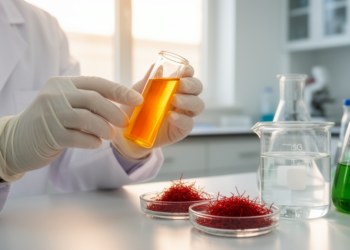
Scientists Turn Saffron Into a Water-Soluble Compound With a Greener Process
A non-chromatographic process converts saffron crocins into disodium crocetinate at 99.3% purity while recovering safranal as a co-product.
A non-chromatographic process converts saffron crocins into disodium crocetinate at 99.3% purity while recovering safranal as a co-product.
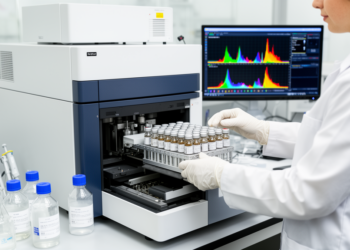
A validated stability-indicating RP-HPLC method simultaneously quantifies formoterol fumarate, glycopyrrolate, and fluticasone propionate in triple-combination inhaler formulations.

An optimized four-enzyme extraction process boosted phenolic and flavonoid yields from rosehip pseudofruit by roughly 50 percent over ethanol-water extraction ...
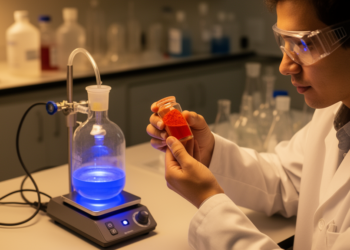
Chemists report a soluble quinacridone photocatalyst that oxidizes sulfides to sulfoxides with oxygen under green light at 0.1 mol percent ...
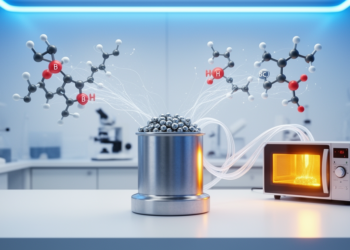
A new review maps how electrochemical, mechanochemical, microwave-assisted and unconventional solvent methods developed between 2020 and 2025 are challenging classical ...
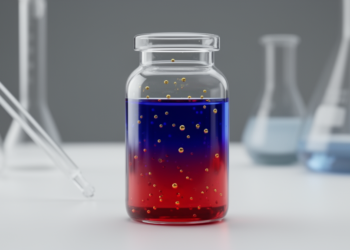
Researchers synthesized PVP-capped gold nanoparticles in one step with a plasma-under-liquid method and used their red-to-blue color change to detect ...
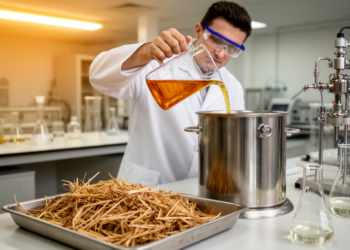
Researchers optimized an acid-catalyzed liquefaction process that converted sugarcane bagasse into bio-polyols with a 95.6 percent laboratory yield and properties ...
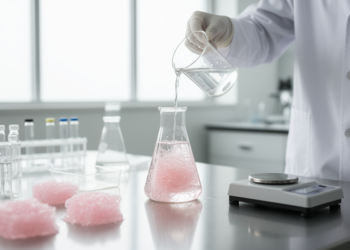
A new review finds ionic liquids can extract collagen from skins and tanned leather more efficiently and sustainably than conventional ...
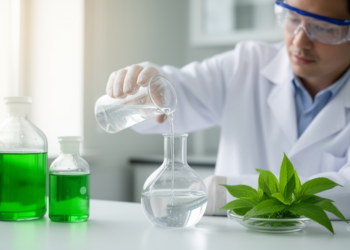
A new review maps proven green replacements for hazardous solvents including pyridine, toluene, THF, DMF and carbon tetrachloride across major ...
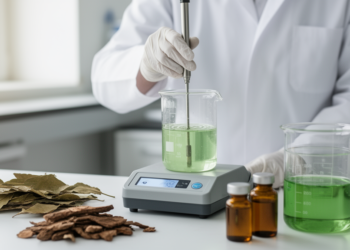
Researchers optimized a choline chloride–urea deep eutectic solvent with ultrasound assistance to extract antioxidant metabolites from Cassia abbreviata leaves, finding ...


Embark on a thrilling journey of discovery with Scienmag.com—your ultimate source for cutting-edge breakthroughs. Immerse yourself in a world where curiosity knows no limits and tomorrow’s possibilities become today’s reality!