


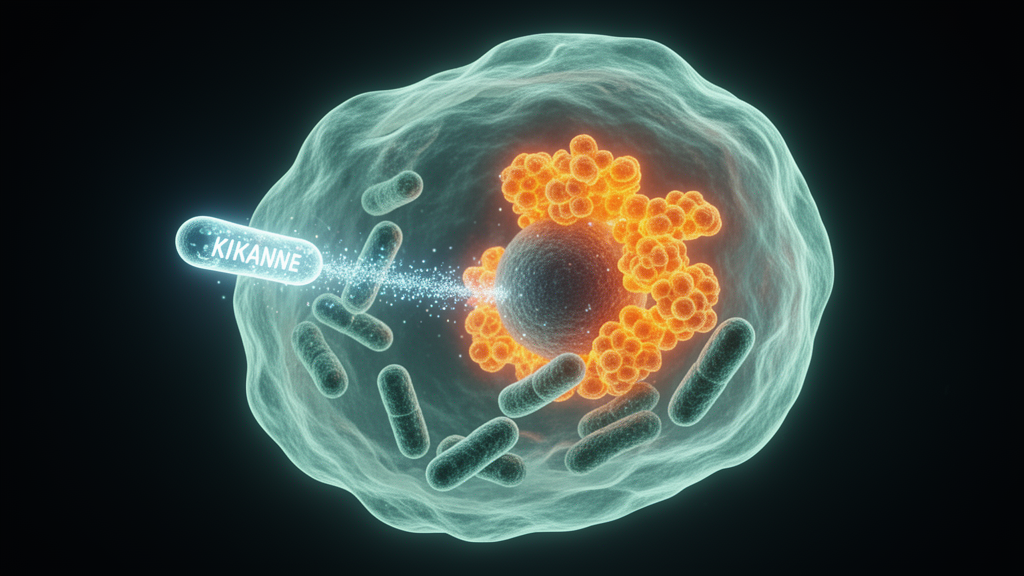
Researchers have mapped how large groups of virulence proteins from Legionella pneumophila, the bacterium behind Legionnaires' disease, shape the reaction of immune cells to infection. The team built a library of 14 mutant bacterial strains, each missing a different effector-rich stretch of the genome, deleting 85 effector genes in total. These effectors are delivered into host cells by the Dot/Icm type IV secretion system, and more than 330 of them are translocated during infection.
Many carry eukaryotic-like domains that mimic host proteins, but only a minority have been characterized, partly because effectors often perform overlapping functions that complicate the study of single genes. The multi-deletion approach allowed the researchers to test the collective impact of effector groups rather than individual proteins. None of the 14 mutants showed a defect in intracellular replication in THP-1 human macrophage-like cells, yet several were attenuated in amoebae.
One of the attenuated mutants lacked a predicted amino acid transporter. Transcriptional profiling of infected THP-1 cells revealed that wild-type L. pneumophila strain 130b triggers a strong inflammatory and cellular stress response in macrophages. Six of the mutants showed reduced interferon signalling, and one mutant stood out for a marked decrease in the global expression of host heat shock response genes, a transcriptional program controlled by the transcription factor heat shock factor 1 (HSF1).
By generating further sub-deletions within that mutant, the team traced the heat shock effect to a single Dot/Icm effector: the bacterial kinase LegK4. LegK4 was responsible for inducing the host heat shock response via HSF1. The study, conducted in cell culture models, reinforces the value of multi-gene deletions for uncovering effector phenotypes that single-gene knockouts can obscure through redundancy.
It also identifies LegK4 as the bacterial trigger of the host heat shock response in Legionella-infected macrophages.
Subject of Research: Dot/Icm effector deletion mutants of Legionella pneumophila and host transcriptional responses in infected macrophages
Article Title: Multi-Dot/Icm effector mutants reveal distinct host responses in Legionella infected macrophages
Article References: Wibawa, R., Li, P., Gearing, L. J., Pidot, S., Faidiuk, Y., Wong, W., Ng, G. Z., McCaffrey, K., Hertzog, P. J., Pasricha, S., & Hartland, E. L. (2026). Multi-Dot/Icm effector mutants reveal distinct host responses in Legionella infected macrophages. PLOS Pathogens, 22(10), e1014083. https://doi.org/10.1371/journal.ppat.1014083
Image Credits: AI Generated
DOI: 10.1371/journal.ppat.1014083
Keywords: Legionella pneumophila, Dot/Icm, effectors, LegK4, HSF1, heat shock response, macrophages, interferon signalling, THP-1, amoebae, multi-gene deletion, host-pathogen interactions
Cite Scienmag News
Kristina Jarvis. (October 24, 2026). Bacterial Effector Kinase Drives Heat Shock Response in Legionella-Infected Macrophages. Scienmag. https://scienmag.com/bacterial-effector-kinase-drives-heat-shock-response-in-legionella-infected-macrophages/
Kristina Jarvis. "Bacterial Effector Kinase Drives Heat Shock Response in Legionella-Infected Macrophages." Scienmag, 24 October 2026, https://scienmag.com/bacterial-effector-kinase-drives-heat-shock-response-in-legionella-infected-macrophages/. Accessed 24 October 2026.
Kristina Jarvis. "Bacterial Effector Kinase Drives Heat Shock Response in Legionella-Infected Macrophages." Scienmag. October 24, 2026. https://scienmag.com/bacterial-effector-kinase-drives-heat-shock-response-in-legionella-infected-macrophages/


