


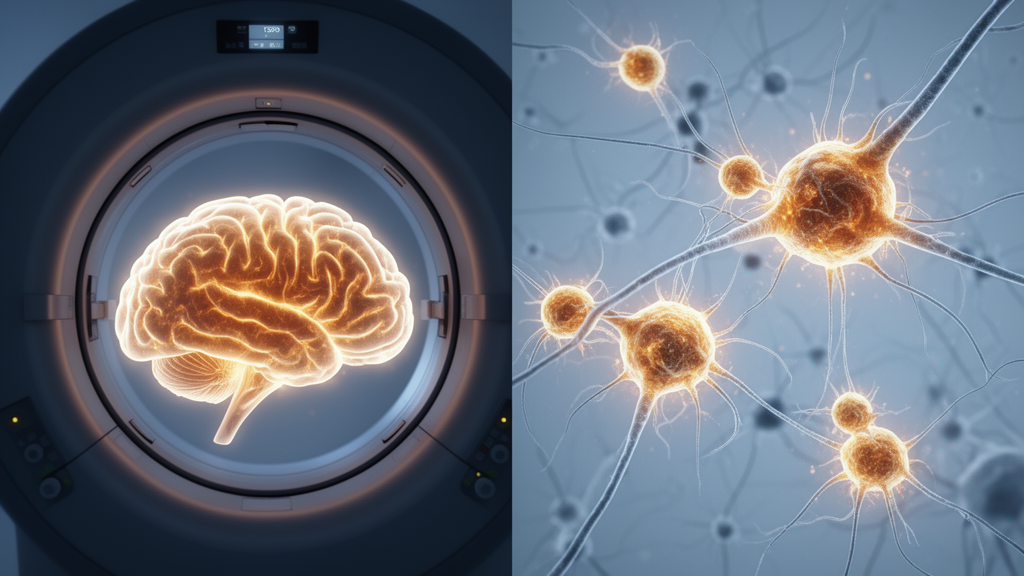
Positron emission tomography using the tracer [11C]PK11195 may be more than a general indicator of brain inflammation in frontotemporal dementia: in a small post-mortem study, the elevated signal was most closely associated with TSPO-bearing CD68-positive microglia, a population consistent with phagocytic activity. Researchers paired scans obtained during life with quantitative neuropathology from 10 people with frontotemporal dementia and five age- and sex-matched controls. Across 17 sampled brain regions, the amount of CD68-positive staining in tissue was positively associated with regional PET binding potential, while the association was similar in cases with tau and TDP-43 protein pathology. The findings support interpreting TSPO-PET in this disease as a signal that is enriched for phagocytic microglial burden, rather than as an undifferentiated readout of astrocytes, endothelial cells or all microglia.
The investigation, reported in Acta Neuropathologica, addressed a central limitation of TSPO imaging. The 18 kDa translocator protein is expressed in several cell populations within the central nervous system, including microglia, astrocytes and vascular endothelial cells, and it has therefore been uncertain whether the increased binding frequently detected in neurodegenerative disease originates from one cellular source or reflects a mixture of responses. Some post-mortem studies have suggested that disease-related TSPO-PET elevation may arise mainly from a greater number of immune cells rather than stronger expression within each cell. By directly matching ante-mortem imaging to tissue pathology, this study narrowed that possibility in frontotemporal dementia while also examining the phenotype and size of individual microglia.
The dementia cohort was heterogeneous. Five participants had frontotemporal lobar degeneration with tau pathology, including corticobasal degeneration, progressive supranuclear palsy and Pick’s disease, while the other five had TDP-43 pathology. The clinical diagnoses included three cases of behavioural-variant frontotemporal dementia, three of semantic-variant primary progressive aphasia and four of non-fluent-variant primary progressive aphasia. Three participants carried mutations associated with frontotemporal dementia, including variants in MAPT, C9orf72 and GRN. Controls had no significant neurodegenerative pathology at autopsy and had Braak tangle stages no higher than III. Mean age at death was 71.1 years in the dementia group and 73.6 years in controls, with no significant difference in age or sex distribution.
Analysis of CD68 immunohistochemistry across 323 tissue observations from the 15 participants showed an overall elevation in the frontotemporal dementia group compared with controls. When cortical tissue was divided into grey and white matter, the absolute difference was larger in white matter, where CD68-positive area was significantly higher in several cortical regions and in cerebellar white matter. A separate model showed that CD68 burden was also elevated in grey matter across the segmented regions, although no individual cortical grey-matter contrast reached significance in the region-specific follow-up analysis. Elevated CD68 burden was also detected in the anterior cingulate, globus pallidus, hippocampal cortex, putamen, thalamus, amygdala, midbrain and pons. The PET-to-post-mortem interval did not significantly explain the relationship between imaging and pathology.
Matching regional PET binding to post-mortem tissue burden produced a clear association. Among the 10 people with dementia, regional [11C]PK11195 binding potential was positively associated with CD68 area fraction, with a regression coefficient of 8.66, a standard error of 0.86 and P below 0.001. The model accounted for repeated regional observations within individuals and produced marginal and conditional R-squared values of 0.30 and 0.45, respectively. The slopes were comparable in the two pathology groups: 9.36 for FTLD-tau and 8.05 for FTLD-TDP, with no evidence that the association differed between them. These values are estimates from a small, pathologically diverse cohort rather than population-level performance measures for the tracer.
Tissue-level TSPO staining provided a second line of evidence. In three frontotemporal cortical regions, investigators quantified TSPO in two independently processed sets of adjacent slides, one stained for IBA1 and CD68 and the other for GFAP and CD31. Total TSPO-positive area fraction was higher in dementia cases in both sets, and each set separately showed a positive relationship with regional PET binding. The slopes did not differ significantly between slide sets. The agreement between independently prepared histology slides suggests that the imaging-tissue relationship was not attributable to a peculiarity of one staining batch, although the restricted number of regions and participants limits generalization.
Multiplex immunofluorescence then tested which cell types could account for the regional PET variation. Co-localization of TSPO with CD68, IBA1 and GFAP was elevated in the dementia group before correction for multiple comparisons, while endothelial CD31-TSPO co-localization showed only a trend. After correction across the four markers, significant elevations remained for CD68-TSPO and IBA1-TSPO. When the co-localized areas were related directly to PET binding, however, only CD68-TSPO had a positive association, with a coefficient of 0.0041, P = 0.015 and a false-discovery-rate-adjusted P value of 0.062. GFAP-TSPO had no relationship, IBA1-TSPO had a non-significant negative trend and CD31-TSPO had a negative association before correction. Because the CD68 result narrowly missed the study’s false-discovery-rate threshold, it supports a cellular interpretation but does not provide corrected statistical confirmation on its own.
Three-dimensional confocal reconstruction added a single-cell perspective. In BA46 tissue, investigators reconstructed individual IBA1-positive microglia and measured their intracellular TSPO and CD68. Within every one of the 10 dementia participants, CD68-positive microglia contained more absolute TSPO and were larger than CD68-negative microglia; both comparisons remained significant after correction, each with a false-discovery-rate-adjusted P value of 0.004. The proportion of cell volume occupied by TSPO, however, was not higher in CD68-positive cells and was numerically lower, with an adjusted P value of 0.055. This distinction suggests that phagocytic microglia may contain more TSPO partly because they are larger, rather than because TSPO occupies a greater share of their cytoplasm. The sampled fields did not show a significant difference in IBA1-positive cell counts between groups, and the numerical increase in the proportion of CD68-positive microglia did not reach significance.
Several limitations constrain how far the result can be generalized. Only 10 people with dementia and five controls contributed matched PET and tissue data, and the single-cell analysis used only four controls, making null findings underpowered. The PET tracer [11C]PK11195 is a first-generation ligand with a lower signal-to-noise ratio than newer tracers, although newer TSPO ligands can be strongly affected by genetic polymorphisms in binding. Cerebral tissue came from one hemisphere while cortical PET values were bilateral, potentially complicating comparisons if pathology or inflammation is asymmetric. CD68 identifies lysosome-rich cells but does not resolve specific microglial states or establish whether lysosomal function is intact. Immunofluorescence was confined to three cortical regions, and PET resolves signals at a much coarser scale than the microscope, so correspondence at a cellular scale remains an inference supported by converging measurements rather than a direct one-to-one demonstration.
Taken together, the results make a specific rather than sweeping claim: within this cohort, elevated TSPO-PET binding in frontotemporal dementia tracked regional post-mortem CD68 burden and was preferentially aligned with TSPO co-localized in phagocytic microglia. The same pattern appeared across tau- and TDP-43-associated disease, suggesting that it may reflect a shared inflammatory feature of frontotemporal lobar degeneration rather than a protein-specific mechanism. The study does not show that the measured microglial response causes dementia, that TSPO-PET diagnoses individual patients or that reducing TSPO would alter the disease. Instead, it provides histological evidence that could help interpret TSPO-PET measurements in experimental studies of frontotemporal dementia and related neurodegenerative disorders.
Subject of Research: Cellular origins of elevated TSPO-PET binding in frontotemporal dementia
Article Title: TSPO–PET binding in vivo reflects increased phagocytic microglia at post mortem in people with frontotemporal dementia
Article References: Vontobel, D. S., Lai, K. O., Bacioglu, M., Nolan, G., Maddison, D. C., Adamski, A., Goddard, J., Shapiro, N. L., Crook, H., Fryer, T., Hong, Y., Wijesinghe, S., Aigbirhio, F., Avezov, E., Allinson, K. S. J., Quaegebeur, A., O’Brien, J. T., Rowe, J. B., Spillantini, M. G., & Malpetti, M. (2026). TSPO–PET binding in vivo reflects increased phagocytic microglia at post mortem in people with frontotemporal dementia. Acta Neuropathologica, 152(1), Article 59. https://doi.org/10.1007/s00401-026-03103-5
Image Credits: AI Generated
DOI: 10.1007/s00401-026-03103-5
Keywords: TSPO-PET, frontotemporal dementia, microglia, CD68, phagocytosis, neuroinflammation, FTLD-tau, FTLD-TDP, post-mortem neuropathology, positron emission tomography, TSPO, binding
Cite Scienmag News
Cassandra Pierce. (October 22, 2026). TSPO-PET tracks phagocytic microglia in frontotemporal dementia. Scienmag. https://scienmag.com/tspo-pet-tracks-phagocytic-microglia-in-frontotemporal-dementia/
Cassandra Pierce. "TSPO-PET tracks phagocytic microglia in frontotemporal dementia." Scienmag, 22 October 2026, https://scienmag.com/tspo-pet-tracks-phagocytic-microglia-in-frontotemporal-dementia/. Accessed 22 October 2026.
Cassandra Pierce. "TSPO-PET tracks phagocytic microglia in frontotemporal dementia." Scienmag. October 22, 2026. https://scienmag.com/tspo-pet-tracks-phagocytic-microglia-in-frontotemporal-dementia/


