

Thursday, October 22, 2026
Science
No Result
View All Result
  • Login
  • HOME
  • SCIENCE NEWS
  • CONTACT US
  • HOME
  • SCIENCE NEWS
  • CONTACT US
No Result
View All Result
Scienmag
No Result
View All Result
Home Science News Agriculture

Research report: Postglacial expansion and sieving of adaptive variation contribute to speciation in a subtropical oak complex

October 22, 2026
in Agriculture
Juliet Wilcox
By Juliet Wilcox Scienmag Editorial Profile - Human Genetics
Reading Time: 2 mins read
0
Research report: Postglacial expansion and sieving of adaptive variation contribute to speciation in a subtropical oak complex

Research report: Postglacial expansion and sieving of adaptive variation contribute to speciation in a subtropical oak complex

65
SHARES
587
VIEWS
Share on FacebookShare on Twitter
ADVERTISEMENT

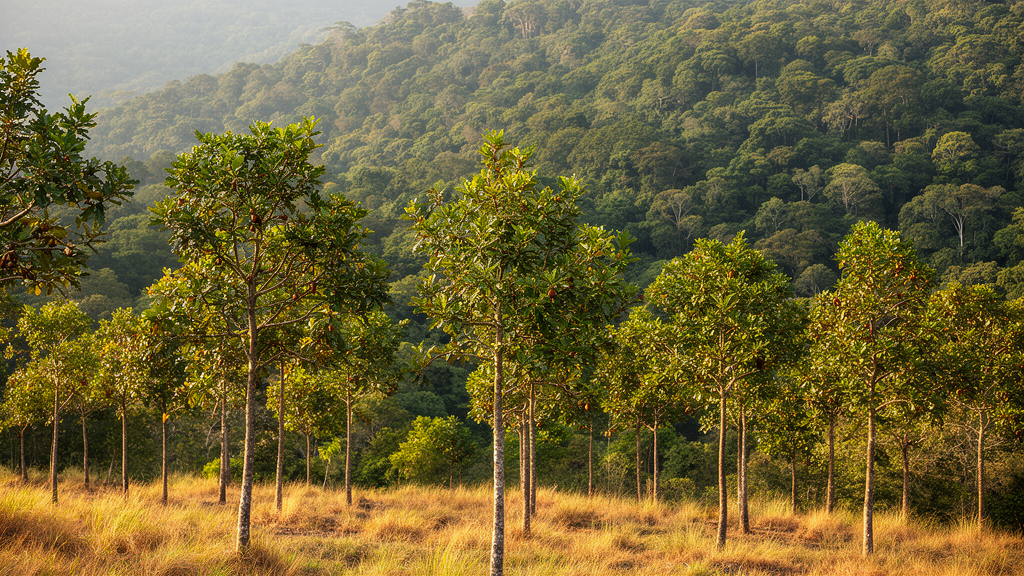
The researchers found that Quercus longinus var. kuoi persisted in a southern refugium on the Hengchun Peninsula during the Last Glacial Maximum, whereas northern and high-elevation populations were established after the ice age. Based on the combined evidence, the authors propose recognizing the refugial lineage as a distinct species, Quercus kuoi. The study tested whether postglacial range expansion was purely neutral or instead involved environmental filtering of standing genetic variation.

Genomic and ecological analyses indicated that the southern refugial population represented the ancestral lineage, while populations farther north and at higher elevations arose following postglacial range expansion. Allele frequencies associated with temperature and soil variables shifted markedly between the refugial population and newly colonized northern populations, consistent with climate-driven sorting of ancestral variation during expansion. Because these findings were partly correlative, the results support a sieving hypothesis rather than demonstrating a single causal mechanism.

Environment-associated genetic outliers were concentrated near genes with putative functions in membrane transport, stress response, signaling and photosynthesis. Gradient forest projections predicted that cold-associated adaptive variation would be retained in expanding northern populations, while the southern refugial lineage would become differentiated in adaptive composition under warmer postglacial environments. Similarity between adaptive and genome-wide projections indicated that the broad geographic pattern was not unique to the candidate loci.

The researchers also examined morphology, geographic distribution, population structure, phylogenetic placement, ecological niche differentiation and lineage-specific adaptive divergence to support the proposed recognition of Q. kuoi as a species. Under the proposed mechanism, expanding populations encountered different environmental conditions that filtered genetic variants already present in ancestral populations, helping lineages diverge across heterogeneous habitats. The study’s authors described the evidence as convergent but partly correlative, so the findings do not establish that climate sieving alone caused speciation or show how broadly the mechanism applies beyond the studied Taiwanese oak complex.

Subject of Research: Postglacial expansion and adaptive genetic variation in Taiwan’s Quercus longinus oak complex

Article Title: Postglacial expansion and sieving of adaptive variation contribute to speciation in a subtropical oak complex

Article References: Sun, P.-W., Chao, C.-T., Chang, J.-T., & Liao, P.-C. (2026). Postglacial expansion and sieving of adaptive variation contribute to speciation in a subtropical oak complex. BMC Plant Biology. https://doi.org/10.1186/s12870-026-10175-8

Image Credits: AI Generated

DOI: 10.1186/s12870-026-10175-8

Keywords: Quercus kuoi, Taiwan oaks, postglacial expansion, adaptive variation, climate sieving, plant speciation, standing genetic variation, environmental genomics, refugial lineage, tropical endemism, Postglacial, expansion

Cite Scienmag News

Juliet Wilcox. (October 22, 2026). Research report: Postglacial expansion and sieving of adaptive variation contribute to speciation in a subtropical oak complex. Scienmag. https://scienmag.com/research-report-postglacial-expansion-and-sieving-of-adaptive-variation-contribute-to-speciation-in-a-subtropical-oak-complex/


Juliet Wilcox. "Research report: Postglacial expansion and sieving of adaptive variation contribute to speciation in a subtropical oak complex." Scienmag, 22 October 2026, https://scienmag.com/research-report-postglacial-expansion-and-sieving-of-adaptive-variation-contribute-to-speciation-in-a-subtropical-oak-complex/. Accessed 22 October 2026.

Juliet Wilcox. "Research report: Postglacial expansion and sieving of adaptive variation contribute to speciation in a subtropical oak complex." Scienmag. October 22, 2026. https://scienmag.com/research-report-postglacial-expansion-and-sieving-of-adaptive-variation-contribute-to-speciation-in-a-subtropical-oak-complex/

Tags: adaptive gene functions in oaksadaptive variationadaptive variation in Quercusallele frequency shifts in oak populationsclimate sievingclimate-driven genetic filteringecological and genetic divergenceEnvironmental Genomicsenvironmental influence on oak evolutionenvironmental sieving in plant speciationexpansiongenomic analysis of subtropical oaksplant speciationpopulation divergence after ice agePostglacialpostglacial expansionPostglacial oak speciationpostglacial range expansion effectsQuercus kuoirefugial lineagerefugial lineage identificationstanding genetic variationTaiwan oakstropical endemism
Share26Tweet16
Previous Post

Lean Kano–QFD framework prioritizes wearable device development

Next Post

Two-year subtropical island survey links habitat and disturbance to invasive plants

Related Posts

Bioristor tracks tomato responses to drought and combined heat stress
Agriculture

Bioristor tracks tomato responses to drought and combined heat stress

October 22, 2026
Colder Alpine Grasslands Show Less Integrated Plant Trait Networks
Agriculture

Colder Alpine Grasslands Show Less Integrated Plant Trait Networks

October 22, 2026
Lightweight AI detects potato leaf diseases under field conditions
Agriculture

Lightweight AI detects potato leaf diseases under field conditions

October 22, 2026
Wheat in Crisis: Variability of Wheat Area in Lebanon 2017–2025
Agriculture

Wheat in Crisis: Variability of Wheat Area in Lebanon 2017–2025

October 22, 2026
High-dose sheep manure improves black cumin oil composition in field trial
Agriculture

High-dose sheep manure improves black cumin oil composition in field trial

October 22, 2026
Tea resistance to anthracnose links enzymes, flavonoids and gene regulation
Agriculture

Tea resistance to anthracnose links enzymes, flavonoids and gene regulation

October 21, 2026
Next Post
Two-year subtropical island survey links habitat and disturbance to invasive plants

Two-year subtropical island survey links habitat and disturbance to invasive plants

  • Mothers who receive childcare support from maternal grandparents show more optimized

    Mothers who receive childcare support from maternal grandparents show more parental warmth, finds NTU Singapore study

    27656 shares
    Share 11059 Tweet 6912
  • University of Seville Breaks 120-Year-Old Mystery, Revises a Key Einstein Concept

    1061 shares
    Share 424 Tweet 265
  • Bee body mass, pathogens and local climate influence heat tolerance

    682 shares
    Share 273 Tweet 171
  • Researchers record first-ever images and data of a shark experiencing a boat strike

    546 shares
    Share 218 Tweet 137
  • Groundbreaking Clinical Trial Reveals Lubiprostone Enhances Kidney Function

    531 shares
    Share 212 Tweet 133
Science

Embark on a thrilling journey of discovery with Scienmag.com—your ultimate source for cutting-edge breakthroughs. Immerse yourself in a world where curiosity knows no limits and tomorrow’s possibilities become today’s reality!

RECENT NEWS

  • Two-year subtropical island survey links habitat and disturbance to invasive plants
  • Research report: Postglacial expansion and sieving of adaptive variation contribute to speciation in a subtropical oak complex
  • Lean Kano–QFD framework prioritizes wearable device development
  • Calibrated model predicts aluminium strength and ductility loss after alcoholate corrosion

Categories

  • Agriculture
  • Anthropology
  • Archaeology
  • Athmospheric
  • Biology
  • Biotechnology
  • Blog
  • Bussines
  • Cancer
  • Chemistry
  • Climate
  • Earth Science
  • Editorial Policy
  • Marine
  • Mathematics
  • Medicine
  • Pediatry
  • Policy
  • Psychology & Psychiatry
  • Science Education
  • Science News
  • Social Science
  • Space
  • Technology and Engineering

Subscribe to Blog via Email

Enter your email address to subscribe to this blog and receive notifications of new posts by email.

Join 5,151 other subscribers

© 2025 Scienmag - Science Magazine

Welcome Back!

Login to your account below

Forgotten Password?

Retrieve your password

Please enter your username or email address to reset your password.

Log In
No Result
View All Result
  • HOME
  • SCIENCE NEWS
  • CONTACT US

© 2025 Scienmag - Science Magazine

Discover more from Science

Subscribe now to keep reading and get access to the full archive.

Continue reading