

Wednesday, October 21, 2026
Science
No Result
View All Result
  • Login
  • HOME
  • SCIENCE NEWS
  • CONTACT US
  • HOME
  • SCIENCE NEWS
  • CONTACT US
No Result
View All Result
Scienmag
No Result
View All Result
Home Science News Medicine

Research report: Local circuitry mechanisms underlying motor cortex stimulation for chronic pain treatment

October 21, 2026
in Medicine
Ophelia Keating
By Ophelia Keating Scienmag Editorial Profile - Health Services Research
Reading Time: 2 mins read
0
Research report: Local circuitry mechanisms underlying motor cortex stimulation for chronic pain treatment

Research report: Local circuitry mechanisms underlying motor cortex stimulation for chronic pain treatment

65
SHARES
587
VIEWS
Share on FacebookShare on Twitter
ADVERTISEMENT

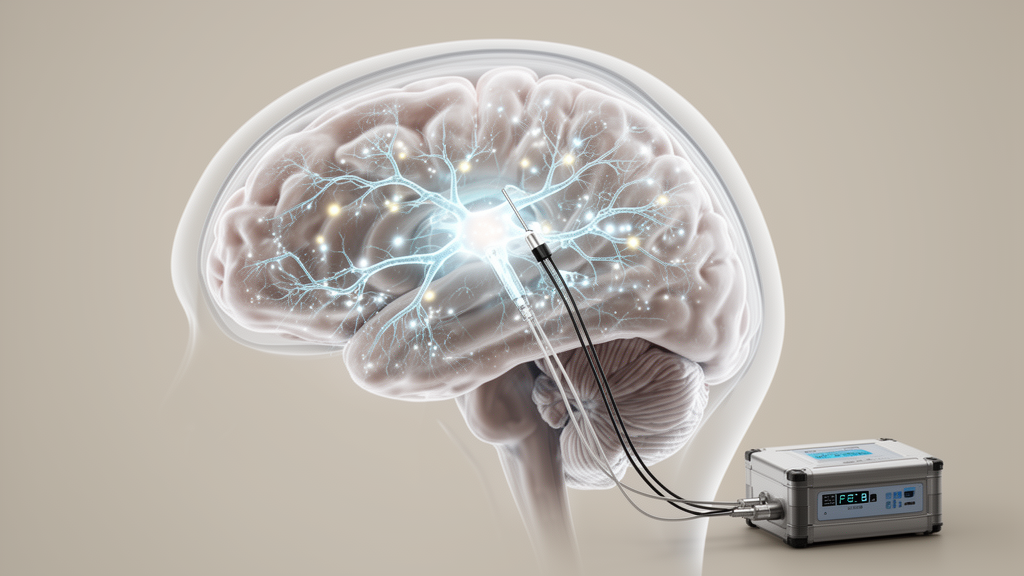
Motor cortex stimulation can relieve certain chronic pain conditions by altering local electrical activity and microcircuitry in the primary motor cortex, according to a review in BMC Medicine. The review synthesizes clinical electrophysiological findings with evidence about motor neuroanatomy and neuroplasticity to propose a local-circuit framework for analgesia. Its central message is that pain relief does not depend on a single uniform mechanism: the response varies with the stimulation method, the cortical layers engaged and the balance between excitatory pyramidal neurons and inhibitory interneurons.

The proposed framework starts with motor cortical output. Pyramidal neurons in the primary motor cortex, or M1, can inhibit spinal pain processing through direct and indirect activation of descending control systems. Through thalamic relays and corticocortical connections, they also modulate broad cortical and subcortical regions involved in pain.

At the cellular level, motor cortex stimulation changes the electrical states of local neurons and affects their microcircuit activity, enhancing motor output while altering wider pain-related network activity. The review therefore treats analgesia as a circuit-level process rather than the simple consequence of activating a motor area. Targeting appears especially important within this model.

By comparison, protocols that directly recruit deeper M1 layers may produce enhanced motor output without recruiting the same local network. The review presents this as an important distinction for understanding efficacy and identifies the engagement of superficial layers as a feature shared by effective therapeutic stimulation approaches. Long-term pain relief after non-invasive M1 stimulation is also associated with N-methyl-D-aspartate receptor-dependent, or NMDA receptor-dependent, long-term potentiation-like synaptic plasticity in local excitatory microcircuits.

The association provides a possible explanation for durable analgesic effects, although the clinical contribution and causal extent of that mechanism require direct evaluation. The review distinguishes this longer-lasting synaptic change from the acute modulation produced by changing neuronal electrical states during a stimulation session. Chronic pain can also change the local response to stimulation by shifting excitation and inhibition within M1.

The review reports that enhanced excitability of GABAergic interneurons suppresses the analgesic effect associated with activation of M1 pyramidal neurons. M1-targeted rTMS is proposed to rebalance these dynamics and restore M1 analgesic output, indicating that the response may depend on the excitability state of local cells as well as the location of stimulation. Based on this framework, the authors propose spatially precise, temporally targeted and personalized neuromodulation strategies.

These are research directions derived from a translational review, not established clinical recommendations, and the synthesis does not establish that every chronic pain condition responds through the same local circuitry.

Subject of Research: Local motor cortex microcircuitry associated with chronic pain relief from motor cortex stimulation

Article Title: Local circuitry mechanisms underlying motor cortex stimulation for chronic pain treatment

Article References: Bai, Y., Fregni, F., Liang, G.-B., Li, Y.-Q., & Nitsche, M. A. (2026). Local circuitry mechanisms underlying motor cortex stimulation for chronic pain treatment. BMC Medicine. https://doi.org/10.1186/s12916-026-05313-w

Image Credits: AI Generated

DOI: 10.1186/s12916-026-05313-w

Keywords: motor cortex stimulation, chronic pain, primary motor cortex, rTMS, microcircuitry, synaptic plasticity, NMDA receptors, GABAergic interneurons, neuromodulation, descending pain control, Local, circuitry

Cite Scienmag News

Ophelia Keating. (October 21, 2026). Research report: Local circuitry mechanisms underlying motor cortex stimulation for chronic pain treatment. Scienmag. https://scienmag.com/research-report-local-circuitry-mechanisms-underlying-motor-cortex-stimulation-for-chronic-pain-treatment/


Ophelia Keating. "Research report: Local circuitry mechanisms underlying motor cortex stimulation for chronic pain treatment." Scienmag, 21 October 2026, https://scienmag.com/research-report-local-circuitry-mechanisms-underlying-motor-cortex-stimulation-for-chronic-pain-treatment/. Accessed 21 October 2026.

Ophelia Keating. "Research report: Local circuitry mechanisms underlying motor cortex stimulation for chronic pain treatment." Scienmag. October 21, 2026. https://scienmag.com/research-report-local-circuitry-mechanisms-underlying-motor-cortex-stimulation-for-chronic-pain-treatment/

Tags: chronic paincircuitrycortical layer-specific stimulation effectscortical microcircuitry in pain treatmentdescending pain controldescending pain inhibitory pathwayselectrophysiological evidence in chronic painelectrophysiological mechanisms of pain modulationGABAergic interneuronsinhibitory interneurons in pain controlLocalmicrocircuitrymotor cortex and pain network modulationmotor cortex stimulationMotor cortex stimulation for chronic pain reliefneuroanatomy of motor cortex in painneuromodulationneuroplasticity in motor cortexNMDA receptorsprimary motor cortexpyramidal neuron role in analgesiarTMSsynaptic plasticitytargeted cortical stimulation for analgesia
Share26Tweet16
Previous Post

NMN reduces spinal cord damage and improves recovery in mouse study

Next Post

Norrin complex structure guides potent engineered signaling surrogates

Related Posts

NMN reduces spinal cord damage and improves recovery in mouse study
Medicine

NMN reduces spinal cord damage and improves recovery in mouse study

October 21, 2026
DynaVelo predicts B-cell mutation effects and rescue targets in mice
Medicine

DynaVelo predicts B-cell mutation effects and rescue targets in mice

October 21, 2026
Routine fertility conversations linked to better childhood cancer care perceptions
Medicine

Routine fertility conversations linked to better childhood cancer care perceptions

October 21, 2026
Smart wearable ownership tracks fewer depressive symptoms in older Chinese adults
Medicine

Smart wearable ownership tracks fewer depressive symptoms in older Chinese adults

October 21, 2026
Mouse study links corticohypothalamic circuit to waking from pup calls
Medicine

Mouse study links corticohypothalamic circuit to waking from pup calls

October 21, 2026
Preclinical study finds PTPN12 restrains colorectal cancer immunity
Medicine

Preclinical study finds PTPN12 restrains colorectal cancer immunity

October 21, 2026
Next Post
Norrin complex structure guides potent engineered signaling surrogates

Norrin complex structure guides potent engineered signaling surrogates

  • Mothers who receive childcare support from maternal grandparents show more optimized

    Mothers who receive childcare support from maternal grandparents show more parental warmth, finds NTU Singapore study

    27656 shares
    Share 11059 Tweet 6912
  • University of Seville Breaks 120-Year-Old Mystery, Revises a Key Einstein Concept

    1061 shares
    Share 424 Tweet 265
  • Bee body mass, pathogens and local climate influence heat tolerance

    682 shares
    Share 273 Tweet 171
  • Researchers record first-ever images and data of a shark experiencing a boat strike

    546 shares
    Share 218 Tweet 137
  • Groundbreaking Clinical Trial Reveals Lubiprostone Enhances Kidney Function

    531 shares
    Share 212 Tweet 133
Science

Embark on a thrilling journey of discovery with Scienmag.com—your ultimate source for cutting-edge breakthroughs. Immerse yourself in a world where curiosity knows no limits and tomorrow’s possibilities become today’s reality!

RECENT NEWS

  • Bacteriophages could help oncolytic viruses penetrate cold tumors
  • Mouse germinal-center confinement supports broader antibody responses
  • Norrin complex structure guides potent engineered signaling surrogates
  • Research report: Local circuitry mechanisms underlying motor cortex stimulation for chronic pain treatment

Categories

  • Agriculture
  • Anthropology
  • Archaeology
  • Athmospheric
  • Biology
  • Biotechnology
  • Blog
  • Bussines
  • Cancer
  • Chemistry
  • Climate
  • Earth Science
  • Editorial Policy
  • Marine
  • Mathematics
  • Medicine
  • Pediatry
  • Policy
  • Psychology & Psychiatry
  • Science Education
  • Science News
  • Social Science
  • Space
  • Technology and Engineering

Subscribe to Blog via Email

Enter your email address to subscribe to this blog and receive notifications of new posts by email.

Join 5,150 other subscribers

© 2025 Scienmag - Science Magazine

Welcome Back!

Login to your account below

Forgotten Password?

Retrieve your password

Please enter your username or email address to reset your password.

Log In
No Result
View All Result
  • HOME
  • SCIENCE NEWS
  • CONTACT US

© 2025 Scienmag - Science Magazine

Discover more from Science

Subscribe now to keep reading and get access to the full archive.

Continue reading