

Wednesday, October 21, 2026
Science
No Result
View All Result
  • Login
  • HOME
  • SCIENCE NEWS
  • CONTACT US
  • HOME
  • SCIENCE NEWS
  • CONTACT US
No Result
View All Result
Scienmag
No Result
View All Result
Home Science News Medicine

Smart wearable ownership tracks fewer depressive symptoms in older Chinese adults

October 21, 2026
in Medicine
Glenn Wilkins
By Glenn Wilkins Scienmag Editorial Profile - Clinical Psychology
Reading Time: 2 mins read
0
Smart wearable ownership tracks fewer depressive symptoms in older Chinese adults

Smart wearable ownership tracks fewer depressive symptoms in older Chinese adults

65
SHARES
587
VIEWS
Share on FacebookShare on Twitter
ADVERTISEMENT

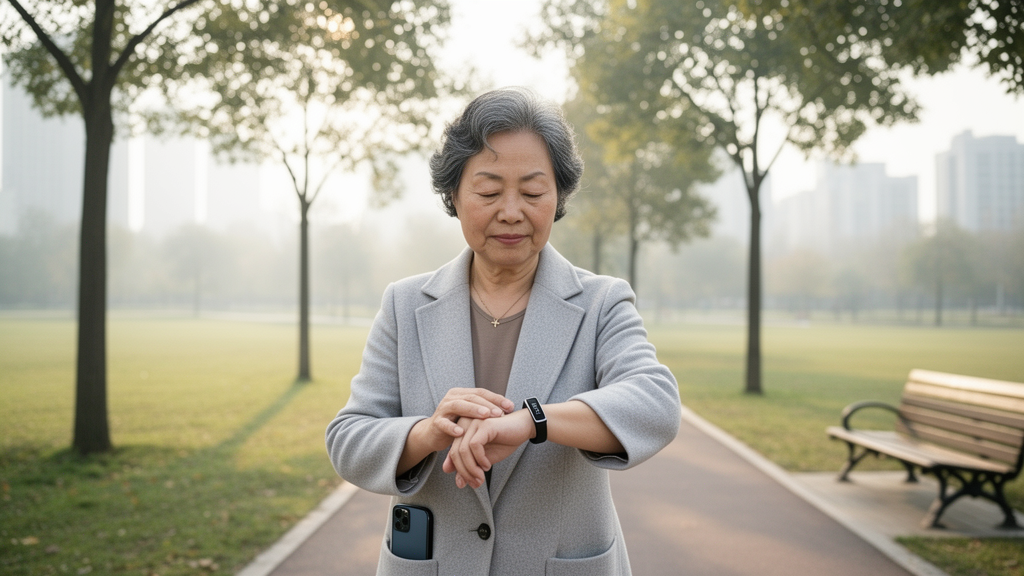
Older adults in China who reported owning a smart wristband or smartwatch tended to report fewer depressive symptoms during survey waves in which they owned a device, according to a longitudinal fixed-effects analysis. The within-person association remained positive across multiple sensitivity analyses, but the observational findings do not establish that wearable ownership caused the difference. The study used data from the 2018, 2020 and 2023 waves of the China Longitudinal Aging Social Survey.

The baseline analytical sample contained 30,255 person-year observations from 16,752 respondents. For the two-way fixed-effects models, the researchers analyzed 22,536 observations from 9,033 respondents observed repeatedly, including 902 participants whose smart wearable ownership status changed between waves. Depressive symptoms were measured with a reverse-coded nine-item CES-D score. A higher score in the analysis indicated fewer depressive symptoms. Smart wearable ownership was positively associated with this score within individuals, with a coefficient of 0.719 and a 95% confidence interval of 0.414 to 1.024.

The analysis also examined whether wearable ownership covaried with concurrent psychosocial and behavioral characteristics. Ownership was positively associated with health perception, social adaptation and leisure participation, according to the study. Because these characteristics were measured at the same time as wearable ownership, the results could not establish that any of them mediated the association with depressive symptoms. Additional analyses considered mobile-phone proficiency, sociodemographic variation, sample selection and attrition.

Contemporaneous analyses found a more favorable association between wearable ownership and the reverse-coded depressive-symptom score among older adults reporting higher mobile-phone proficiency. The linear interaction coefficient was 1.890, with p less than .001. When the researchers instead examined prior-wave mobile-phone proficiency, the evidence for this relationship was weaker. The difference between these approaches means that the results do not identify a single, consistent relationship between earlier digital proficiency and the ownership–depressive-symptom association.

Variation in the association was statistically supported for hukou origin after accounting for multiple comparisons, while evidence of heterogeneity was not supported for gender, age or education. Taken together, the findings show a measurable association between smart wearable ownership and fewer depressive symptoms within the surveyed older Chinese population, alongside differences related to digital capability and hukou origin. The study does not determine whether the devices themselves improve well-being, whether people with better health or social circumstances are more likely to acquire and use them, or whether other factors contribute to the observed pattern.

Subject of Research: Within-person associations between smart wearable ownership and depressive symptoms among older adults in China

Article Title: Smart wearable device ownership and depressive symptoms among older adults in China: a longitudinal fixed-effects analysis

Article References: Ji, H., Pan, W., Zhang, M., & Yu, Y. (2026). Smart wearable device ownership and depressive symptoms among older adults in China: a longitudinal fixed-effects analysis. BMC Geriatrics. https://doi.org/10.1186/s12877-026-08525-0

Image Credits: AI Generated

DOI: 10.1186/s12877-026-08525-0

Keywords: smart wearables, depressive symptoms, older adults, China, longitudinal analysis, fixed-effects models, CES-D, mobile phone proficiency, health perception, digital health, Smart, wearable

Cite Scienmag News

Glenn Wilkins. (October 21, 2026). Smart wearable ownership tracks fewer depressive symptoms in older Chinese adults. Scienmag. https://scienmag.com/smart-wearable-ownership-tracks-fewer-depressive-symptoms-in-older-chinese-adults/


Glenn Wilkins. "Smart wearable ownership tracks fewer depressive symptoms in older Chinese adults." Scienmag, 21 October 2026, https://scienmag.com/smart-wearable-ownership-tracks-fewer-depressive-symptoms-in-older-chinese-adults/. Accessed 21 October 2026.

Glenn Wilkins. "Smart wearable ownership tracks fewer depressive symptoms in older Chinese adults." Scienmag. October 21, 2026. https://scienmag.com/smart-wearable-ownership-tracks-fewer-depressive-symptoms-in-older-chinese-adults/

Tags: Agingassociation between smartwatches and psychological well-beingCES-DCES-D score as a measure of depression in older adultsChinadepressive symptomsdigital healthfixed-effects modelshealth perceptionimpact of wearable technology on depression in elderlyinfluence of wearable devices on health perception and social adaptationlongitudinal analysislongitudinal analysis of wearable ownership and depressive symptomsmental health benefits of wearable health trackersmobile phone proficiencyobservational study on wearables and depressive symptomsolder adultssmartSmart wearable devices and mental health in older adultssmart wearablesTechnologywearablewearable health devices and social participation among seniorswearable technology usage in aging populations in China
Share26Tweet16
Previous Post

Mouse study links corticohypothalamic circuit to waking from pup calls

Next Post

Semantic popularity control outperforms count-based control in recommender studies

Related Posts

Mouse study links corticohypothalamic circuit to waking from pup calls
Medicine

Mouse study links corticohypothalamic circuit to waking from pup calls

October 21, 2026
Preclinical study finds PTPN12 restrains colorectal cancer immunity
Medicine

Preclinical study finds PTPN12 restrains colorectal cancer immunity

October 21, 2026
Screening-defined neurocognitive impairment frequent in vulnerable Amazonian HIV cohort
Medicine

Screening-defined neurocognitive impairment frequent in vulnerable Amazonian HIV cohort

October 21, 2026
Research report: Barriers and facilitators to career progression and leadership among internationally educated nurses and midwives in the UK: a mixed methods systematic review
Medicine

Research report: Barriers and facilitators to career progression and leadership among internationally educated nurses and midwives in the UK: a mixed methods systematic review

October 21, 2026
Beyond generalist AI: purpose-built foundation models for transplantation
Medicine

Beyond generalist AI: purpose-built foundation models for transplantation

October 21, 2026
Structured Nursing Education Linked to Better Colorectal Surgery Outcomes
Medicine

Structured Nursing Education Linked to Better Colorectal Surgery Outcomes

October 21, 2026
Next Post
Semantic popularity control outperforms count-based control in recommender studies

Semantic popularity control outperforms count-based control in recommender studies

  • Mothers who receive childcare support from maternal grandparents show more optimized

    Mothers who receive childcare support from maternal grandparents show more parental warmth, finds NTU Singapore study

    27656 shares
    Share 11059 Tweet 6912
  • University of Seville Breaks 120-Year-Old Mystery, Revises a Key Einstein Concept

    1061 shares
    Share 424 Tweet 265
  • Bee body mass, pathogens and local climate influence heat tolerance

    682 shares
    Share 273 Tweet 171
  • Researchers record first-ever images and data of a shark experiencing a boat strike

    546 shares
    Share 218 Tweet 137
  • Groundbreaking Clinical Trial Reveals Lubiprostone Enhances Kidney Function

    531 shares
    Share 212 Tweet 133
Science

Embark on a thrilling journey of discovery with Scienmag.com—your ultimate source for cutting-edge breakthroughs. Immerse yourself in a world where curiosity knows no limits and tomorrow’s possibilities become today’s reality!

RECENT NEWS

  • Graph-learning model reports high drug-response accuracy in cancer cell lines
  • Semantic popularity control outperforms count-based control in recommender studies
  • Smart wearable ownership tracks fewer depressive symptoms in older Chinese adults
  • Mouse study links corticohypothalamic circuit to waking from pup calls

Categories

  • Agriculture
  • Anthropology
  • Archaeology
  • Athmospheric
  • Biology
  • Biotechnology
  • Blog
  • Bussines
  • Cancer
  • Chemistry
  • Climate
  • Earth Science
  • Editorial Policy
  • Marine
  • Mathematics
  • Medicine
  • Pediatry
  • Policy
  • Psychology & Psychiatry
  • Science Education
  • Science News
  • Social Science
  • Space
  • Technology and Engineering

Subscribe to Blog via Email

Enter your email address to subscribe to this blog and receive notifications of new posts by email.

Join 5,150 other subscribers

© 2025 Scienmag - Science Magazine

Welcome Back!

Login to your account below

Forgotten Password?

Retrieve your password

Please enter your username or email address to reset your password.

Log In
No Result
View All Result
  • HOME
  • SCIENCE NEWS
  • CONTACT US

© 2025 Scienmag - Science Magazine

Discover more from Science

Subscribe now to keep reading and get access to the full archive.

Continue reading