


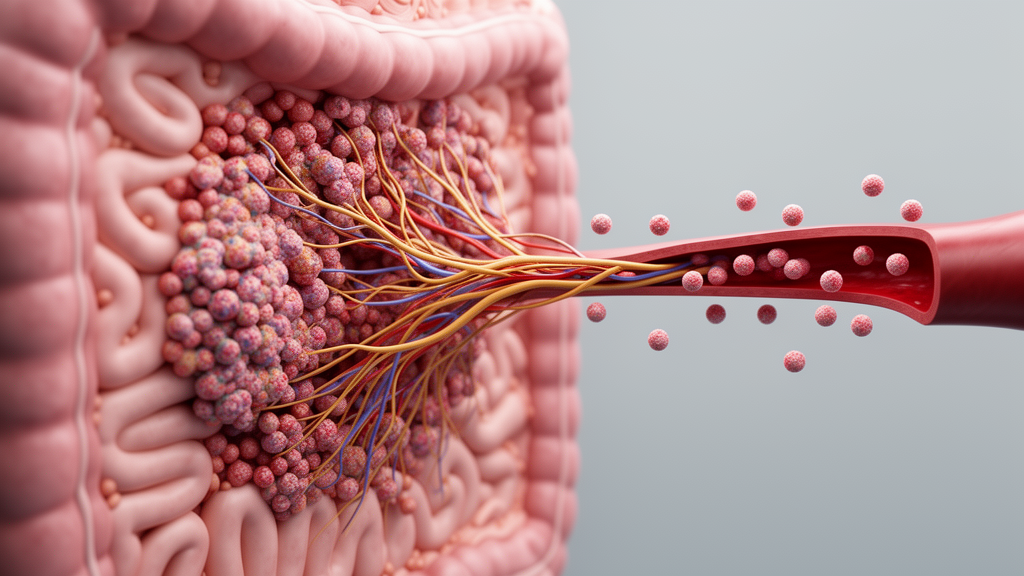
Colorectal tumors with perineural invasion (PNI) showed a stronger association with distant metastasis and lower sensitivity to capecitabine in laboratory assays in a retrospective study of 724 patients who underwent potentially curative surgery at a tertiary cancer center in China. Among the participants, 94 tumors were classified as PNI-positive. Even after accounting for lymphovascular invasion and lymph-node status, PNI was associated with more than twice the odds of distant metastasis during follow-up, while patient-derived tumor cells from PNI-positive cancers were less responsive to capecitabine after several methods of statistical adjustment. The findings identify PNI as a marker of an aggressive tumor phenotype, but the capecitabine result was confined to an in vitro assay and does not establish that affected patients fare less well with clinical chemotherapy.
The investigation combined two partially overlapping analytical cohorts drawn from the same surgical population. Cohort A included 430 patients with complete information for the clinical variables considered in a prediction model for PNI. The researchers used least absolute shrinkage and selection operator regression, multivariable logistic modeling and bootstrap corrections to develop a six-factor nomogram based on pathological T stage, N stage, lymphovascular invasion, tumor budding, KRAS mutation status and Ki-67 expression. Cohort B consisted of 390 patients with valid ATP-based tumor chemosensitivity records. Its complete-covariate subset included 292 patients and was used to test the relationship between PNI and capecitabine sensitivity through ordinal regression, inverse probability of treatment weighting and propensity-score matching. The two analytical cohorts partially overlapped, but model development and chemosensitivity testing were conducted separately to limit information leakage.
All participants had histologically confirmed colorectal adenocarcinoma and underwent R0 resection between January 2024 and August 2025. The researchers excluded patients with another primary malignancy, those who received neoadjuvant chemoradiotherapy before surgery, and those with hereditary colorectal cancer syndromes. Follow-up ranged from eight to 27 months, with a median of 18 months, and ended with a database lock on March 31, 2026. PNI was defined using the Liebig criteria: tumor cells had to encircle at least 33% of a nerve’s circumference or involve a layer of the nerve sheath. Two senior gastrointestinal pathologists independently reviewed hematoxylin-and-eosin-stained slides while blinded to clinical outcomes.
Among all 724 patients, 630 tumors were PNI-negative and 94 were PNI-positive. The PNI-positive group more frequently had pT3 disease, lymphovascular invasion, lymph-node metastasis and the highest category of tumor budding. KRAS mutations were also more common in PNI-positive tumors. In contrast, high Ki-67 expression was less prevalent in that group, at 89% compared with 96%, despite the tumors’ greater overall aggressiveness. Patients with and without PNI did not differ significantly by age, sex or tumor location. The investigators interpreted the lower Ki-67 prevalence cautiously, suggesting that PNI may reflect a more migratory, microenvironment-dependent invasion pattern rather than simply more rapid proliferation. They emphasized that Ki-67 functions in the model as an adjustment variable and that this proposed interpretation requires mechanistic confirmation.
The six-factor nomogram produced an area under the receiver operating characteristic curve of 0.778 in its development subset, 0.741 in an internal hold-out group of 129 patients and 0.803 across the full 430-patient Cohort A. The difference between development and hold-out AUCs was 0.037, below the researchers’ prespecified threshold of 0.05 for acceptable generalizability. Calibration appeared satisfactory: the mean absolute error was 0.023, and a Hosmer–Lemeshow test for the hold-out subset did not indicate a significant lack of fit. Decision-curve analysis suggested positive net benefit at threshold probabilities of roughly 5% to 40%. These are internal performance results, however, rather than evidence from an external multicenter cohort. The model also relied on complete-case data, and 294 of the original patients lacked one or more candidate variables. The authors said the model could complement rather than replace direct pathological assessment, particularly where sampling is limited or interpretation varies among observers.
Distant metastasis was documented in 84 patients during the available follow-up. Because exact metastasis and censoring dates could not be reconstructed consistently from routine records, the investigators did not perform a primary time-to-event analysis. Instead, they used binary logistic regression to estimate associations. PNI was associated with distant metastasis in the unadjusted analysis, with an odds ratio of 2.80 and a 95% confidence interval of 1.60 to 4.77. In a model containing PNI, lymphovascular invasion and N stage, the adjusted odds ratio remained 2.38, with a 95% confidence interval of 1.32 to 4.17 and P = 0.003. Firth penalized logistic regression produced a nearly identical result, with an odds ratio of 2.38, a 95% confidence interval of 1.33 to 4.14 and P = 0.004. The baseline risk of distant metastasis among PNI-negative patients was 9.84%, or 62 of 630 patients. A sensitivity analysis restricted to at least 12 months of follow-up retained the same direction of association.
Subgroup analyses generally followed the same direction, including strata defined by age, sex, tumor location, T3 and N2 stage, lymphovascular invasion and KRAS wild-type status. The association was not significant in the T2, N0, N1 or KRAS-mutant subgroups, which the authors treated as exploratory rather than evidence of a definitive interaction. An apparent stronger association in KRAS wild-type tumors, with an odds ratio of 4.61 and a 95% confidence interval of 1.99 to 10.24, was not supported by a statistically significant PNI-by-KRAS interaction test, for which P = 0.107. The researchers also calculated an E-value of 3.61, with a lower confidence limit of 1.88. Under the study’s assumptions, an unmeasured confounder would need to be associated with both PNI and distant metastasis by a risk ratio of at least 3.61 to explain away the observed adjusted association. This estimate addresses the potential influence of unmeasured variables but cannot rule it out.
Capecitabine sensitivity was evaluated in patient-derived tumor cells exposed for 72 hours to six concentrations ranging from 6.25% to 200% of the theoretical drug concentration, defined from the peak plasma concentration expected with standard-dose capecitabine. Cellular ATP served as the measure of viability, and responses were classified into four grades based on inhibitory concentrations and a composite index. In PNI-negative tumors, 12.6% were classified as highly sensitive and 9.1% as resistant. Among PNI-positive tumors, the resistant proportion rose to 22.4%, while the highly sensitive proportion fell to 10.2%. In the unweighted cohort, PNI positivity was associated with reduced sensitivity, with an odds ratio of 0.50 and a 95% confidence interval of 0.27 to 0.91. The direction persisted after multivariable adjustment, but that initial estimate did not reach statistical significance: its 95% confidence interval was 0.25 to 1.09 and P = 0.085.
Stronger results emerged after the researchers controlled for measured confounding through weighting and matching, although the effective sample size for PNI-positive cases was smaller. After inverse probability of treatment weighting, PNI was associated with reduced capecitabine sensitivity in the univariate model, with an odds ratio of 0.60 and a 95% confidence interval of 0.43 to 0.83, and in the multivariable model, with an odds ratio of 0.62, a 95% confidence interval of 0.44 to 0.88 and P = 0.007. Propensity-score matching produced 90 pairs and a multivariable odds ratio of 0.34, with a 95% confidence interval of 0.15 to 0.77 and P = 0.009. Ordinal and multinomial sensitivity analyses pointed in the same direction, and formal tests did not detect a violation of the proportional-odds assumption. These remain observational associations, however: weighting and matching can address differences in measured covariates, but residual confounding from unmeasured factors remains possible, and the cell assay does not reproduce drug metabolism, immune surveillance or other features of treatment in a patient.
The assay also requires particular caution because capecitabine is a prodrug and no exogenous activation system was added. The authors noted that colorectal cancer cells can express enzymes such as thymidine phosphorylase and generate the active metabolite 5-fluorouracil locally, but incomplete activation within the culture system cannot be excluded. The study did not establish that PNI modifies the effectiveness of capecitabine in patients. Only five deaths occurred during the available follow-up, precluding robust analyses of disease-free or overall survival. The single-center retrospective design, missing-data restrictions, limited follow-up and lack of external validation further constrain generalization. Prospective studies with clinical treatment outcomes, active-metabolite testing and longer follow-up would be needed before the findings could justify changes to fluoropyrimidine-based treatment. For now, the results offer a hypothesis for future work and a possible approach to postoperative risk stratification, not a clinical directive.
Subject of Research: Associations of perineural invasion with distant metastasis and in vitro capecitabine sensitivity in resected colorectal adenocarcinoma
Article Title: Perineural invasion is associated with an aggressive phenotype and reduced in vitro capecitabine sensitivity in colorectal cancer
Article References: Yang, S., Bai, Z., Li, Y., Mao, C., Han, T., Liang, S., & Xi, Y. (2026). Perineural invasion is associated with an aggressive phenotype and reduced in vitro capecitabine sensitivity in colorectal cancer. Frontiers in Oncology, 16, Article 1961159. https://doi.org/10.3389/fonc.2026.1961159
Image Credits: AI Generated
DOI: 10.3389/fonc.2026.1961159
Keywords: colorectal cancer, perineural invasion, capecitabine sensitivity, distant metastasis, patient-derived tumor cells, chemotherapy resistance, pathology, risk prediction, KRAS, tumor microenvironment, Perineural, invasion
Cite Scienmag News
Nathaniel Bowman. (October 21, 2026). Retrospective colorectal cancer study links nerve invasion to metastasis. Scienmag. https://scienmag.com/retrospective-colorectal-cancer-study-links-nerve-invasion-to-metastasis/
Nathaniel Bowman. "Retrospective colorectal cancer study links nerve invasion to metastasis." Scienmag, 21 October 2026, https://scienmag.com/retrospective-colorectal-cancer-study-links-nerve-invasion-to-metastasis/. Accessed 21 October 2026.
Nathaniel Bowman. "Retrospective colorectal cancer study links nerve invasion to metastasis." Scienmag. October 21, 2026. https://scienmag.com/retrospective-colorectal-cancer-study-links-nerve-invasion-to-metastasis/


