

Wednesday, October 21, 2026
Science
No Result
View All Result
  • Login
  • HOME
  • SCIENCE NEWS
  • CONTACT US
  • HOME
  • SCIENCE NEWS
  • CONTACT US
No Result
View All Result
Scienmag
No Result
View All Result
Home Science News Medicine

Gail Cornwall Wins NIH Grant to Test Protein-Based Inheritance

October 21, 2026
in Medicine
Juliet Wilcox
By Juliet Wilcox Scienmag Editorial Profile - Human Genetics
Reading Time: 2 mins read
0
Gail Cornwall Wins NIH Grant to Test Protein-Based Inheritance

Gail Cornwall Wins NIH Grant to Test Protein-Based Inheritance

65
SHARES
587
VIEWS
Share on FacebookShare on Twitter
ADVERTISEMENT

Gail A. Cornwall, Ph.D., a professor in the School of Medicine’s Department of Cell Biology and Biochemistry at Texas Tech University Health Sciences Center, has received a 2026 National Institutes of Health Director’s Transformative Research Award. One of six U.S. researchers selected in the grant cycle, Cornwall will receive $2.9 million to investigate “Protein-Based Inheritance in Mammals,” a five-year project under the NIH Common Fund’s High-Risk, High-Reward Research program.

The award supports research that the NIH describes as exceptionally creative, highly innovative and potentially capable of broad impact across biomedical, behavioral or social sciences. For Cornwall, the central question is how information acquired through environmental experience might be transmitted across generations. Her research examines transgenerational epigenetic inheritance, a field concerned with whether changes induced by environmental stress can affect traits in descendants without those descendants directly encountering the original stressor.

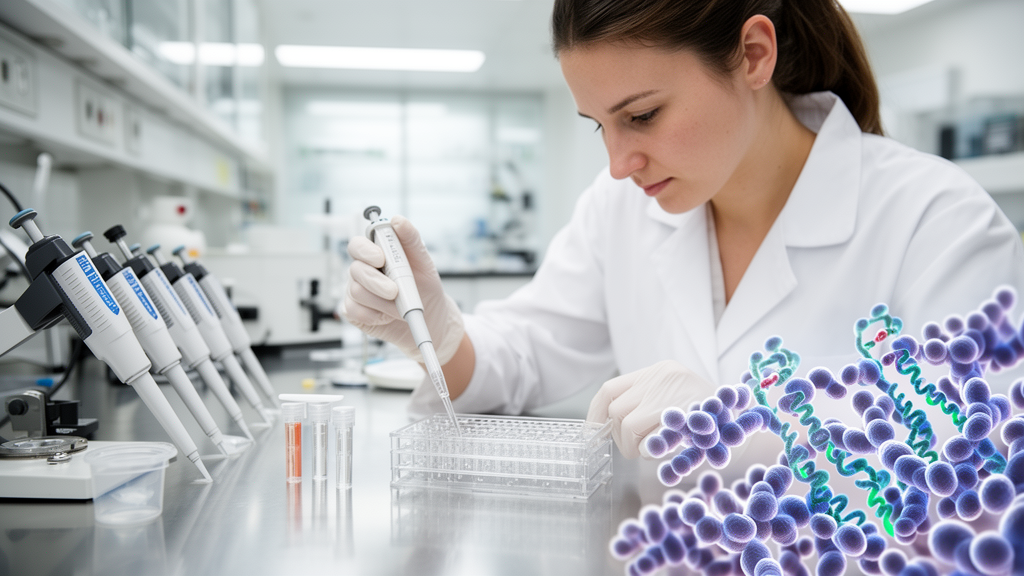
Previous studies support the general possibility that environmental stress can alter sperm and influence later generations, but the molecular carrier responsible for this transmission remains unknown. Cornwall proposes that small cellular structures called germ granules may serve that role. In her model, environmentally sensitive proteins known as amyloids carry inherited information through their three-dimensional structures. These protein structures, rather than genomic material such as DNA or RNA, would transmit information to future generations, including descendants that never experienced the environmental stress directly.

Cornwall characterized the proposed mechanism as a way for an organism to “beta test” a new phenotype before making a more permanent change to its DNA sequence. Such a temporary adaptation could allow cells to respond to altered conditions and, in some cases, produce traits associated with disease. She also cited instances in the human population in which newly acquired traits cannot be explained by genetic changes, although the supplied announcement does not identify particular studies or establish how common protein-based inheritance may be in humans.

The project is explicitly a test of a mechanism rather than a demonstration that the mechanism already operates in mammals. “If we can prove that protein-based inheritance happens in mammals, it would be a new epigenetic mechanism for how traits are acquired,” Cornwall said. The work could reveal how environmental conditions influence developmental origins of disease, but the grant itself funds research and does not establish a human clinical benefit. The NIH Director’s Transformative Research Awards are designed to initiate important new research directions over five years, making this an early-stage investigation into a speculative form of inheritance.

Subject of Research: Research into protein-based transgenerational epigenetic inheritance in mammals

Article Title: TTUHSC’s Cornwall receives 2026 NIH Director's Transformative Research Award

Article References: TTUHSC’s Cornwall receives 2026 NIH Director's Transformative Research Award. Original publication (Bibliographic details unavailable.)

Image Credits: AI Generated

DOI: Not provided

Keywords: Gail Cornwall, NIH, transformative research, epigenetic inheritance, germ granules, amyloid proteins, environmental stress, developmental origins of disease, mammalian genetics, TTUHSC, Cornwall, receives

Cite Scienmag News

Juliet Wilcox. (October 21, 2026). Gail Cornwall Wins NIH Grant to Test Protein-Based Inheritance. Scienmag. https://scienmag.com/gail-cornwall-wins-nih-grant-to-test-protein-based-inheritance/

Juliet Wilcox. "Gail Cornwall Wins NIH Grant to Test Protein-Based Inheritance." Scienmag, 21 October 2026, https://scienmag.com/gail-cornwall-wins-nih-grant-to-test-protein-based-inheritance/. Accessed 21 October 2026.

Juliet Wilcox. "Gail Cornwall Wins NIH Grant to Test Protein-Based Inheritance." Scienmag. October 21, 2026. https://scienmag.com/gail-cornwall-wins-nih-grant-to-test-protein-based-inheritance/


Tags: amyloid proteinsbiomedical research on inheritancecellular structures in inheritanceCornwalldevelopmental origins of diseaseEnvironmental Stressenvironmental stress effectsepigenetic inheritanceepigenetic transmission mechanismsGail Cornwallgerm granuleshereditary influence of environmental factorshigh-impact genetic researchmammalian geneticsmolecular carriers of inheritanceNIHNIH Director’s Transformative Research AwardProtein-based inheritancereceivestransformative researchtransgenerational epigenetic inheritanceTTUHSC
Share26Tweet16
Previous Post

Brazil pilot study finds sharply different toxicity in sludge percolates

Next Post

Three admission indicators distinguish ruptured intracranial aneurysms

Related Posts

Three admission indicators distinguish ruptured intracranial aneurysms
Medicine

Three admission indicators distinguish ruptured intracranial aneurysms

October 21, 2026
Psychiatric nurses’ depressive-symptom screens linked to violence and shift burden
Medicine

Psychiatric nurses’ depressive-symptom screens linked to violence and shift burden

October 21, 2026
Prone surgery in child with Alport syndrome managed with supraglottic airway
Medicine

Prone surgery in child with Alport syndrome managed with supraglottic airway

October 21, 2026
Research report: A case report: an 11-year-old boy with peripheral T-cell lymphoma presenting after a five-year indolent inguinal lymphadenopathy
Medicine

Research report: A case report: an 11-year-old boy with peripheral T-cell lymphoma presenting after a five-year indolent inguinal lymphadenopathy

October 21, 2026
Alzheimer’s tetraploid neurons show enriched somatic single nucleotide variants
Medicine

Alzheimer’s tetraploid neurons show enriched somatic single nucleotide variants

October 21, 2026
Research report: Emotional eating as a stress- and emotion-regulation coping mechanism: a systematic review of quantitative evidence across populations
Medicine

Research report: Emotional eating as a stress- and emotion-regulation coping mechanism: a systematic review of quantitative evidence across populations

October 21, 2026
Next Post
Three admission indicators distinguish ruptured intracranial aneurysms

Three admission indicators distinguish ruptured intracranial aneurysms

  • Mothers who receive childcare support from maternal grandparents show more optimized

    Mothers who receive childcare support from maternal grandparents show more parental warmth, finds NTU Singapore study

    27656 shares
    Share 11059 Tweet 6912
  • University of Seville Breaks 120-Year-Old Mystery, Revises a Key Einstein Concept

    1061 shares
    Share 424 Tweet 265
  • Bee body mass, pathogens and local climate influence heat tolerance

    682 shares
    Share 273 Tweet 171
  • Researchers record first-ever images and data of a shark experiencing a boat strike

    546 shares
    Share 218 Tweet 137
  • Groundbreaking Clinical Trial Reveals Lubiprostone Enhances Kidney Function

    531 shares
    Share 212 Tweet 133
Science

Embark on a thrilling journey of discovery with Scienmag.com—your ultimate source for cutting-edge breakthroughs. Immerse yourself in a world where curiosity knows no limits and tomorrow’s possibilities become today’s reality!

RECENT NEWS

  • Three admission indicators distinguish ruptured intracranial aneurysms
  • Gail Cornwall Wins NIH Grant to Test Protein-Based Inheritance
  • Brazil pilot study finds sharply different toxicity in sludge percolates
  • Calibration failure and limited-label recalibration of retinal image classifiers under dataset shift

Categories

  • Agriculture
  • Anthropology
  • Archaeology
  • Athmospheric
  • Biology
  • Biotechnology
  • Blog
  • Bussines
  • Cancer
  • Chemistry
  • Climate
  • Earth Science
  • Editorial Policy
  • Marine
  • Mathematics
  • Medicine
  • Pediatry
  • Policy
  • Psychology & Psychiatry
  • Science Education
  • Science News
  • Social Science
  • Space
  • Technology and Engineering

Subscribe to Blog via Email

Enter your email address to subscribe to this blog and receive notifications of new posts by email.

Join 5,150 other subscribers

© 2025 Scienmag - Science Magazine

Welcome Back!

Login to your account below

Forgotten Password?

Retrieve your password

Please enter your username or email address to reset your password.

Log In
No Result
View All Result
  • HOME
  • SCIENCE NEWS
  • CONTACT US

© 2025 Scienmag - Science Magazine

Discover more from Science

Subscribe now to keep reading and get access to the full archive.

Continue reading