


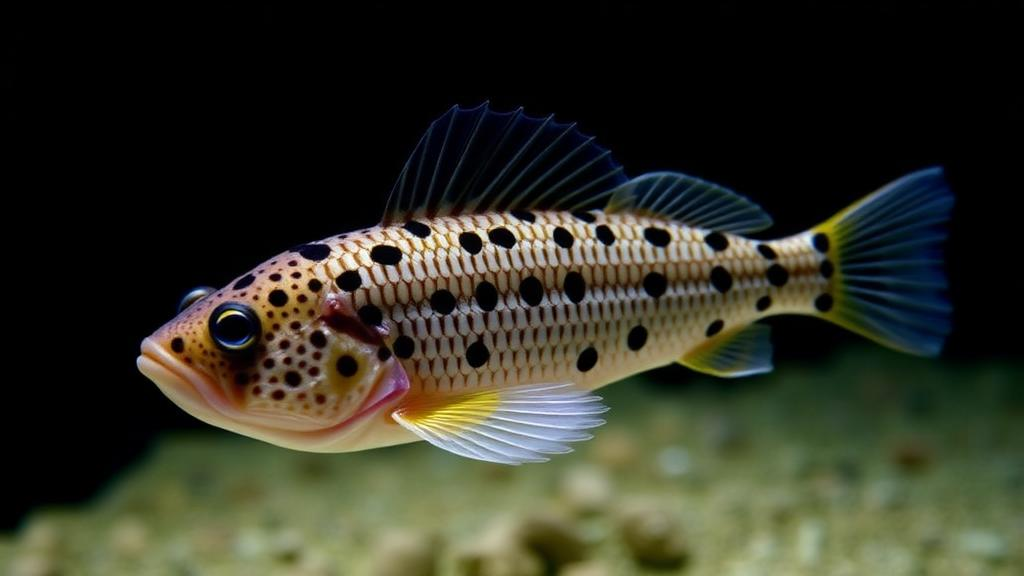
On a small Vietnamese island in the Gulf of Thailand, two unassuming freshwater predators are rewriting what scientists know about how chromosomes evolve. Snakehead fishes of the genus Channa are famous among biologists for their toughness: they possess accessory air-breathing organs that let them survive out of water for extended periods and even wriggle across land to colonize new habitats. That same hardiness has scattered them across a patchwork of rivers, floodplains and islands throughout Southern Asia, and a new study from Phu Quoc Island suggests that this fragmented lifestyle has left a striking signature in their genomes — one written not in DNA sequence, but in the very architecture of their chromosomes.
The research, published in the journal Comparative Cytogenetics, describes for the first time the chromosome complements of Channa lucius and Channa striata populations from Phu Quoc Island, and places those findings within a sweeping comparative analysis of karyotypic evolution across the entire genus. The results support a provocative idea: that the splitting and isolation of populations, particularly on continental islands, acts as an engine of chromosomal diversification in these fish. For a group whose chromosome counts range more widely than almost any other vertebrate genus studied to date, that engine appears to have been running hot.
Snakeheads are an ancient lineage. The family Channidae contains just two genera — Parachanna, restricted to tropical Africa with three species, and Channa, the dominant Asian genus with more than 40 described species. Appearing in the Eocene, snakeheads have endured a long evolutionary history punctuated by repeated range expansions, fragmentations and secondary contacts between lineages that had diverged in isolation. That turbulent history is reflected in extraordinary cytogenetic variety: among the species studied so far, the diploid chromosome number swings from 2n = 32 to 2n = 112, while the number of chromosome arms ranges from 46 to 116. Few fish genera display such dramatic variation in genome organization.
To probe this diversity, the researchers collected specimens from Phu Quoc Island in December 2011, sampling four individuals of C. lucius from the Bai Dai and Duong Dong river basins and six individuals of C. striata from the Bai Dai basin. Chromosome preparations were made from the anterior kidney tissue of live fish treated with colchicine, following classical cytogenetic protocols: hypotonic incubation in potassium chloride, fixation in ethanol-acetic acid, air-drying and Giemsa staining. In total, 65 and 82 metaphase plates were analyzed for the two species, and voucher specimens were deposited at the Vietnam-Russian Tropical Center in Ho Chi Minh City.
The results were subtle but telling. Both river-basin populations of C. lucius on the island shared the same diploid number of 2n = 48, yet differed in karyotype composition: fish from the Bai Dai basin carried two metacentric chromosomes and 46 subtelocentric or acrocentric ones, while fish from the Duong Dong basin carried three metacentrics, giving a chromosome arm number of 51 instead of 50. Such a shift is most plausibly explained by a pericentric inversion — a rearrangement that flips a chromosomal segment containing the centromere, converting a uniarmed chromosome into a biarmed one without changing the overall count.
C. striata proved even more variable. Within the single Bai Dai basin population, the researchers found karyomorphs with 2n = 44 and 2n = 43, the latter heterozygous for a centric fusion and carrying an unpaired metacentric chromosome. Mainland populations of the species show even wider variability, from 2n = 40 in India to 2n = 44 in China and Thailand, with an atypical 2n = 43 karyotype previously reported from northeastern Thailand. The persistence of heterozygous fusion karyotypes in different populations suggests that individuals carrying them produce viable gametes — evidence that such rearrangements can persist and spread rather than being purged by selection. Intriguingly, heterozygous karyotypes have also been documented in goby fish on Phu Quoc, hinting that the island’s recent isolation may favor their maintenance.
That isolation is geologically young. Phu Quoc was likely cut off from the Cambodian mainland roughly ten thousand years ago, when rising sea levels after the last glacial period drowned the connecting lowlands. In evolutionary terms this is a blink of an eye, yet the island’s snakeheads already display chromosomal polymorphism distinguishing them from mainland relatives. The authors argue that this short-term isolation probably contributed either to the appearance of new chromosomal variants or to their maintenance through drift in small, separated populations. If so, continental islands may function as natural laboratories of genome reshuffling, and further sampling across the island’s river basins is likely to reveal an even greater range of variation.
Placing the new data into a genus-wide context, the comparative analysis identifies a dominant direction in snakehead chromosome evolution: a decrease in chromosome number driven by centric fusions — Robertsonian translocations — combined with an increase in chromosome arm number driven by pericentric inversions. The probable ancestral karyotype consisted of 48 uniarmed chromosomes, a configuration still retained by C. argus and C. lucius, the latter of which also preserves plesiomorphic traits such as gular scales. From that starting point, some populations of C. punctata evolved fully symmetrical karyotypes of 2n = 32 composed exclusively of biarmed chromosomes, while other lineages took the opposite route, increasing chromosome counts through centric fissions and polyploidization. Species complexes such as C. gachua, with diploid numbers from 52 to 112, show that ploidy shifts have occurred repeatedly and may still be co-evolving within populations.
Why would chromosomes matter for survival? Chromosomal rearrangements such as inversions and fusions disturb homologous pairing during meiosis, which suppresses recombination across the rearranged regions. Genes located there are then inherited together as linked blocks, allowing adaptations — to salinity gradients, temperature extremes or other environmental pressures — to accumulate and spread without being diluted by genetic mixing. This mechanism is increasingly recognized as a driver of adaptive divergence in fishes. Notably, C. gachua, the species with some of the highest karyotypic variability in the genus, is also renowned for its resilience, tolerating mountain habitats with fluctuating climates that other snakeheads cannot. The correlation is suggestive, though causation remains to be tested.
The broader picture emerging from Phu Quoc is one of genomes in motion. The Miocene and Pliocene range expansions of Asian snakeheads, combined with climatic oscillations, repeatedly isolated populations — especially on continental islands — and later brought them back into contact, generating the intrapopulation and interpopulation chromosomal variability observed today. Hybridization may add yet another layer, since snakehead species with different chromosome numbers can still interbreed. As cytogenetic surveys extend to more of the isolated populations that dot the snakehead map, researchers expect the true extent of this chromosomal kaleidoscope to grow — a reminder that evolution sculpts not only what genes an organism carries, but how those genes are packaged, shuffled and inherited.
Subject of Research: Karyotypic evolution and chromosomal diversification in snakehead fishes from Phu Quoc Island
Article Title: Chromosome complements of Channa lucius and C. striata from Phu Quoc Island and karyotypic evolution in snakehead fishes ( Actinopterygii , Channidae )
Article References: Prazdnikov, D. V. (2023). Chromosome complements of Channa lucius and C. striata from Phu Quoc Island and karyotypic evolution in snakehead fishes (Actinopterygii, Channidae). Comparative Cytogenetics, 17(1), 1-12. https://doi.org/10.3897/compcytogen.v17.i1.94943
Image Credits: AI Generated
DOI: 10.3897/compcytogen.v17.i1.94943
Keywords: Channa, snakehead fish, cytogenetics, karyotype, chromosomal rearrangements, Phu Quoc Island, pericentric inversion, centric fusion, population isolation, Comparative Cytogenetics, chromosome evolution, polyploidization
Cite Scienmag News
Gavin Prescott. (October 19, 2026). Island Snakeheads Reveal How Isolation Reshapes Fish Chromosomes. Scienmag. https://scienmag.com/island-snakeheads-reveal-how-isolation-reshapes-fish-chromosomes/
Gavin Prescott. "Island Snakeheads Reveal How Isolation Reshapes Fish Chromosomes." Scienmag, 19 October 2026, https://scienmag.com/island-snakeheads-reveal-how-isolation-reshapes-fish-chromosomes/. Accessed 19 October 2026.
Gavin Prescott. "Island Snakeheads Reveal How Isolation Reshapes Fish Chromosomes." Scienmag. October 19, 2026. https://scienmag.com/island-snakeheads-reveal-how-isolation-reshapes-fish-chromosomes/


