


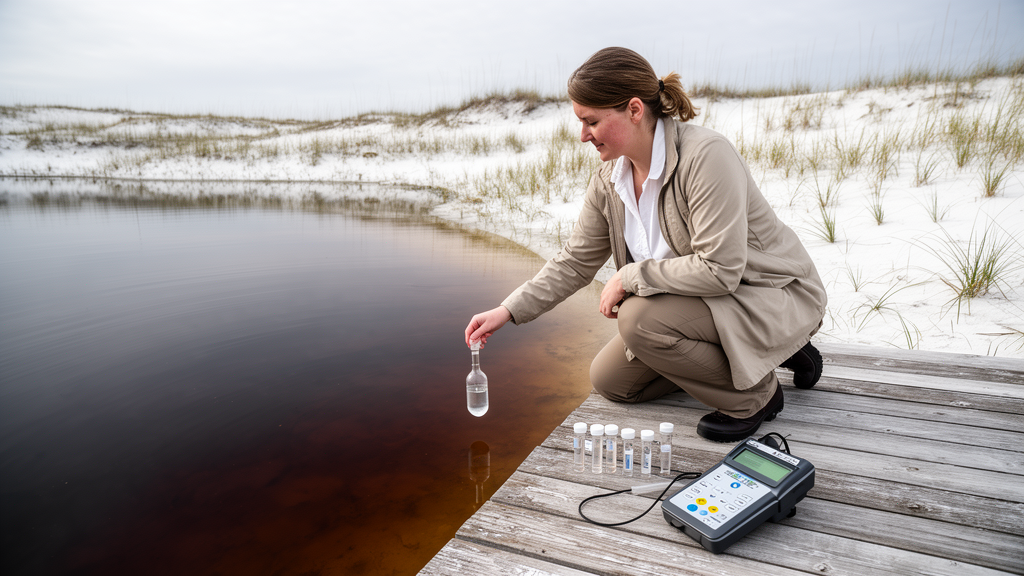
Coastal dune lakes are among the rarest freshwater systems on Earth, existing in isolated pockets of the United States, Mexico, Madagascar, eastern Australia, and New Zealand. These unique ecosystems are formed inland of dune systems and often remain disconnected from major river networks, creating distinct biogeochemical environments. A recent study published in Metabarcoding and Metagenomics has provided a detailed look into the microbial life within six such lakes on Chatham Island, a remote location in the Pacific Ocean. The research team utilized advanced molecular techniques to investigate how these isolated microbial communities function and how they respond to environmental pressures such as salinity and nutrient availability. By focusing on a location with minimal human impact, the study offers a pristine baseline for understanding the metabolic processes that drive lake health in these globally rare habitats.
The investigation centered on six specific dune lakes on Chatham Island, which is part of the Rēkohu archipelago in Aotearoa New Zealand. These lakes vary significantly in size and depth, ranging from the small Rotoparaoa at five hectares to the expansive Huro at 588 hectares. Two of the lakes, Pateriki and Te Wapu, are located on the north-east coast and exhibit elevated salinity levels due to intermittent connectivity with the ocean. This natural variation provided an ideal setting for examining how salinity influences microbial community structure. The researchers collected surface sediment samples from the deepest points of each lake in April 2021, ensuring that the samples represented the core biological activity of the lake beds. The sediments were processed using both metabarcoding and metagenomic approaches to capture a comprehensive view of the microbial diversity and functional potential.
Metabarcoding, which targets the 16S rRNA gene, allowed the researchers to identify the taxonomic composition of the bacterial and archaeal communities. The analysis revealed that Pseudomonadota were the predominant phylum across all six lakes, a finding consistent with previous studies in other aquatic environments. However, the specific classes within this phylum varied significantly depending on the lake’s environmental conditions. In the saline-influenced lakes of Pateriki and Te Wapu, Alphaproteobacteria were more prominent, whereas Betaproteobacteria dominated in the freshwater lakes. This shift suggests that salinity acts as a strong filter on microbial composition, with Betaproteobacteria appearing less tolerant of haline environments. In the large lake of Huro, Cyanobacteria, specifically the picocyanobacterial genus Cyanobium, constituted a major portion of the community, highlighting the role of photosynthetic organisms in this particular system.
While metabarcoding identifies who is present, metagenomics reveals what they can do by analyzing the functional genes within the sediment. The study found that the functional potential of the microbial communities was distinct among the lakes, with a strong correlation between taxonomic and functional distances. The metagenomic data showed that bacteria accounted for 90% of the coding sequences, with the remainder consisting of archaea, eukaryotes, and viruses. The analysis of metabolic pathways indicated that the lakes had different strategies for handling carbon, nitrogen, and sulfur. For instance, the abundance of genes involved in nitrogen cycling was related to the nitrogen-to-phosphorus ratio in the sediment. This relationship suggests that the microbial communities are actively adapting to the nutrient limitations present in these phosphate-enriched but nitrogen-limited environments.
Nitrogen metabolism emerged as a key area of differentiation among the lakes. The researchers observed that genes associated with dissimilatory nitrate reduction to ammonia and nitrification were more abundant in lakes with lower nitrogen availability. This pattern aligns with the hypothesis that when nitrogen is scarce, microbes prioritize pathways that conserve nitrogen within the system rather than losing it through denitrification. In contrast, denitrification genes were more prevalent in Pateriki, which had higher nutrient loads. The taxonomic attribution of these functions revealed that Betaproteobacteria and Gammaproteobacteria were the primary contributors to nitrogen cycling, while Nitrospiria played a significant role in nitrification. In Huro, methanogenic archaea contributed notably to nitrogen fixation, indicating a complex interplay between different microbial groups in maintaining the nitrogen balance of the lake.
Sulfur cycling also showed clear links to environmental conditions, particularly in the saline lakes. Pateriki, which had the highest conductivity and sulfur concentrations, exhibited the highest abundance of genes for assimilatory sulfate reduction. There was a significant positive relationship between the abundance of these genes and the concentration of sulfate in the sediment, suggesting that microbes in Pateriki are actively utilizing sulfate for metabolic processes. In contrast, dissimilatory sulfate reduction showed weaker and non-significant relationships with sulfur and organic matter concentrations. The taxonomic analysis indicated that Alphaproteobacteria were the main drivers of sulfate reduction in Pateriki, while Betaproteobacteria and Gammaproteobacteria were more prevalent in the other lakes. This differentiation underscores the specialized roles that different microbial classes play in the biogeochemical cycles of these unique ecosystems.
Carbon fixation strategies varied across the lakes, reflecting the diverse metabolic capabilities of the resident microbes. The Calvin cycle, a common pathway for carbon fixation, was prevalent in all lakes, with genes primarily associated with Pseudomonadota, especially Betaproteobacteria. However, in Huro, Cyanobacteria contributed significantly to this pathway, consistent with their high abundance in that lake. The reductive tricarboxylic acid cycle, another carbon fixation pathway, was also detected, with Nitrospirota being a major contributor in several lakes. In the saline lakes, Thermodesulfobacteriota were prominent, likely relying on the oxidation of sulfur compounds for energy. The Wood-Ljungdahl pathway, which allows for the anaerobic conversion of hydrogen and carbon dioxide into acetyl-CoA, showed higher abundance in Pateriki. This pathway is often associated with anoxic conditions and may provide an energy advantage in high-salinity environments, suggesting that microbes in Pateriki are utilizing diverse metabolic routes to thrive in their specific conditions.
One of the most striking findings was the response of microbial communities to osmotic stress in the saline lakes. Pateriki, with the highest salinity, showed significantly elevated levels of genes involved in the production of osmoprotectants such as glycine betaine and proline. These compatible solutes help cells maintain turgor pressure and prevent dehydration in high-salinity environments. The abundance of glycine betaine genes in Pateriki was roughly twice that of the other lakes, with Alphaproteobacteria being the primary contributors. Genes encoding transporters for these osmoprotectants were also more abundant in Pateriki, indicating a robust cellular response to salinity. In contrast, Te Wapu, which also had elevated salinity, did not show a similar increase in osmoprotectant genes. This discrepancy may be due to temporal variability in salinity or the use of alternative stress mitigation mechanisms by the microbial community in Te Wapu. The findings highlight the dynamic nature of microbial adaptation to environmental stressors in these isolated lakes.
The study underscores the importance of understanding the functional potential of microbial communities in rare and remote ecosystems. By combining metabarcoding and metagenomics, the researchers were able to link environmental drivers such as salinity and nutrient ratios to specific metabolic functions. This integrated approach provides a more holistic view of lake ecology than taxonomic analysis alone. The results suggest that the microbial communities in Chatham Island’s dune lakes are highly adapted to their local conditions, with distinct strategies for nutrient cycling and stress response. As these ecosystems face increasing pressures from climate change and human activities, understanding their baseline functioning is crucial for effective conservation and management. The data generated from this study can serve as a reference for monitoring changes in lake health and assessing the impact of various environmental pressures on these unique habitats.
Ultimately, this research highlights the hidden complexity of seemingly simple lake environments. The microbial communities in coastal dune lakes are not just passive inhabitants but active participants in the biogeochemical processes that define the ecosystem. Their ability to shift metabolic strategies in response to salinity and nutrient availability demonstrates a remarkable resilience and adaptability. As global changes continue to alter the conditions of freshwater systems, the insights gained from this remote island study offer valuable lessons for understanding how microbial communities might respond to similar stresses elsewhere. The integration of molecular techniques with environmental data provides a powerful tool for unraveling the intricate web of interactions that sustain these rare ecosystems, paving the way for more informed decision-making in the preservation of global biodiversity.
Subject of Research: Microbial biodiversity and metabolic functioning in coastal dune lake sediments
Article Title: Microbial biodiversity and metabolic functioning in sediments of coastal dune lakes on a remote island
Article References: Pearman, J. K., Sissons, J., Kihika, J. K., Thomson-Laing, G., & Wood, S. A. (2025). Microbial biodiversity and metabolic functioning in sediments of coastal dune lakes on a remote island. Metabarcoding and Metagenomics, 9, Article e144128. https://doi.org/10.3897/mbmg.9.144128
Image Credits: AI Generated
Keywords: microbial ecology, metagenomics, coastal dune lakes, biogeochemical cycling, salinity stress, nitrogen cycling, sulfur metabolism, osmoprotection, Chatham Island, carbon fixation, Microbial, biodiversity
Cite Scienmag News
Morgan Morrow. (October 18, 2026). Microbial Metabolism in Remote Coastal Dune Lakes Revealed. Scienmag. https://scienmag.com/microbial-metabolism-in-remote-coastal-dune-lakes-revealed/
Morgan Morrow. "Microbial Metabolism in Remote Coastal Dune Lakes Revealed." Scienmag, 18 October 2026, https://scienmag.com/microbial-metabolism-in-remote-coastal-dune-lakes-revealed/. Accessed 18 October 2026.
Morgan Morrow. "Microbial Metabolism in Remote Coastal Dune Lakes Revealed." Scienmag. October 18, 2026. https://scienmag.com/microbial-metabolism-in-remote-coastal-dune-lakes-revealed/


