


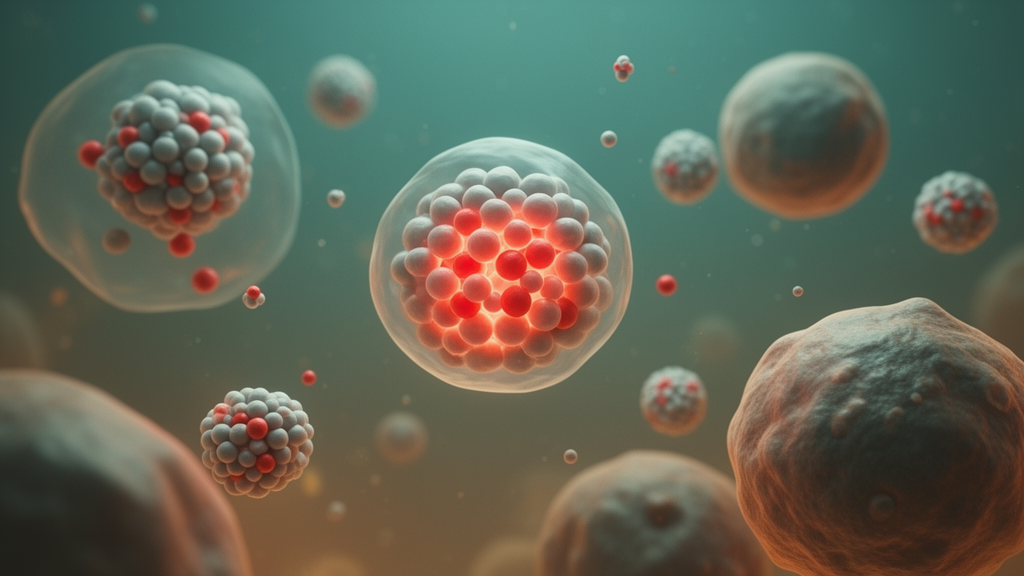
Chemotherapy saves lives, but it can also leave chaos in its wake. One of the most widely used anticancer drugs, doxorubicin, is a case in point: while it kills tumor cells with remarkable efficiency, it simultaneously triggers systemic toxicity and provokes unwanted pro-inflammatory responses in immune cells. Now, a team of researchers from Turkey, Bulgaria, and Ukraine has developed a clever nanoscale solution to this problem. By co-encapsulating doxorubicin with the natural polyphenol resveratrol inside nanogels and polymeric micelles, they have shown that these dual-loaded nanosystems can transform an inflammatory storm into a controlled, synergistic immunomodulatory response in macrophages.
The study, published in the Journal of Materials Science, focused on J774.2 mammalian macrophages, a widely used cell line for studying immune responses. Macrophages are the sentinels of the immune system, capable of both igniting and calming inflammation. When conventional chemotherapy with doxorubicin is administered, macrophages often respond by secreting excessive amounts of pro-inflammatory cytokines, small signaling proteins that can amplify tissue damage and contribute to the systemic toxicity that limits doxorubicin’s clinical use. Resveratrol, found naturally in grapes and berries, has long been recognized for its potent anti-inflammatory properties, but in its free form it suffers from poor water solubility and low bioavailability, rendering it largely ineffective when administered alone.
To overcome these limitations, the researchers engineered doubly loaded nanogels (DR-NG) and polymeric micelles (DR-M), each carrying both doxorubicin and resveratrol. These nanoscale carriers protect resveratrol from degradation, improve its solubility, and deliver both drugs directly to macrophages in a controlled manner. The team treated macrophages with standardized doses of 1, 5, and 10 micrograms per milliliter of both the pure drugs and the nanoformulations, under both basal conditions and in an inflammatory environment induced by lipopolysaccharide (LPS), a molecule that mimics bacterial infection and triggers a robust immune response.
The results were striking. All treatment groups maintained high cellular integrity, with over 90 percent cell viability as measured by the MTT assay, confirming that the nanosystems were not inherently toxic to the macrophages. But the immunological effects told a far more compelling story. Pure doxorubicin, when administered alone, exacerbated the inflammatory environment, approximately doubling the secretion of tumor necrosis factor-alpha (TNF-α), a key pro-inflammatory cytokine. Pure resveratrol, on the other hand, was immunologically ineffective at the tested doses, likely due to its poor solubility and limited cellular uptake in free form.
In sharp contrast, the dual-loaded nanoformulations showed significant and statistically meaningful inhibition of interleukin-6 (IL-6) and interleukin-12p40 (IL-12p40), both critical mediators of inflammation, with P values below 0.001. Even more remarkably, the polymeric micelles (DR-M) successfully neutralized the doxorubicin-induced increase in TNF-α, reducing its levels below those of the control group containing only LPS. This suggests that the nanoencapsulation of resveratrol alongside doxorubicin transforms an otherwise inactive free drug into a potent immunomodulator capable of counteracting the pro-inflammatory side effects of chemotherapy.
Granulocyte-macrophage colony-stimulating factor (GM-CSF), another cytokine measured in the study, remained largely unaffected across all treatment groups. This selectivity is significant: it indicates that the dual-loaded nanosystems do not broadly suppress immune function but instead target hyper-inflammatory cascades specifically. Preserving systemic immune capacity while preventing uncontrolled cytokine release is precisely the balance that nanomedicine strives to achieve, and these results suggest the researchers have struck it.
The implications for cancer therapy are profound. Doxorubicin is a cornerstone of chemotherapy for breast cancer, lymphoma, and sarcoma, among others, but its use is often limited by cardiotoxicity, neurotoxicity, and the induction of systemic inflammation. Previous studies have explored resveratrol’s chemoprotective effects against doxorubicin-induced cardiotoxicity, but the poor bioavailability of free resveratrol has hampered clinical translation. By co-delivering both drugs in a single nanoscale vehicle, the researchers have not only improved resveratrol’s solubility and stability but also created a synergistic therapeutic partnership that enhances the overall therapeutic index of chemotherapy.
The choice of nanocarrier matters as well. Nanogels, three-dimensional hydrogel networks at the nanoscale, offer high drug loading capacity and controlled release kinetics. Polymeric micelles, self-assembled structures with a hydrophobic core and hydrophilic shell, excel at solubilizing hydrophobic drugs and prolonging circulation time. The fact that both carriers produced similar immunomodulatory outcomes, with the micelles showing a particularly strong capacity to neutralize TNF-α, suggests that the dual-loading strategy itself, rather than the specific carrier architecture, is the key driver of the synergistic effect.
This study adds to a growing body of evidence that nanotechnology can fundamentally reshape how we deploy conventional chemotherapy. Rather than simply wrapping a single drug in a nanoscale package, researchers are now designing multifunctional nanosystems that combine cytotoxic agents with immunomodulatory compounds, creating therapies that kill tumors while simultaneously protecting healthy tissue from collateral inflammatory damage. The doubly loaded nanogels and micelles developed here represent a promising step in that direction, offering a strategy to prevent uncontrolled cytokine release and preserve immune capacity during cancer treatment.
As the field of cancer nanotechnology matures, the ability to fine-tune the immune environment alongside tumor cell killing will become increasingly central to therapeutic design. The work presented here demonstrates that nanoencapsulation can transform a poorly bioavailable natural compound into a powerful ally for conventional chemotherapy, opening new avenues for enhancing the safety and efficacy of some of the most widely used anticancer drugs in clinical practice today.
Subject of Research: Dual-loaded nanogels and micelles for the synergistic immunomodulation of doxorubicin and resveratrol in J774.2 macrophages
Article Title: Dual-loaded nanogels and micelles for the synergistic immunomodulation of doxorubicin and resveratrol in J774.2 macrophages
Article References: Atalay, B. R., Radeva, L., Yoncheva, K., Aydemir, E., & Ayaz, F. (2026). Dual-loaded nanogels and micelles for the synergistic immunomodulation of doxorubicin and resveratrol in J774.2 macrophages. Journal of Materials Science. https://doi.org/10.1007/s10853-026-13684-x
Image Credits: AI Generated
DOI: 10.1007/s10853-026-13684-x
Keywords: nanomedicine, immunomodulation, doxorubicin, resveratrol, macrophages, drug delivery, cancer therapy, nanogels, polymeric micelles, cytokines, Dual-loaded, micelles
Cite Scienmag News
Nathaniel Bowman. (October 18, 2026). Nanogels and micelles tame doxorubicin’s inflammatory side effects in macrophages. Scienmag. https://scienmag.com/nanogels-and-micelles-tame-doxorubicins-inflammatory-side-effects-in-macrophages/
Nathaniel Bowman. "Nanogels and micelles tame doxorubicin’s inflammatory side effects in macrophages." Scienmag, 18 October 2026, https://scienmag.com/nanogels-and-micelles-tame-doxorubicins-inflammatory-side-effects-in-macrophages/. Accessed 18 October 2026.
Nathaniel Bowman. "Nanogels and micelles tame doxorubicin’s inflammatory side effects in macrophages." Scienmag. October 18, 2026. https://scienmag.com/nanogels-and-micelles-tame-doxorubicins-inflammatory-side-effects-in-macrophages/


