


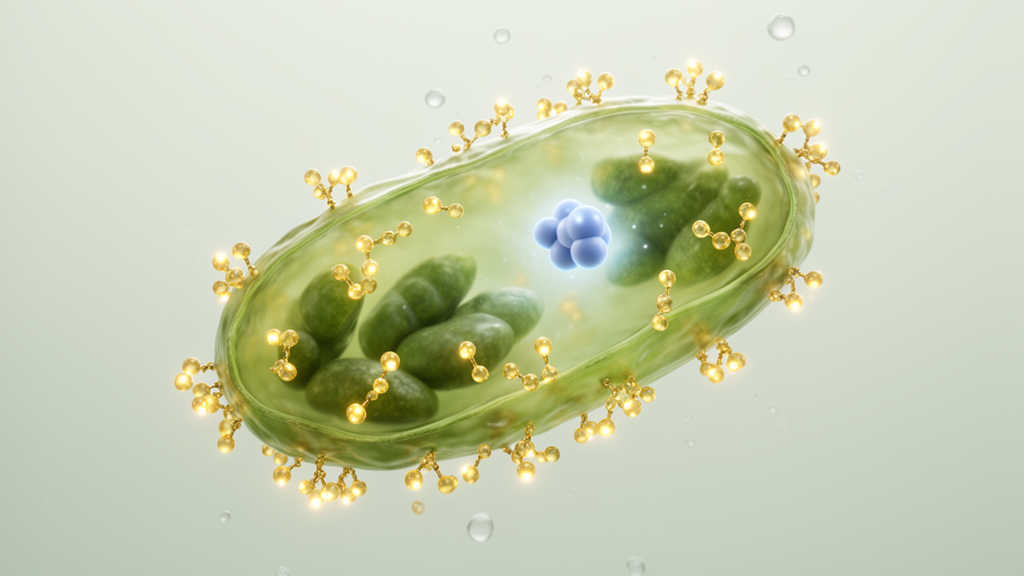
In the race to understand how life copes with a changing atmosphere, some of the most instructive players are not plants or animals but single-celled algae that have spent hundreds of millions of years perfecting the art of grabbing scarce carbon from water. A new study of the marine microalga Nannochloropsis oceanica, published in BMC Plant Biology, has now provided the most detailed picture yet of what happens inside this industrially important organism when carbon dioxide becomes scarce — and the results point to a layer of cellular control that biologists have rarely examined in algae: the attachment of sugar chains to proteins.
Nannochloropsis oceanica is what researchers call an oleaginous microalga, meaning its cells can accumulate large quantities of lipids, making it a promising candidate for sustainable feed, food supplements, and bioenergy. Like other microalgae, it depends on photosynthesis to fix carbon dioxide into organic molecules, but in aquatic environments CO2 diffuses slowly and is often present at vanishingly low concentrations. To cope, N. oceanica deploys a carbon-concentrating mechanism, a suite of transporters and enzymes that actively pump and convert bicarbonate into CO2 around the photosynthetic machinery. What the new research shows is that this survival strategy involves far more than simply turning up the expression of carbon-grabbing proteins — it requires a coordinated rewiring of the entire metabolic network, with protein glycosylation playing a central role.
The team, led by Yikai Wu, Meng Feng, and colleagues at Hainan Normal University, together with corresponding authors Zhengru Xu and Li Wei, grew N. oceanica under two contrasting conditions: a carbon-rich atmosphere of 5 percent CO2 and a carbon-limited atmosphere of 0.04 percent CO2, essentially the ambient level. They then applied a cutting-edge analytical approach known as 4D-DIA proteomics, which uses ion mobility separation and data-independent acquisition to identify and quantify thousands of proteins with high precision. In parallel, they performed glycoproteomics — a technique that specifically captures and maps the sites on proteins where sugar chains are attached — to see how these modifications change when carbon becomes limiting.
The scale of the dataset is impressive. The researchers identified 5,136 protein groups across the two growth conditions, of which 454 were differentially expressed between carbon-rich and carbon-limited cells. Most of these changes pointed in one direction: down. Under carbon limitation, proteins involved in photosynthesis, protein synthesis by the ribosome, and fatty acid biosynthesis were broadly suppressed. This makes sense from an energetic standpoint — when the raw material for growth is scarce, the cell cannot afford to run its most expensive anabolic factories at full speed. Instead, the researchers found that oxidative phosphorylation, the process by which cells generate ATP by breaking down substrates through the respiratory chain, and various catabolic processes were enhanced. In other words, the alga shifted from a growth-oriented metabolism to a survival-oriented one, breaking down existing molecules to keep the lights on.
But the real novelty of the study lies in the glycoproteomic layer. The team mapped 459 N-glycosylation sites — specific asparagine residues on proteins where sugar chains are enzymatically attached — and found that 131 of these sites showed significant changes between the two conditions. N-glycosylation is a modification best known from human and plant cell biology, where it helps proteins fold correctly, reach their proper cellular destinations, and interact with partners. In microalgae, its role in stress responses has been largely unexplored. What the new data reveal is that differentially expressed glycosylated proteins are heavily enriched in energy metabolism, translation, membrane transport, and signaling — precisely the processes a cell would need to reconfigure when its carbon supply is cut off.
Network analysis of the glycosylated proteins highlighted central metabolic enzymes and regulatory proteins as key targets of glycosylation. This is significant because central carbon metabolism — the interconnected pathways of glycolysis, the tricarboxylic acid cycle, and the pentose phosphate pathway — forms the backbone of how a cell converts carbon into energy and building blocks. The study found that this backbone underwent extensive remodeling under low CO2 conditions. Enzymes such as fructose-1,6-bisphosphate aldolase, triosephosphate isomerase, and phosphoglycerate kinase, which catalyze key steps in glycolysis and the Calvin cycle, were among the proteins whose abundance and glycosylation status changed. The pyruvate dehydrogenase complex, which links glycolysis to the citric acid cycle, and 2-oxoglutarate dehydrogenase, a key regulatory enzyme of the TCA cycle, were also implicated. These are not random changes — they represent a deliberate rerouting of carbon flux through the cell’s metabolic network.
Notably, the researchers found that lipid biosynthesis and photosynthetic components were downregulated under carbon limitation, which has direct implications for anyone hoping to use N. oceanica for biofuel or nutritional applications. If the alga cannot accumulate lipids when CO2 is scarce, then industrial cultivation strategies must ensure adequate carbon supply — or find ways to decouple lipid production from carbon availability. At the same time, the identification of specific glycosylated proteins involved in carbon metabolism opens up new targets for genetic engineering. If researchers can modify the glycosylation of key metabolic enzymes, they may be able to enhance carbon fixation efficiency or improve stress tolerance, making the alga more productive under real-world conditions where CO2 is not artificially elevated.
The study also underscores the value of integrating proteomics with glycoproteomics. Protein abundance alone tells you how much of a given enzyme is present, but glycosylation can alter an enzyme’s activity, stability, and localization without changing its abundance. By measuring both layers simultaneously, the researchers gained a much richer understanding of how N. oceanica reprograms its metabolism. A protein whose level stays constant but whose glycosylation changes may be just as important as one whose level shifts dramatically — and this study is among the first in microalgae to capture that dynamic at scale.
From a broader perspective, the findings contribute to a growing appreciation of glycobiology — the study of sugar chains and their biological roles — as a frontier in understanding how organisms respond to environmental stress. Glycosylation is a modification that has been extensively studied in mammalian systems, where it influences everything from immune recognition to cancer progression, but its role in photosynthetic organisms has remained comparatively obscure. This study suggests that in microalgae, glycosylation is not merely a housekeeping modification but an active participant in metabolic regulation, one that helps the cell sense and respond to carbon availability. As climate change alters CO2 levels in both terrestrial and aquatic environments, understanding how photosynthetic organisms adjust their metabolism at this level of detail could prove essential for predicting ecosystem responses and for engineering more resilient crops and algae.
For now, the study stands as a technical tour de force and a conceptual advance. It demonstrates that when a microalga is starved of carbon, it does not simply slow down — it rewrites its metabolic program, and it does so with the help of sugar chains attached to its proteins. The researchers suggest that these findings provide new insights and potential targets for improving carbon fixation efficiency and stress tolerance in microalgae, a goal that could have far-reaching consequences for sustainable food production, bioenergy, and carbon capture technologies. As the field of algal biotechnology matures, studies like this one — which peer deep inside the cell and map the molecular changes that accompany environmental stress — will be the ones that guide the next generation of engineered organisms designed to thrive in a carbon-constrained world.
Subject of Research: Molecular biology
Article Title: Integrated proteomics and glycoproteomics reveal metabolic reprogramming in Nannochloropsis oceanica under CO₂ limitation
Article References: Wu, Y., Feng, M., Gao, X., Gao, Y., Xu, Z., Su, H., & Wei, L. (2026). Integrated proteomics and glycoproteomics reveal metabolic reprogramming in Nannochloropsis oceanica under CO₂ limitation. BMC Plant Biology. https://doi.org/10.1186/s12870-026-10124-5
Image Credits: AI Generated
DOI: 10.1186/s12870-026-10124-5
Keywords: Integrated, proteomics, glycoproteomics, reveal, metabolic, reprogramming, Nannochloropsis, oceanica, under, limitation, scientific research
Cite Scienmag News
Alan Morgan. (October 17, 2026). Sugar tags on proteins reveal how microalgae survive CO2 starvation. Scienmag. https://scienmag.com/sugar-tags-on-proteins-reveal-how-microalgae-survive-co2-starvation/
Alan Morgan. "Sugar tags on proteins reveal how microalgae survive CO2 starvation." Scienmag, 17 October 2026, https://scienmag.com/sugar-tags-on-proteins-reveal-how-microalgae-survive-co2-starvation/. Accessed 17 October 2026.
Alan Morgan. "Sugar tags on proteins reveal how microalgae survive CO2 starvation." Scienmag. October 17, 2026. https://scienmag.com/sugar-tags-on-proteins-reveal-how-microalgae-survive-co2-starvation/


