


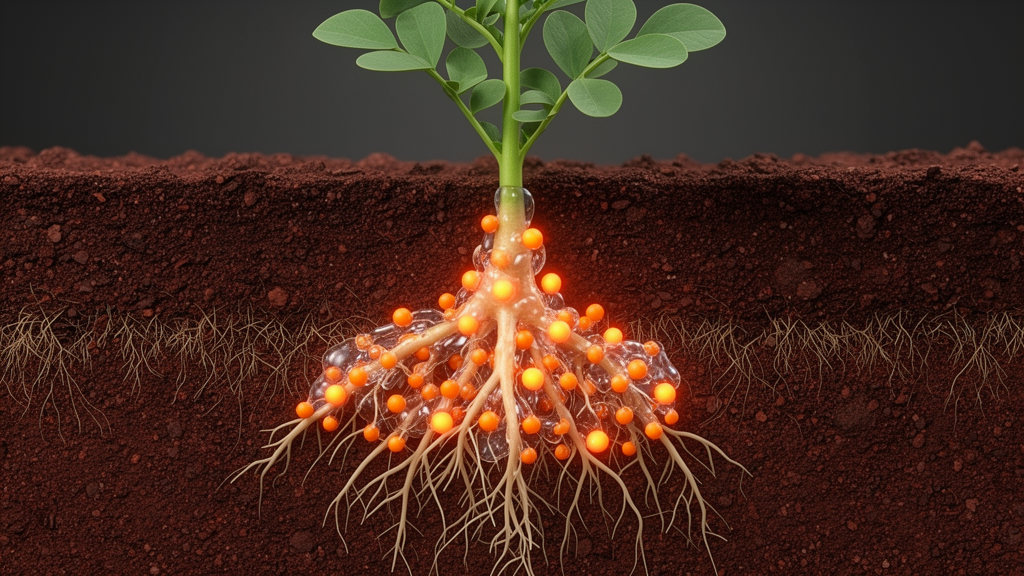
Acidic soils blanket vast swathes of the tropics and subtropics, and beneath their surface lies an invisible adversary that costs farmers billions of dollars in lost yields every year. When soil pH drops, aluminium that is normally locked away in mineral structures dissolves into its toxic trivalent form, Al³⁺, which attacks the very first tissue it meets: the root tip. Within hours of exposure, cell division stalls, root elongation halts, and the plant’s ability to take up water and nutrients collapses. For staple cereals such as maize, rice and wheat, the physiology of this assault has been studied for decades, informing breeding programmes that have produced acid-soil-tolerant varieties. But for sesame, a high-value oilseed crop grown precisely in those affected regions, the picture has remained strikingly incomplete. A new study published in BMC Plant Biology by Saira Ghafoor, Ziming Wu and colleagues now delivers one of the first comprehensive physiological portraits of how sesame copes with aluminium toxicity, and the findings could reshape how breeders screen for resilient cultivars.
The research team set up a controlled experiment comparing two sesame cultivars with contrasting behaviour under aluminium stress: Zhongzhi-13, designated V1, and ZZM2748, designated V2. Seedlings were exposed to 30 milligrams per litre of aluminium sulfate, a concentration sufficient to provoke measurable toxicity without obliterating growth entirely. The researchers then measured an unusually broad battery of traits spanning root architecture, water relations, membrane integrity, photosynthetic pigment retention, canopy geometry, osmoprotectant accumulation and antioxidant enzyme activity. This integrated design matters because aluminium tolerance is not governed by a single heroic mechanism; it emerges from the coordination of many processes operating simultaneously in roots and shoots. By capturing the whole system rather than an isolated enzyme or gene, the study offers a genuinely systemic view of stress resistance in a crop that has long been understudied relative to the cereals.
The differences between the two cultivars were immediate and dramatic, beginning underground. The tolerant cultivar, Zhongzhi-13, suffered only a 7.4 percent reduction in root length under aluminium stress, a statistically significant advantage over its sensitive counterpart. Root fresh weight told an even starker story: V1 lost 25.4 percent of this trait, while V2 lost a full 51 percent. Because the root is the primary target of Al³⁺ toxicity, preserving root length and biomass translates directly into continued access to water and nutrients. A stunted, thickened, aluminium-damaged root system is the classic signature of toxicity in acid soils, and the fact that one sesame cultivar largely avoids this fate while another succumbs provides breeders with a clear morphological marker for tolerance.
Above ground, the tolerant cultivar maintained its water status far more effectively. Relative water content, a measure of how well tissues retain hydration, stood at 71.5 percent in V1 under stress compared with just 56.5 percent in V2. This gap reflects a cascade of consequences flowing from the roots: when root tips are damaged, water uptake falters, leaves dehydrate, stomata close, and photosynthesis declines. The tolerant line’s ability to keep its tissues hydrated suggests that its root system continues functioning under conditions that cripple the sensitive line. Water relations, often treated as a downstream casualty of root damage, thus emerge in this study as a meaningful and easily measured indicator of aluminium tolerance in sesame.
Perhaps the most revealing part of the story concerns oxidative damage. Aluminium stress does not kill cells primarily through direct poisoning; instead, it disrupts membranes and triggers the overproduction of reactive oxygen species, including hydrogen peroxide, which then ravage lipids, proteins and DNA. The study quantified this damage through electrolyte leakage, a proxy for membrane integrity, and through hydrogen peroxide accumulation. In the sensitive cultivar, electrolyte leakage surged 3.8-fold and hydrogen peroxide climbed 4.4-fold under stress. In the tolerant cultivar, the corresponding increases were only 1.9-fold and 1.6-fold respectively, with all comparisons reaching statistical significance. In plain terms, the tolerant sesame line simply leaks far less of its cellular contents and generates far fewer destructive oxidants, keeping its membranes intact where the sensitive line’s cellular barriers fail.
How does the tolerant cultivar achieve this protection? The answer lies in a robust antioxidant defence system. The researchers documented elevated activity of key scavenging enzymes, including superoxide dismutase, which converts superoxide radicals into hydrogen peroxide; catalase, which then breaks hydrogen peroxide down into water and oxygen; and glutathione reductase, which regenerates the reduced form of glutathione, a central player in the cellular antioxidant network. Together, these enzymes form a coordinated pipeline that intercepts reactive oxygen species before they accumulate to damaging levels. The tolerant cultivar’s stronger enzymatic arsenal explains its lower electrolyte leakage and hydrogen peroxide burden, and it identifies specific biochemical activities that could serve as selection targets in breeding programmes aimed at acid-soil resilience.
Alongside enzymatic defences, the tolerant line deployed chemical osmoprotection. Proline, an amino acid that accumulates in many plants under stress, and soluble sugars both rose significantly in V1 under aluminium treatment. These compatible solutes do double duty: they buffer the cell’s osmotic balance, helping tissues retain water when the root system is compromised, and they stabilize proteins and membranes directly, shielding macromolecules from oxidative assault. The combination of sustained water status, high proline and abundant soluble sugars in the tolerant cultivar paints a coherent picture of osmotic adjustment working hand in hand with antioxidant defence, rather than either mechanism acting alone.
The photosynthetic apparatus also told a tale of two cultivars. Chlorophyll content declined by 39 percent in the sensitive line under aluminium stress, but only 21.7 percent in the tolerant line, a statistically significant difference. Beyond pigments, the researchers used imaging-based phenotyping to track canopy architecture, finding that the tolerant cultivar preserved superior canopy area, canopy width and a greenness ratio metric throughout the stress period. These canopy traits are more than cosmetic: a fuller, greener canopy sustains photosynthetic carbon gain, which fuels recovery and ultimately determines seed yield. The study’s use of non-destructive canopy imaging is particularly noteworthy, because it hints at high-throughput screening methods that could evaluate large breeding populations without sacrificing plants.
To synthesize this wealth of measurements, the team turned to multivariate analysis, and the results affirmed that the two cultivars employ genuinely distinct strategies. Traits of the tolerant cultivar clustered together with osmoprotectants and antioxidant enzymes, forming a coherent group of protective mechanisms. Traits of the sensitive cultivar, by contrast, grouped with the oxidative damage indicators such as electrolyte leakage and hydrogen peroxide. This statistical separation demonstrates that aluminium tolerance in sesame is not a matter of degree on a single axis but a coordinated, multi-component system integrating root integrity, membrane stability, osmotic regulation and antioxidant capacity. The authors propose a practical toolkit flowing directly from these results: electrolyte leakage, relative water content, proline content and glutathione reductase activity stand out as actionable, and in several cases non-destructive, screening criteria for identifying tolerant germplasm.
The implications extend well beyond the laboratory. Sesame is a prized oilseed across Asia and Africa, often grown by smallholder farmers on marginal lands where acidic soils are common and inputs are scarce. A physiological blueprint of aluminium tolerance, complete with cheap and rapid screening markers, gives breeders a concrete path toward cultivars that thrive where conventional varieties falter. The authors are careful to note that their conclusions rest on two contrasting genotypes under controlled conditions, and they emphasize the need to validate these traits across a broader range of sesame diversity and in real field soils, where aluminium toxicity interacts with drought, heat and nutrient limitations. Even so, the study fills a conspicuous gap in crop stress physiology. It shows that a crop long overshadowed by the cereals possesses a sophisticated, measurable and breedable defence against one of agriculture’s most stubborn soil constraints, and it hands the research community a set of tools to accelerate the search for sesame lines that can turn hostile acid soils into productive ground.
Subject of Research: Physiological and antioxidant mechanisms of aluminium tolerance in sesame cultivars
Article Title: Integrated physiological and antioxidant responses in roots and shoots underpin aluminium tolerance in sesame
Article References: Ghafoor, S., Aslam, M. T., Mushtaq, W., Alvi, A. A., Raza, A., Abdel-Maksoud, M. A., Ben-Qasem, N. S. S., Alrokayan, S., Feng, S., & Wu, Z. (2026). Integrated physiological and antioxidant responses in roots and shoots underpin aluminium tolerance in sesame. BMC Plant Biology. https://doi.org/10.1186/s12870-026-10091-x
Image Credits: AI Generated
DOI: 10.1186/s12870-026-10091-x
Keywords: aluminium toxicity, sesame, acidic soils, antioxidant enzymes, oxidative stress, osmotic adjustment, root growth, proline, chlorophyll, plant physiology, Sesamum indicum, crop breeding
Cite Scienmag News
Alan Morgan. (October 17, 2026). How Sesame Roots Fight Back Against Toxic Aluminium in Acid Soils. Scienmag. https://scienmag.com/how-sesame-roots-fight-back-against-toxic-aluminium-in-acid-soils/
Alan Morgan. "How Sesame Roots Fight Back Against Toxic Aluminium in Acid Soils." Scienmag, 17 October 2026, https://scienmag.com/how-sesame-roots-fight-back-against-toxic-aluminium-in-acid-soils/. Accessed 17 October 2026.
Alan Morgan. "How Sesame Roots Fight Back Against Toxic Aluminium in Acid Soils." Scienmag. October 17, 2026. https://scienmag.com/how-sesame-roots-fight-back-against-toxic-aluminium-in-acid-soils/


