


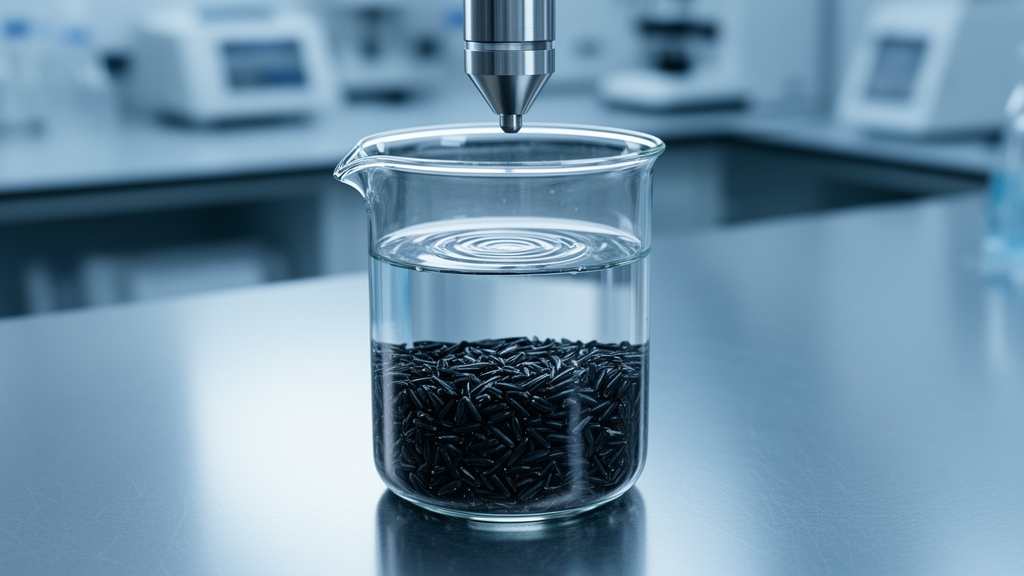
Black rice has long been prized for its striking color and its rich stores of anthocyanins, the same pigments that give blueberries and blackberries their deep hues. But turning this specialty grain into functional foods has always been a balancing act: the very compounds that make pigmented rice nutritionally interesting are fragile, and conventional processing can destroy them before they ever reach the consumer. A new review published in Food Science & Nutrition argues that ultrasound, a technology far older than most people realize, could be the versatile tool that food scientists have been looking for.
The review, led by Jingxian An of the Food Science and Technology Programme at the National University of Singapore, examines how low-frequency, high-intensity ultrasound can address three interconnected challenges in pigmented rice processing: modifying starch structure, reducing processing time, and extracting anthocyanins efficiently. The authors emphasize that ultrasound is not a new technology—research on ultrasonic depolymerization dates back to 1933—but its application to pigmented rice remains comparatively underexplored.
Pigmented rice varieties, including black, red, purple, and purple-red rice, are distinguished from their non-pigmented counterparts by an abundance of bioactive compounds, particularly flavonoids, anthocyanins, and proanthocyanidins. Cyanidin-3-glucoside is the predominant anthocyanin, reaching concentrations up to 470 milligrams per 100 grams, followed by peonidin-3-glucoside at up to 40 milligrams per 100 grams. These concentrations vary considerably among cultivars, and the predominant phenolic compounds also differ among color types: anthocyanins are particularly abundant in black and purple rice, while the pigmentation of red rice is more strongly associated with proanthocyanidins concentrated in the outer layers of the grain.
The processing challenges are closely tied to the starch properties of pigmented rice. Its relatively ordered starch-granule structure, together with interactions between starch and endogenous phenolic compounds, can restrict enzyme accessibility and require longer soaking, cooking, or structural-modification treatments. However, increasing treatment duration or intensity to improve starch functionality may simultaneously accelerate anthocyanin degradation. An appropriate processing technology must therefore balance three related objectives: effective starch modification, shorter cooking and drying times, and rapid anthocyanin recovery with minimal pigment degradation.
Ultrasound addresses these challenges through acoustic cavitation, a phenomenon that occurs only in liquid media. Alternating compression and rarefaction waves induce the formation and violent collapse of microscopic bubbles, generating shear forces, microjets, and localized pressure and temperature gradients. In starch-water systems, these physical effects can disrupt starch-granule organization, producing surface erosion, cracks, depressions, and increased porosity. When applied to rice starch, ultrasonic treatment can alter granule morphology and molecular organization, thereby enhancing swelling properties, reducing short-range molecular order and relative crystallinity, and modifying gelatinization characteristics.
The review highlights that ultrasound can be combined with other processing techniques to improve efficiency. Ultrasound-assisted enzymatic treatment can increase starch surface accessibility and facilitate enzyme-substrate interactions, thereby accelerating structural modification. Studies have shown that ultrasound-assisted cellulase treatment improved the textural properties and modified the in vitro starch digestibility of brown rice noodles, while ultrasonic enzyme treatment improved the cooking and eating quality of brown rice. However, the authors caution that evidence directly linking shortened ultrasound-assisted processing to improved anthocyanin retention in pigmented rice remains limited and condition-dependent.
Drying presents another opportunity for ultrasound application. After harvesting, paddy rice must be dried to a moisture level suitable for safe storage and milling, but higher drying temperatures and prolonged storage can accelerate the loss of heat-sensitive phenolic compounds. Ultrasound pretreatment can alter plant-tissue structure and increase porosity, thereby facilitating the migration of free, immobilized, and some bound water. Evidence from non-rice plant matrices suggests that ultrasound pretreatment may contribute to quality preservation by reducing the activity of enzymes such as polyphenol oxidase and peroxidase, which are associated with color deterioration and bioactive compound loss. Nevertheless, the authors stress that direct pigmented-rice studies measuring anthocyanin retention are required before a preservation advantage can be concluded.
The strongest rice-specific evidence currently concerns ultrasound-assisted extraction. Pigmented rice bran, a major byproduct of rice milling, is particularly rich in anthocyanins but has traditionally been used as animal feed or discarded as a low-value material. Ultrasound-assisted extraction enhances the recovery of bioactive compounds through acoustic cavitation, which disrupts plant cell walls and membranes, thereby facilitating the release of anthocyanins into the solvent. Representative studies demonstrate impressive yields: ultrasound-assisted extraction of black rice bran using water recovered around 173.25 milligrams of cyanidin-3-glucoside equivalents per liter, while extraction from red rice bran using acidified aqueous ethanol achieved a validated anthocyanin yield of 5.512 milligrams per gram. The magnitude of these effects varies with frequency, power, treatment time, temperature, reactor geometry, and the physicochemical properties of the solvent and sample matrix.
Despite these advantages, the review acknowledges several limitations. Excessive sonication may generate localized heating and reactive radicals, potentially degrading anthocyanins and other phenolic compounds rather than preserving them. Non-uniform acoustic fields and attenuation of ultrasonic energy in dense or heterogeneous materials can result in uneven treatment. At the industrial scale, equipment cost, probe erosion, energy efficiency, and reproducibility also require further evaluation. The authors conclude that ultrasound should be considered a complementary processing technology rather than a universally superior replacement for conventional methods, and that future research should focus on optimizing processing parameters tailored to specific rice varieties, investigating novel ultrasound-assisted combinations with emerging technologies, and conducting techno-economic assessments to evaluate the long-term feasibility of ultrasound-assisted processing in commercial settings.
Subject of Research: Ultrasound-assisted processing of pigmented rice for anthocyanin retention and extraction
Article Title: Ultrasound in Pigmented Rice Processing: A Versatile Approach for Anthocyanin Retention and Extraction: A Review
Article References: An, J., Liu, C., & You, K.-M. (2026). Ultrasound in Pigmented Rice Processing: A Versatile Approach for Anthocyanin Retention and Extraction: A Review. Food Science & Nutrition, 14(10), Article e72476. https://doi.org/10.1002/fsn3.72476
Image Credits: AI Generated
DOI: 10.1002/fsn3.72476
Keywords: ultrasound, anthocyanins, pigmented rice, food processing, starch, extraction, Pigmented, Rice, Processing, Versatile, Approach, Anthocyanin
Cite Scienmag News
Alan Morgan. (October 17, 2026). Ultrasound Could Unlock the Hidden Power of Black Rice. Scienmag. https://scienmag.com/ultrasound-could-unlock-the-hidden-power-of-black-rice/
Alan Morgan. "Ultrasound Could Unlock the Hidden Power of Black Rice." Scienmag, 17 October 2026, https://scienmag.com/ultrasound-could-unlock-the-hidden-power-of-black-rice/. Accessed 17 October 2026.
Alan Morgan. "Ultrasound Could Unlock the Hidden Power of Black Rice." Scienmag. October 17, 2026. https://scienmag.com/ultrasound-could-unlock-the-hidden-power-of-black-rice/


