


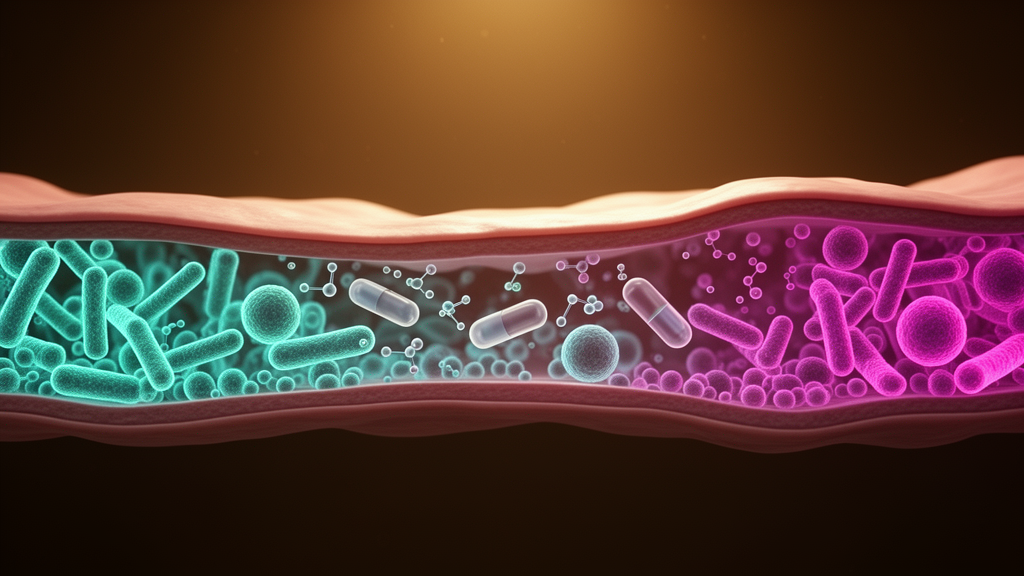
Menopause has long been understood as a hormonal event, a moment when declining estrogen transforms the body’s physiology and increases the risk of chronic disease. A narrative review published in Frontiers in Microbiomes by Susanne B. Haga of Duke University School of Medicine argues that the story is incomplete without a third participant: the trillions of microbes living in the gut. The review, which synthesizes evidence across endocrinology, microbiology, and clinical pharmacology, proposes that the menopausal transition creates a unique biological context in which gut bacteria may meaningfully alter how medications are absorbed, metabolized, and tolerated. This field, known as pharmacomicrobiomics, has until now focused largely on microbial drug metabolism in general, without accounting for a woman’s hormonal stage of life.
The timing of this convergence is significant. Women spend decades of their lives post-menopause, and the menopausal transition coincides with a rising burden of chronic conditions such as cardiovascular disease, osteoporosis, and depression. Prescription medication use climbs steeply through midlife, and polypharmacy is increasingly common among older adults. Yet drug trials rarely record menopausal status in a standardized way, and few studies have directly compared drug responses between premenopausal, perimenopausal, and postmenopausal women. Haga’s central argument is that this blind spot may conceal an important source of interindividual variability in drug efficacy and toxicity, one rooted in the interplay between falling estrogen levels and a rapidly remodeling gut microbial community.
The evidence that menopause reshapes the gut microbiome is now substantial. Estrogen receptors are expressed throughout the gastrointestinal tract, where estrogen helps regulate epithelial barrier integrity, mucosal immunity, intestinal permeability, inflammatory signaling, and bile acid metabolism. When ovarian function declines, these effects wane, and microbial communities shift accordingly. Studies have documented menopause-associated changes not only in the gut but also in vaginal, oral, and urogenital microbiomes. One large population study even found that the postmenopausal gut microbiome resembles that of men more closely than that of premenopausal women. These microbial alterations have, in turn, been implicated in conditions ranging from metabolic dysfunction and osteoporosis to depression and hormone-related cancers, suggesting that microbiome remodeling may contribute to the very diseases that drive pharmacotherapy in midlife.
Crucially, the relationship runs in both directions. The gut microbiome contributes to estrogen homeostasis through a collection of microbial genes called the estrobolome, which encodes enzymes capable of deconjugating estrogens in the intestine. After the liver converts circulating estrogens into inactive, water-soluble glucuronides and excretes them into bile, gut bacterial beta-glucuronidases strip off the glucuronic acid moiety, regenerating biologically active estrogens that can be reabsorbed through enterohepatic circulation. This microbial rescue of hormones helps maintain circulating estrogen concentrations despite hepatic metabolism. The functional capacity of the estrobolome varies considerably between individuals and is shaped by age, diet, medication exposure, antibiotic use, obesity, and other lifestyle factors, making it a plausible determinant of how much active hormone any given woman retains.
This same enzymatic pathway provides what the review identifies as the strongest mechanistic bridge between endocrine physiology and pharmacology. Many therapeutic agents undergo hepatic glucuronidation as part of phase II metabolism, producing inactive conjugates that are secreted into bile and delivered to the intestinal lumen. Bacterial beta-glucuronidases can hydrolyze those conjugates just as they do estrogen glucuronides, regenerating the active parent compound within the gut. Depending on the drug, this reactivation can prolong exposure, enhance efficacy, or intensify toxicity. The best-characterized example is the chemotherapy agent irinotecan, in which microbial reactivation of the inactive metabolite SN-38G produces active SN-38 in the colon, causing dose-limiting diarrhea and intestinal injury. Similar mechanisms have been described for nonsteroidal anti-inflammatory drugs, mycophenolate mofetil, morphine, and the osteoporosis drug raloxifene, all of which are commonly used by women in midlife and beyond.
Beyond the estrobolome, the review catalogs several other microbiome-mediated pathways that could interact with menopause-related changes. Gut bacteria possess an extensive enzymatic repertoire that directly metabolizes drugs before absorption or excretion. Classic examples include the inactivation of the cardiac drug digoxin by the bacterium Eggerthella lenta, bacterial activation of the prodrug sulfasalazine in the colon, and microbial metabolism of levodopa used in Parkinson’s disease. Because microbial composition changes after menopause, the abundance and activity of these drug-transforming organisms may shift as well, though the review emphasizes that almost nothing is known about how menopause specifically alters microbial xenobiotic metabolism. This remains an emerging rather than an established mechanism.
Bile acid biology offers another biologically plausible route. The gut microbiome transforms host-derived primary bile acids into secondary bile acids through deconjugation, oxidation, epimerization, and dehydroxylation. Bile acids are far more than digestive detergents; they act as signaling molecules through receptors such as the farnesoid X receptor and TGR5, influencing glucose and lipid metabolism, inflammation, and intestinal barrier integrity. They also affect the absorption of orally administered drugs and regulate the expression of hepatic and intestinal transporters and xenobiotic-metabolizing enzymes. Reviews of the emerging literature suggest that menopause alters both gut microbial composition and bile acid metabolism, but whether these changes translate into clinically meaningful differences in drug pharmacokinetics or pharmacodynamics is still unknown.
Microbial metabolites and immune regulation complete the mechanistic picture, though with even thinner direct evidence. Bacteria produce short-chain fatty acids, indole derivatives, secondary bile acids, trimethylamine, and other bioactive compounds that interact with host receptors and can modulate the expression and activity of cytochrome P450 enzymes, membrane transporters, and nuclear receptors involved in drug disposition. Menopause has been associated with altered short-chain fatty acid production and bile acid profiles, although findings vary across studies. Meanwhile, declining estrogen can independently disrupt intestinal tight junctions, increasing permeability and promoting low-grade inflammation, effects that microbial dysbiosis can amplify. These changes do not metabolize drugs directly, but they may alter intestinal absorption, hepatic metabolism, and susceptibility to adverse drug reactions, and hormonal and microbial factors appear to act synergistically on host physiology.
Haga is careful to note that direct clinical evidence connecting menopause-associated microbiome remodeling with altered drug response remains limited. The strongest data support two independent pillars: menopause changes the gut microbiome, and the gut microbiome influences drug metabolism. Bridging the two will require overcoming significant methodological gaps. Clinical trials rarely assess menopausal status with standardized criteria, microbiome characterization has emphasized taxonomic composition rather than functional capacity, and important modifiers such as menopausal hormone therapy, diet, obesity, and concomitant medications are infrequently integrated into study design. Fecal sampling, which reflects mainly distal colonic luminal communities, may also incompletely capture the mucosa-associated and region-specific microbiota most relevant to drug disposition. The contributions of non-bacterial microbial components, including the virome, mycobiome, and archaeome, remain essentially unexplored.
The path forward, the review argues, lies in integrated longitudinal studies that follow women across the menopausal transition with repeated measurements of hormones, microbiome function, medications, and clinical outcomes. Because microbial functional capacity, measured through beta-glucuronidase activity, xenobiotic-metabolizing enzymes, bile acid profiles, and metatranscriptomics or metabolomics, may predict medication response better than species lists alone, functional profiling should become a priority. With menopausal hormone therapy now increasingly used in appropriately selected women, researchers must also determine whether its route, formulation, timing, and duration modify the gut microbiome or microbiome-mediated drug responses. Ultimately, intervention trials using diet, probiotics, prebiotics, or selective microbial enzyme inhibitors would provide the strongest evidence for causality. For now, the review concludes, microbiome-informed prescribing is not ready for the clinic, but the framework it outlines could eventually help explain why two women with identical prescriptions and similar health profiles can experience dramatically different therapeutic outcomes, and it positions menopausal status as a variable that precision medicine can no longer afford to ignore.
Subject of Research: Menopause-associated gut microbiome remodeling and its influence on drug metabolism and therapeutic response
Article Title: Menopause-associated gut microbiome remodeling and pharmacomicrobiomics: emerging mechanisms influencing drug response
Article References: Menopause-associated gut microbiome remodeling and pharmacomicrobiomics: emerging mechanisms influencing drug response. (n.d.). https://doi.org/10.3389/frmbi.2026.1953547
Image Credits: AI Generated
DOI: 10.3389/frmbi.2026.1953547
Keywords: menopause, gut microbiome, pharmacomicrobiomics, estrogen, estrobolome, beta-glucuronidase, drug metabolism, bile acids, microbial metabolites, intestinal barrier, precision medicine, polypharmacy
Cite Scienmag News
Morgan Morrow. (October 16, 2026). How Menopause Reshapes Gut Microbes That Influence How Drugs Work. Scienmag. https://scienmag.com/how-menopause-reshapes-gut-microbes-that-influence-how-drugs-work/
Morgan Morrow. "How Menopause Reshapes Gut Microbes That Influence How Drugs Work." Scienmag, 16 October 2026, https://scienmag.com/how-menopause-reshapes-gut-microbes-that-influence-how-drugs-work/. Accessed 16 October 2026.
Morgan Morrow. "How Menopause Reshapes Gut Microbes That Influence How Drugs Work." Scienmag. October 16, 2026. https://scienmag.com/how-menopause-reshapes-gut-microbes-that-influence-how-drugs-work/


