


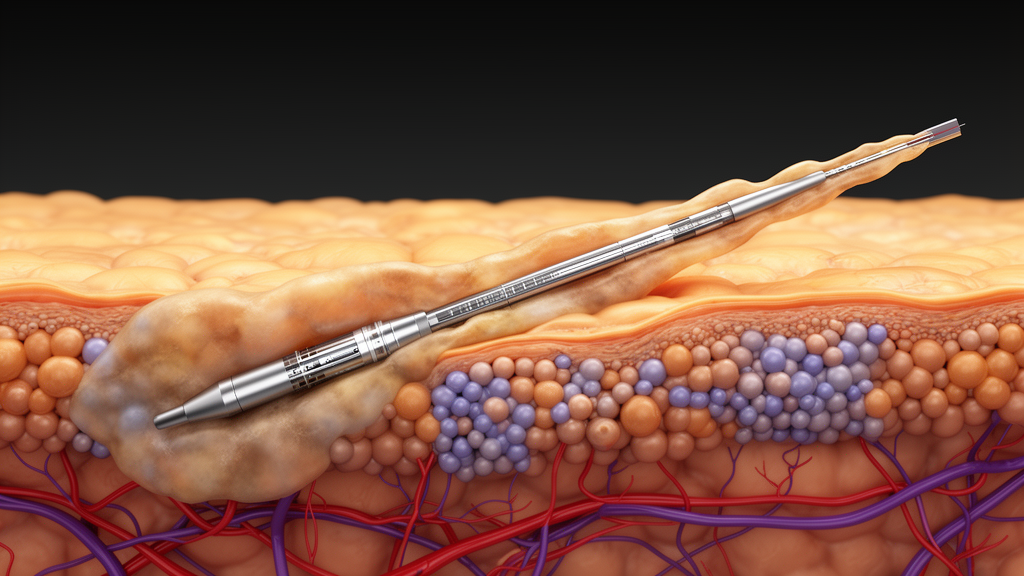
Brain–computer interfaces promise to restore movement and communication to people with paralysis, yet the microelectrodes that make them possible have a stubborn flaw: their recording quality tends to fade over months and years inside the brain. For decades, researchers have studied this decline by measuring how far tissue sits from the implanted device, grouping samples into rings or bands around the electrode track. A new methodological framework published in Frontiers in Materials argues that this distance-centered view, while useful, misses something crucial — the local biological neighborhoods, or spatial niches, in which each measurement is actually embedded.
The review, authored by Miaozhe Huo, Zhengyang Xue, Yifei Sheng, and Shiying Li from City University of Hong Kong and Shenzhen Nanshan People’s Hospital, proposes a resolution-aware analytical framework that treats the intracortical microelectrode–brain interface as a layered system. The first layer is geometric: the implant-centered coordinate that locates every measurement relative to the device surface or reconstructed probe tract. The second layer is biological: the multivariate local context — cell types, molecular states, tissue structure, and cell–cell relationships — that exists within and across those coordinates. The authors argue that combining both layers preserves the defining geometry of the biohybrid interface while exposing biological organization that a distance value alone cannot capture.
The motivation is well established. Intracortical microelectrodes record neural activity from within the cortex, but chronic signal quality varies across channels, devices, animals, and time. Mechanical injury at insertion, persistent micromotion, vascular disruption, inflammatory signaling, glial and immune responses, and neuronal displacement or loss all contribute to an evolving tissue response. Material and device properties influence the magnitude and time course of that response. Around the interface, these interdependent processes produce a heterogeneous, multicomponent reaction rather than a single uniform scar. Recording performance, in turn, varies with this tissue context together with electrode design, electrochemistry, cortical depth, neuronal availability, and temporal history.
What makes the new framework timely is the arrival of spatially resolved molecular technologies at the implant interface. Direct studies now include Visium whole-transcriptome measurements with multicellular capture spots, regional GeoMx RNA or protein profiles, registered histology and immunofluorescence, and targeted Xenium transcript-coordinate maps with marker-based cell-type inference reported in a 2026 preprint. Each assay contributes a distinct native unit: a Visium spot captures a local multicellular mixture at roughly 55 micrometers; a Xenium readout provides transcript coordinates within a targeted 100-gene panel; a GeoMx area of illumination represents a selected tissue aggregate; and an image feature reflects its staining, segmentation, and registration. Together, these measurements make it possible to analyze recurring local contexts within implant-centered coordinates — something earlier bulk approaches could not do.
Central to the framework is a careful separation of three vocabularies that the authors say are often conflated: established implant-referenced coordinates and sampling regions, assay-native measurement units, and analytically derived spatial contexts. A distance ring, a capture spot, or an unsupervised spatial cluster, they argue, is not a niche by itself. A true spatial niche requires four minimum reporting elements: a declared focal unit, a biologically and technically justified neighborhood rule and scale, the input features used to represent context, and a validation strategy stating the criterion used to evaluate the representation. This discipline is designed to make niche-level findings reproducible and comparable across laboratories, platforms, and studies.
The framework organizes niche-level analysis into three complementary directions. The first is niche identification and biological characterization, drawing on method families such as composition-centered approaches like Spatial-LDA, CellCharter, and CytoCommunity; state- and program-centered methods like scNiche and NicheCompass; spatial-domain scaffolds including BASS, BayesSpace, and BANKSY; image-linked tools such as Starfysh, histoCAT, and SPIAT; and serial-section methods like PASTE and STitch3D that extend two-dimensional observations toward three-dimensional reconstruction. The second direction examines implant-referenced spatial organization — patterns, gradients, boundaries, and molecular-state ordering — using tools such as SpatialDE, SPARK-X, GASTON, SpaceFlow, and ONTraC. The third evaluates niche-conditioned transcript and protein relationships, with methods like Niche-DE, MISTy, SpatialDM, COMMOT, and LIANA+ mapping candidate ligand–receptor interactions onto defined niche contexts.
The current evidence base, though still limited, already hints at what niche analysis could reveal. In rat motor cortex, Visium studies established device-referenced whole-transcriptome variation and exploratory molecular associations with multiunit activity, local field potentials, signal-to-noise ratio, neuronal density, and GFAP intensity. In mice, GeoMx studies documented declining immune activation with distance from the probe and persistent neuronal, oligodendrocyte, and autophagy protein deficits across radial regions at eight weeks. The Xenium preprint compared electrically inactive surrogate probes differing in material and cross-sectional size, finding that local transcript and inferred cell-type patterns varied more with probe size than with material, especially at six weeks. Notably, none of the niche-analysis methods reviewed has yet been applied to intracortical microelectrode data — a gap the framework is designed to close.
The authors are careful about statistical practice, distinguishing animal-level replication from within-animal sampling. Cells, spots, sampled regions, and implant sites within the same animal are nested observations; counting them as independent replicates would constitute pseudoreplication. They also flag batch effects, tissue deformation, registration uncertainty, and tract-boundary placement as factors that can shift distance assignments and the features attributed to a local region. The Xenium study, for example, averaged gene-expression estimates for each cell type within specified spatial regions of each animal before analysis of variance, treating the animal as the biological replicate.
Perhaps the most forward-looking part of the framework connects spatial niches to recording performance. Existing studies have posed recording quality as an explicit supervised-learning target, combining temporal, electrochemical, electrode-design, cortical-depth, and prior-recording variables to predict whether a channel will yield sortable units. The review proposes candidate niche-derived predictors at matched functional scales: local niche composition and niche-conditioned state for registered channels or sites; device-relative niche distribution and across-site heterogeneity for shanks and implants; and recurrent niche assemblies or ecotypes for whole specimens. Outcome-linked spatial transcriptomics studies in cancer — from compartment-specific gene signatures to niche-fraction and ecotype models — provide methodological precedents for pooling local features to larger outcome units.
The authors conclude that distance remains an essential coordinate for microelectrode research, but that spatial niches add the cellular, molecular, and structural context present within and across implant-centered coordinates. By reporting the focal unit, neighborhood rule and scale, input features, and validation strategy, researchers can make that context explicit and comparable. The resulting material–niche–function question offers a common language for comparing spatial omics, morphology, interface engineering, and chronic recording studies — and, ultimately, for understanding why some electrodes keep listening to the brain while others fall silent.
Subject of Research: A methodological framework for analyzing spatial niches at the intracortical microelectrode–brain interface using spatial transcriptomics
Article Title: From peri-implant distance ranges to spatial niches: a resolution-aware analytical framework for the intracortical microelectrode–brain interface
Article References: Huo, M., Xue, Z., Sheng, Y., & Li, S. (2026). From peri-implant distance ranges to spatial niches: a resolution-aware analytical framework for the intracortical microelectrode–brain interface. Frontiers in Materials, 13, Article 1969087. https://doi.org/10.3389/fmats.2026.1969087
Image Credits: AI Generated
DOI: 10.3389/fmats.2026.1969087
Keywords: intracortical microelectrodes, spatial transcriptomics, spatial niches, brain–computer interfaces, neural implants, biomaterials, foreign body response, Visium, Xenium, GeoMx, recording performance, neuroinflammation
Cite Scienmag News
Cassandra Pierce. (October 16, 2026). Spatial Niches May Explain Why Brain Implants Lose Their Signal Over Time. Scienmag. https://scienmag.com/spatial-niches-may-explain-why-brain-implants-lose-their-signal-over-time/
Cassandra Pierce. "Spatial Niches May Explain Why Brain Implants Lose Their Signal Over Time." Scienmag, 16 October 2026, https://scienmag.com/spatial-niches-may-explain-why-brain-implants-lose-their-signal-over-time/. Accessed 16 October 2026.
Cassandra Pierce. "Spatial Niches May Explain Why Brain Implants Lose Their Signal Over Time." Scienmag. October 16, 2026. https://scienmag.com/spatial-niches-may-explain-why-brain-implants-lose-their-signal-over-time/


