


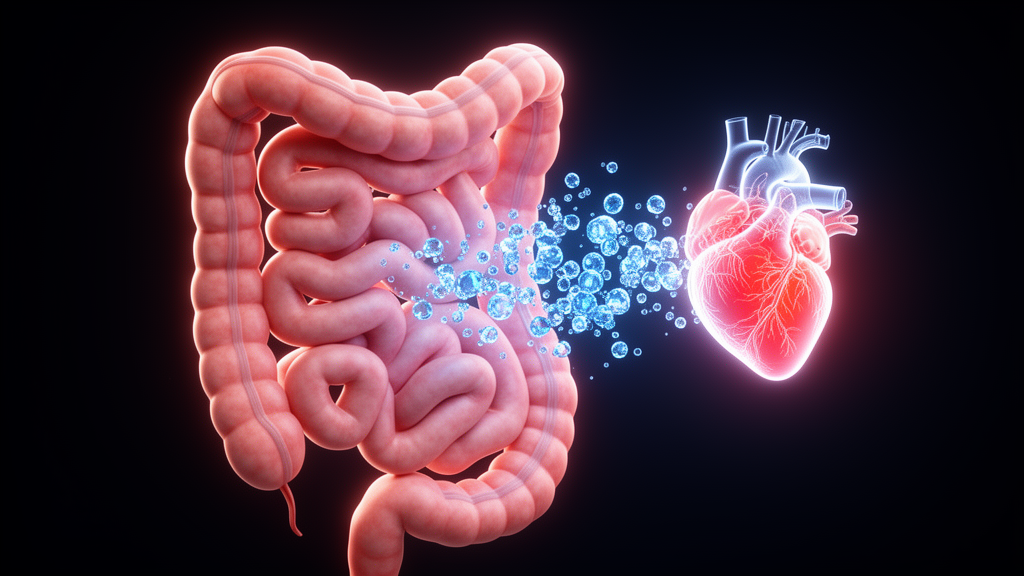
An 84-year-old woman arrived at the hospital with a heart rate that had dropped to as low as 30 beats per minute, slurred speech, tremors, and a searing pain in her lower right abdomen. The culprit behind her failing heart rhythm was not a primary cardiac disease but an unexpected combination: lithium, a decades-old psychiatric medication, and a twisted section of her large intestine. A case report published in Frontiers in Gastroenterology details how a cecal volvulus, a rare form of bowel obstruction in which the cecum rotates on its own blood supply, transformed a carefully managed psychiatric prescription into a life-threatening toxic event. The case offers a striking illustration of how mechanical problems in the gut can quietly sabotage drug clearance and, in doing so, destabilize the heart.
Lithium has been a mainstay of bipolar disorder treatment since the mid-twentieth century, prized for its mood-stabilizing properties. But the drug operates on a razor’s edge. Its therapeutic window is narrow, meaning the difference between an effective dose and a toxic one is small. When serum concentrations climb above 1.5 milliequivalents per liter, patients risk multiorgan dysfunction affecting the nervous system, kidneys, gastrointestinal tract, endocrine system, and, less commonly, the cardiovascular system. Cardiac complications, while infrequent, can include sinoatrial node dysfunction, atrioventricular block, and dangerous ventricular arrhythmias, with bradycardia, an abnormally slow heart rate, often serving as the first visible warning sign.
In this case, the patient had been living with bipolar I disorder and had been taking lithium under regular monitoring by her primary care physician. Her kidney function, tracked through creatinine levels, had been slowly deteriorating from 0.95 to 1.24 milligrams per deciliter over time, a red flag that would later prove consequential. Roughly a month before admission, she began experiencing progressively worsening tremors and myoclonic jerks, involuntary muscle twitches that were most noticeable during fine motor tasks like writing. Intermittent dizziness, lightheadedness, and mounting fatigue followed. Her family observed that she was drinking more water than usual and had episodes of slurred speech and altered mental status. Three days before hospitalization, she developed intermittent, bandlike pain in her right lower abdomen accompanied by loose stools and reduced oral intake.
On arrival, she was alert but showed signs of mild encephalopathy, a state of brain dysfunction. Her heart rate ranged between 30 and 49 beats per minute, dangerously slow for an adult. Abdominal examination revealed tenderness in the right lower quadrant without signs of peritoneal irritation, meaning the lining of the abdominal cavity had not yet become inflamed. Neurologically, she exhibited a resting tremor and occasional myoclonic jerks but no focal deficits, suggesting no localized brain lesion. Her mental status was slowed but she remained oriented to herself, her location, and the date.
Initial diagnostic workup painted a complex picture. An electrocardiogram revealed an idioventricular rhythm, a slow backup rhythm generated by the ventricles themselves, along with a left bundle branch block, a conduction abnormality. Laboratory results showed elevated creatinine at 1.43 milligrams per deciliter, non-anion gap metabolic acidosis, elevated white blood cell count, and hypernatremia at 149 millimoles per liter, indicating both kidney impairment and dehydration. Her serum lithium level measured 1.6 millimoles per liter, just above the toxic threshold. Abdominal X-rays showed severely distended bowel loops initially raising concern for small bowel obstruction, but a subsequent computed tomography scan of the abdomen and pelvis revealed the true culprit: an 8.6-centimeter distended cecum oriented transversely across the abdomen, consistent with cecal volvulus. A brain CT showed only chronic microvascular changes with no acute pathology, and a urinalysis positive for infection grew Streptococcus dysgalactiae on culture.
The clinical team synthesized these findings into a diagnosis of acute-on-chronic lithium toxicity complicated by cecal volvulus. Lithium was immediately discontinued, and aggressive intravenous hydration was initiated, later transitioning to 5 percent dextrose in water to address the hypernatremia. Nephrology specialists were consulted and recommended close monitoring of sodium and creatinine levels, along with the initiation of amiloride, a medication that addresses lithium-induced arginine vasopressin resistance, a condition in which the kidneys become inappropriately resistant to the hormone that regulates water balance. Cardiology advised against pacemaker placement, reasoning that the bradycardia was potentially reversible rather than stemming from permanent damage to the heart’s conduction system.
What followed was a diagnostic puzzle that unfolded over days. The patient’s lithium level steadily declined, reaching 0.1 millimoles per liter by hospital day 11, well within the normal range. Yet her encephalopathy and bradycardia persisted despite the falling drug concentration. This disconnect between serum levels and clinical symptoms proved to be the critical clue. The persistence of abdominal pain and worsening distension on repeat imaging prompted the surgical team to proceed with an exploratory laparotomy, during which they performed a right hemicolectomy, removing the affected portion of the colon, and an ileocolic anastomosis, reconnecting the small intestine to the remaining colon.
The outcome was dramatic. Following surgical correction of the bowel obstruction, the patient’s heart rate normalized and her neurological symptoms improved markedly. Postoperative ileus, a temporary paralysis of the intestines common after abdominal surgery, resolved with conservative management including intravenous hydration, antiemetics, and gradual reintroduction of a liquid diet. She was discharged in stable condition with resolved encephalopathy and a normal sinus rhythm at 79 beats per minute. The temporal relationship between surgical relief of the obstruction and the restoration of both cardiac and neurological function strongly suggested that the volvulus was not merely a coincidental finding but an active driver of her deterioration.
The authors propose a multifactorial mechanism to explain this clinical trajectory. First, the cecal volvulus impaired lithium clearance, likely by promoting dehydration and reducing renal perfusion, thereby allowing the drug to accumulate despite ongoing chronic therapy. Second, the abdominal distension caused by the twisted bowel likely triggered increased vagal tone, a reflexive activation of the parasympathetic nervous system that independently slows heart rate. This dual mechanism explains why the bradycardia persisted even as serum lithium levels fell: the mechanical obstruction continued to exert its vagal influence until it was physically corrected. The authors also hypothesize that lithium-associated gastrointestinal dysmotility may have predisposed the patient to the volvulus in the first place, creating a self-reinforcing cycle in which the drug slowed gut movement, the sluggish gut twisted and obstructed, and the obstruction further impaired drug elimination.
This case carries important lessons for clinicians managing patients on chronic lithium therapy. Serum lithium concentrations, while useful, may not accurately reflect the severity of toxicity in patients receiving long-term treatment, and clinically significant toxicity can occur despite levels that appear only modestly elevated. The authors emphasize that diagnosis should be guided by the overall clinical presentation rather than by laboratory values alone. They also highlight the value of sequential diagnostic reassessment: when symptoms persist or worsen despite appropriate treatment for an initial diagnosis, clinicians must remain open to additional contributing pathology. For patients with lithium toxicity who present with unexplained or refractory bradycardia, the authors recommend maintaining a high index of suspicion for structural gastrointestinal problems, as emergent surgical intervention may be required to break the cycle of drug accumulation and vagal-mediated cardiac slowing. The case ultimately underscores a broader principle in medicine: the body’s organ systems are deeply interconnected, and a problem in one system can cascade into unexpected and dangerous consequences elsewhere.
Subject of Research: Lithium toxicity and bradycardia caused by cecal volvulus-associated bowel obstruction
Article Title: Case Report: Lithium-induced bradycardia triggered by cecal volvulus: a case of obstruction-associated drug accumulation
Article References: Alnounou, A., Zou, H., Laird, M., Visak, C., Bilsland, S., Numbers, S., & Hughes, N. (2026). Case Report: Lithium-induced bradycardia triggered by cecal volvulus: a case of obstruction-associated drug accumulation. Frontiers in Gastroenterology, 5, Article 1728396. https://doi.org/10.3389/fgstr.2026.1728396
Image Credits: AI Generated
DOI: 10.3389/fgstr.2026.1728396
Keywords: lithium toxicity, bradycardia, cecal volvulus, bowel obstruction, bipolar disorder, drug accumulation, vagal response, renal impairment, encephalopathy, case report, gastroenterology, cardiology
Cite Scienmag News
Ophelia Keating. (October 16, 2026). Twisted Gut Turned a Common Mood Stabilizer Into a Heart-Slowing Poison. Scienmag. https://scienmag.com/twisted-gut-turned-a-common-mood-stabilizer-into-a-heart-slowing-poison/
Ophelia Keating. "Twisted Gut Turned a Common Mood Stabilizer Into a Heart-Slowing Poison." Scienmag, 16 October 2026, https://scienmag.com/twisted-gut-turned-a-common-mood-stabilizer-into-a-heart-slowing-poison/. Accessed 16 October 2026.
Ophelia Keating. "Twisted Gut Turned a Common Mood Stabilizer Into a Heart-Slowing Poison." Scienmag. October 16, 2026. https://scienmag.com/twisted-gut-turned-a-common-mood-stabilizer-into-a-heart-slowing-poison/


