


Plant-derived bioactive compounds such as curcumin, quercetin, resveratrol, and anthocyanins have long been celebrated for their antioxidant, anti-inflammatory, antimicrobial, and anticancer potential, yet a stubborn obstacle has prevented them from reaching their full therapeutic promise: the molecules themselves are fragile, poorly soluble, and rapidly degraded in the body. A comprehensive review published in Frontiers in Nanotechnology by researchers at Guru Jambheshwar University of Science and Technology and partner institutions surveys the rapidly expanding field of micro- and nanoencapsulation, arguing that enclosing these phytochemicals within protective carrier matrices is now the most effective route to stabilizing them, boosting their bioavailability, and enabling controlled release in food, pharmaceutical, and nutraceutical systems.
The scale of interest in plant natural products is striking. According to the review, PubMed listings for the phrase natural products have climbed to nearly 5,000 publications, up from 452 in the year 2000, and roughly a quarter of all medicines on the market trace their origins directly or indirectly to plant chemicals. Landmark examples include aspirin, derived from salicin found in willow species; quinine and artemisinin, isolated from Cinchona officinalis and Artemisia annua respectively; digoxin from Digitalis lanata; and the opium alkaloids morphine and codeine. Despite this rich history, delivering modern plant bioactives intact remains difficult because many secondary metabolites are highly sensitive to heat, light, oxygen, and pH swings, and compounds such as polyphenols often dissolve poorly in water, limiting absorption in the gut.
Encapsulation addresses these weaknesses by surrounding an active molecule with a thin protective coating of polymers, lipids, or biopolymers, in particles ranging from one to 1,000 micrometers for microsystems and one to 1,000 nanometers for nanostructures. The technique isolates the core material from environmental stress, can mask unpleasant flavors and colors, and permits release profiles that are delayed, sustained, or triggered by external cues. Nano-sized carriers add distinct advantages: their large surface area improves interaction with cells and biomolecules, and their small dimensions enhance cellular uptake and permit targeted delivery to diseased tissue. The review notes that recent clinical research has shown nano- and microencapsulation improving the pharmacokinetic and pharmacodynamic performance of curcumin, quercetin, resveratrol, epigallocatechin gallate, apigenin, and berberine, with enhanced outcomes in vitro and in vivo models of cancer, neurodegenerative, cardiovascular, metabolic, and inflammatory disorders.
The authors catalog a broad toolkit of manufacturing techniques. Spray drying, in which a liquid feed is atomized into hot gas to yield dry powder particles, is widely used but exposes thermolabile compounds to temperatures between 170 and 220 degrees Celsius. Freeze-drying is gentler, and complex coacervation exploits electrostatic attraction between oppositely charged biopolymers, typically proteins and polysaccharides, to deposit a coating around droplets. Emulsification creates oil-in-water or water-in-oil dispersions stabilized by surfactant layers, and electrospinning and electrospraying use high-voltage electrostatic forces to stretch or break polymer solutions into nanofibers and nanoparticles under relatively mild conditions. The choice of wall material, whether lipids, natural polymers such as chitosan, zein, alginate, and whey protein, or synthetic polymers such as poly(lactic-co-glycolic acid), ultimately determines encapsulation efficiency, stability, and release behavior.
Among lipid-based systems, the review distinguishes solid lipid nanoparticles, which consist of a solid lipid core surrounded by a phospholipid monolayer, from the newer nanostructured lipid carriers, whose cores blend solid and liquid lipids to form a less organized crystalline matrix with higher loading capacity and reduced drug expulsion during storage. Liposomes, spherical vesicles built from phospholipid bilayers, can carry both hydrophilic and hydrophobic cargo and have already reached the most advanced stage of clinical translation, alongside polymer-based nanoparticles, with cancer therapy as the leading application. Resveratrol encapsulated in liposomes combined with a quorum-sensing molecule reduced tumor development in murine models by approximately 70 percent, and liposomal anthocyanins were protected against degradation by light, pH shifts, enzymes, and ascorbic acid.
Polymeric nanoparticles offer another versatile platform. Curcumin encapsulated in PLGA nanoparticles halted the formation of diabetic cataracts in an animal model, while a PLGA-based silymarin nanocapsule demonstrated sustained release, increased bioavailability, and selective toxicity against prostate cancer cells. Mucoadhesive coatings such as chitosan, which binds to negatively charged mucosal surfaces in the gastrointestinal tract, can substantially improve oral absorption of otherwise poorly bioavailable compounds. Nanoscale solid dispersions also dramatically change dissolution behavior: dispersing compounds in an amorphous form inside carrier matrices boosted the dissolution rate of naringin by 20 to 55 percent and of quercetin by as much as 100 times, and pectin-whey protein nanocomplexes achieved encapsulation efficiencies of 83 to 98.5 percent for D-limonene.
The review also highlights electrospraying as a particularly gentle technique for sensitive molecules. Free beta-carotene degraded completely within 180 minutes of ultraviolet exposure, whereas encapsulated beta-carotene lost only about 20 percent under the same conditions. Because electrodynamic processes operate without the high temperatures of conventional spray drying and accommodate both hydrophilic and hydrophobic compounds across a wide range of wall materials, the authors consider them inexpensive, adaptable, and promising candidates for scaled-up industrial production of nanomaterials.
Safety and regulatory questions loom large over the field. Nanotoxicity depends on particle size, shape, surface charge, composition, and dose, and nanoparticles can cross biological barriers and accumulate in the liver, spleen, kidneys, lungs, and brain, potentially provoking oxidative stress, inflammation, and cellular damage. Niosomes, vesicles formed from nonionic surfactants with typical encapsulation efficiencies between 10 and 40 percent and as high as 75 to 90 percent in optimized systems, are one alternative with high biocompatibility and low toxicity, and proniosomes, dry free-flowing precursors that form vesicles on hydration, were developed to counter aggregation and leakage. Despite encouraging clinical results with established nanoformulations such as Doxil, Abraxane, and Onivyde, the review stresses that no plant-derived phytochemical nanoformulation has yet received approval from regulatory bodies for commercial use, partly because standardized guidelines for characterization, toxicological evaluation, and environmental risk assessment remain incomplete.
Looking forward, the authors anticipate personalized delivery systems tailored to individual physiological conditions, disease states, and genetic profiles, alongside growth in stimuli-responsive and targeted nanocarriers capable of releasing payloads at specific sites. They call for comparative, standardized studies to identify the most efficient and scalable encapsulation methods, more in vivo and clinical trials to establish long-term safety and bioavailability, and cost-effective, environmentally sustainable manufacturing to ease the bottlenecks of process reproducibility, formulation stability, and batch-to-batch consistency that currently slow industrial translation. If those hurdles can be cleared, encapsulated plant bioactives could move from laboratory curiosity to value-added products with longer shelf life, greater efficacy, and controlled delivery, transforming how food, pharmaceutical, and nutraceutical industries harness the healing chemistry of plants.
Subject of Research: Micro- and nanoencapsulation of plant-based bioactive compounds to enhance their stability, bioavailability, and therapeutic activities
Article Title: Trends in micro and nanoencapsulation of various plant-based bioactive compounds for enhanced biological activities: a review
Article References: Gill, A. R., Sharma, P., Siwach, P., Garg, V. K., Bhosale, M. S., & Choudhary, R. K. (2026). Trends in micro and nanoencapsulation of various plant-based bioactive compounds for enhanced biological activities: a review. Frontiers in Nanotechnology, 8, Article 1839002. https://doi.org/10.3389/fnano.2026.1839002
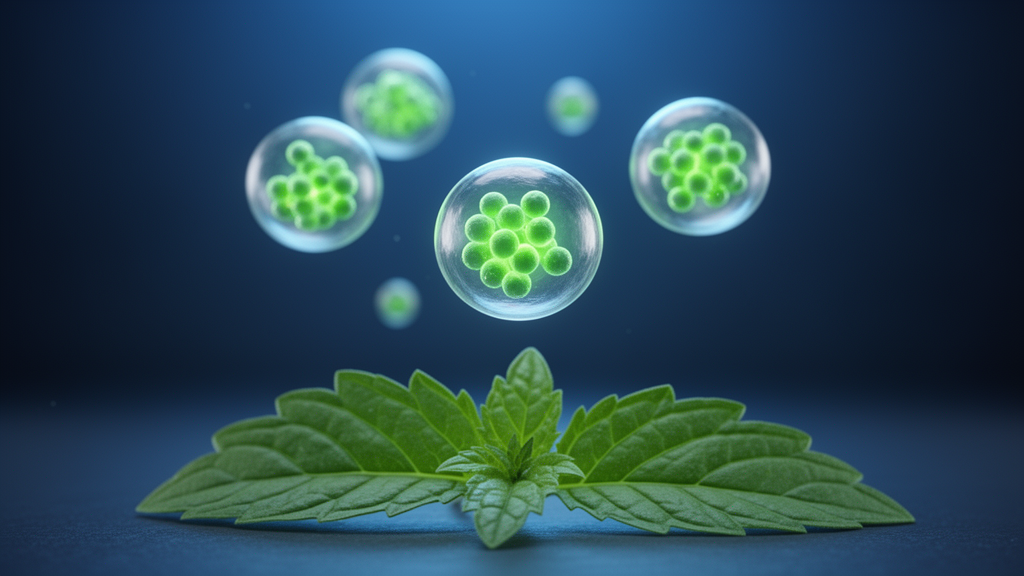
Image Credits: AI Generated
DOI: 10.3389/fnano.2026.1839002
Keywords: nanoencapsulation, microencapsulation, phytochemicals, bioactive compounds, nanoparticles, lipid nanoparticles, liposomes, niosomes, controlled release, bioavailability, drug delivery, Frontiers in Nanotechnology
Cite Scienmag News
Denise Maddox. (October 16, 2026). Tiny Capsules, Big Promise: How Nanoencapsulation Is Unlocking Plant Medicine. Scienmag. https://scienmag.com/tiny-capsules-big-promise-how-nanoencapsulation-is-unlocking-plant-medicine/
Denise Maddox. "Tiny Capsules, Big Promise: How Nanoencapsulation Is Unlocking Plant Medicine." Scienmag, 16 October 2026, https://scienmag.com/tiny-capsules-big-promise-how-nanoencapsulation-is-unlocking-plant-medicine/. Accessed 16 October 2026.
Denise Maddox. "Tiny Capsules, Big Promise: How Nanoencapsulation Is Unlocking Plant Medicine." Scienmag. October 16, 2026. https://scienmag.com/tiny-capsules-big-promise-how-nanoencapsulation-is-unlocking-plant-medicine/


