


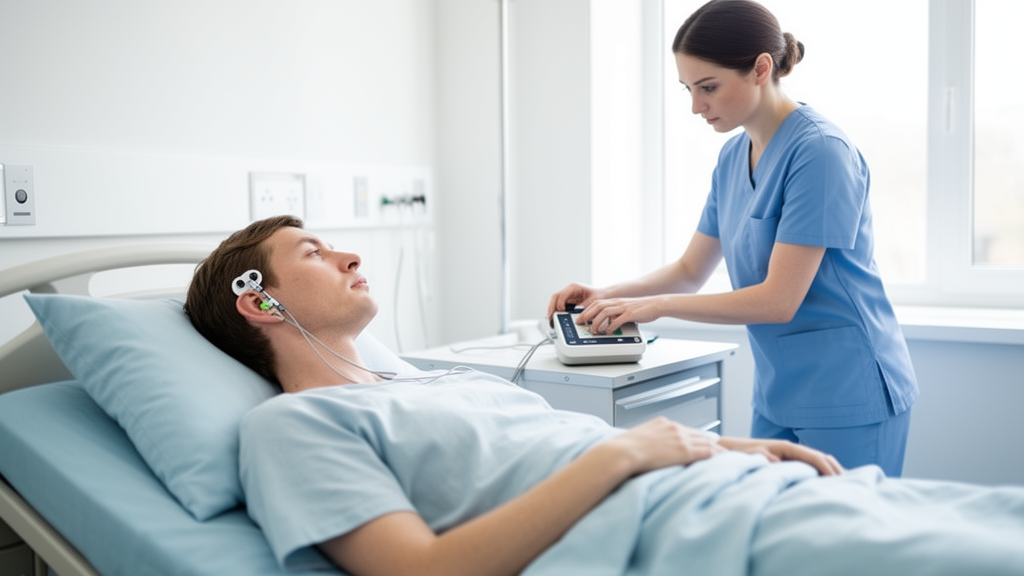
A small device clipped to the outer ear may do far more than ease pain. In a rigorously controlled phase II clinical trial published in Nature Communications, researchers in China report that transcutaneous auricular vagus nerve stimulation, or taVNS, significantly reduced early liver injury in patients undergoing partial hepatectomy, the surgical removal of part of the liver most often performed for hepatocellular carcinoma. The finding offers the first robust clinical evidence that a non-invasive nerve-stimulation technique, already studied for epilepsy, depression and inflammation, might shield one of the body’s most vital organs from the collateral damage of surgery itself.
The trial, led by Yuanyuan Wang, Mingshu Tao, Zhengxiu Sun, Yongao Lin and Jinling Liu of the Jiangsu Province Key Laboratory of Anesthesiology at Xuzhou Medical University, together with corresponding authors He Liu and Jun-Li Cao, enrolled 140 patients scheduled for partial hepatectomy. Participants were randomly assigned in a double-blind design to receive either active taVNS or a sham stimulation that mimicked the procedure without delivering effective neuromodulation. Because neither the patients nor the treating and assessing teams knew who received the active intervention, the design guards against the placebo effects and observer biases that have undermined many earlier studies of neuromodulation.
The logic behind the intervention rests on decades of work mapping the vagus nerve, the longest cranial nerve in the body and the main conduit of the parasympathetic nervous system. A branch of the vagus nerve reaches the skin of the outer ear, specifically the auricular concha and cymba concha, where it lies close enough to the surface to be reached by electrodes placed on the skin. Stimulating this territory sends signals into the brainstem that can ripple outward through the autonomic nervous system, dampening inflammatory cascades in distant organs. Preclinical studies had already suggested that vagus nerve stimulation can attenuate acute organ injury, including kidney damage triggered by hepatic ischemia and reperfusion, but clinical evidence in surgical patients had remained thin.
Timing was central to the trial’s design. The active group received 60-minute stimulation sessions at four carefully chosen time points: during the first clamping of the hepatic pedicle, the bundle of vessels that supplies blood to the liver and whose intermittent clamping is used to limit blood loss but inevitably starves liver tissue of oxygen; immediately after extubation in the post-anesthesia care unit; and on the first and second postoperative days, between 6:00 and 7:00 in the morning. This schedule was engineered to bracket the two principal insults to the liver during and after hepatectomy: ischemia-reperfusion injury, which occurs when clamped tissue is reperfused with oxygenated blood and floods with reactive oxygen species and inflammatory mediators, and the systemic inflammatory response that follows major surgery.
The primary outcome was the serum level of alanine aminotransferase, or ALT, an enzyme released by damaged hepatocytes and one of the most widely used biochemical markers of liver cell injury. On postoperative day 2, the median ALT level in the active taVNS group was 144.5 units per liter, compared with 224.0 units per liter in the sham group, a difference that was statistically significant with a P value of 0.002. In practical terms, patients who received the ear stimulation experienced roughly a one-third reduction in the biochemical signature of hepatocellular injury during the critical early window after surgery.
The authors are careful about what the numbers do and do not show. They describe the effect as early and transient, meaning the protection was evident in the first days after surgery but the trial was not designed to establish whether it translates into fewer serious complications, shorter hospital stays or better long-term liver function. ALT is a sensitive but imperfect proxy: it reflects hepatocyte membrane damage rather than the full clinical picture of post-hepatectomy liver failure, which involves the remaining liver’s capacity to regenerate and sustain metabolism. As a phase II study, the trial was powered to detect a signal worth pursuing, not to justify changing surgical practice on its own.
Even so, the result is notable for the field of bioelectronic medicine, which seeks to treat disease by targeting neural circuits rather than receptors with drugs. If a simple ear electrode can meaningfully blunt liver injury, the implications extend beyond hepatectomy. Liver ischemia-reperfusion injury is a feature of liver transplantation, trauma surgery and hemorrhagic shock, and postoperative liver dysfunction remains a leading cause of morbidity in patients with compromised hepatic reserve, such as those with cirrhosis or chemotherapy-associated liver injury. A therapy that is non-invasive, inexpensive, drug-free and deliverable at the bedside would be an attractive adjunct in all of these settings.
The trial was registered with the Chinese Clinical Trial Registry under identifier ChiCTR2400092005, and the study was published open access under a Creative Commons license, with a transparent peer review file and reporting summary made available alongside the paper. The authors declare no competing interests. Funding came from a broad slate of Chinese sources, including the National Key R&D Program of China, multiple grants from the National Natural Science Foundation of China, provincial programs in Jiangsu, Zhejiang and Shanghai, and institutional support from Xuzhou Medical University; the funding organizations had no role in the design, conduct, analysis or publication of the study.
Several questions remain before taVNS could enter routine perioperative care. The optimal stimulation parameters, including frequency, intensity, duration and the precise auricular targets, are still being refined across the field, and the mechanisms mediating hepatoprotection in humans, whether through anti-inflammatory vagal reflexes, modulation of the cholinergic anti-inflammatory pathway, or effects on hepatic blood flow, have not been fully dissected in patients. Larger phase III trials with hard clinical endpoints, such as post-hepatectomy liver failure, infection rates and length of intensive care stay, would be needed to confirm benefit and define which patients stand to gain the most.
For now, the study stands as a striking proof of concept: a gentle electrical whisper delivered through the skin of the ear, timed to the most dangerous moments of liver surgery, measurably reduced the biochemical footprint of organ injury. It is a vivid demonstration that the nervous system is not merely a bystander in surgical trauma but a modifiable lever in the body’s response to it, and it will likely energize a growing effort to turn vagus nerve stimulation from an experimental curiosity into a standard tool of perioperative medicine.
Subject of Research: Effect of transcutaneous auricular vagus nerve stimulation on postoperative liver injury after partial hepatectomy
Article Title: Effect of transcutaneous auricular vagus nerve stimulation on postoperative liver injury in patients undergoing partial hepatectomy: a phase II clinical randomized trial
Article References: Wang, Y., Tao, M., Sun, Z., Lin, Y., Liu, J., Xiong, X., Li, P., Ma, T., Zhou, M., Guo, X., Hang, C., Wang, M., Han, Y., Zhang, H., Zhang, S., Liu, H., & Cao, J.-L. (2026). Effect of transcutaneous auricular vagus nerve stimulation on postoperative liver injury in patients undergoing partial hepatectomy: a phase II clinical randomized trial. Nature Communications. https://doi.org/10.1038/s41467-026-77236-2
Image Credits: AI Generated
DOI: 10.1038/s41467-026-77236-2
Keywords: taVNS, vagus nerve stimulation, partial hepatectomy, liver injury, hepatocellular carcinoma, perioperative medicine, bioelectronic medicine, randomized controlled trial, alanine aminotransferase, ischemia-reperfusion injury, neuro-immune modulation, hepatoprotection
Cite Scienmag News
Ophelia Keating. (October 15, 2026). Zapping the Ear Could Protect the Liver After Major Surgery, Trial Finds. Scienmag. https://scienmag.com/zapping-the-ear-could-protect-the-liver-after-major-surgery-trial-finds/
Ophelia Keating. "Zapping the Ear Could Protect the Liver After Major Surgery, Trial Finds." Scienmag, 15 October 2026, https://scienmag.com/zapping-the-ear-could-protect-the-liver-after-major-surgery-trial-finds/. Accessed 15 October 2026.
Ophelia Keating. "Zapping the Ear Could Protect the Liver After Major Surgery, Trial Finds." Scienmag. October 15, 2026. https://scienmag.com/zapping-the-ear-could-protect-the-liver-after-major-surgery-trial-finds/


