


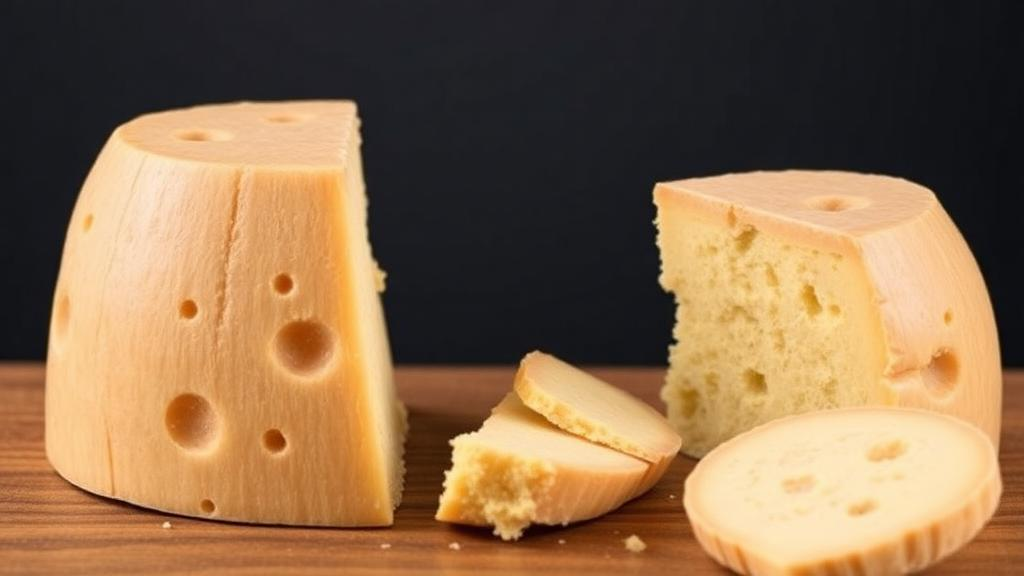
Deep inside the artisanal dairies of northwestern Iran, where sheep and buffalo milk has been fermented by hand for generations, scientists have uncovered a treasure trove of bacteria that may represent some of the most capable probiotic candidates ever pulled from a traditional food. A new study published in Current Research in Biotechnology describes how researchers collected 112 traditional dairy samples from 17 provinces across Iran, isolated 66 strains of lactic acid bacteria, and then subjected them to one of the most comprehensive phenotypic screenings yet attempted for food-derived microbes. Two strains in particular, Lactiplantibacillus pentosus ID27 and Lactiplantibacillus plantarum ID53, emerged as standout performers, combining near-total survival in stomach acid, powerful antimicrobial activity against seven dangerous pathogens, and remarkable antioxidant and enzyme-inhibiting properties in a single package.
The research team, led by Fatemeh Nezhadhossein and colleagues at the Agricultural Biotechnology Research Institute of Iran, focused on products that commercial probiotic pipelines have largely ignored. Among their samples were Lighvan cheese from East Azerbaijan, Kaleibar yogurt, and artisanal buffalo milk ferments from Miandoab, all of which rely on spontaneous fermentation rather than standardized industrial starter cultures. That spontaneous process, the authors argue, is precisely what makes these microbes special. Unlike commercial strains bred for predictable performance under controlled factory conditions, indigenous bacteria have evolved within fluctuating micro-environments, potentially endowing them with superior metabolic plasticity, stress resilience, and competitive fitness within specific food matrices.
Identifying the isolates required molecular precision. The team extracted genomic DNA from each of the 66 presumptive lactic acid bacteria, amplified the 16S rRNA gene using universal primers, and sequenced the products bidirectionally before matching them against the EzBioCloud database with a species-level acceptance threshold of 98.7 percent similarity. The results revealed a collection dominated by Lactiplantibacillus plantarum, which accounted for 30 isolates, or 45.5 percent of the total. Limosilactobacillus fermentum followed with 13.6 percent, then Pediococcus acidilactici at 10.6 percent, with smaller contingents of Pediococcus pentosaceus, Lactiplantibacillus pentosus, Levilactobacillus brevis, Lactococcus lactis, and several Enterococcus species rounding out the roster.
Geography mattered. More than half of the isolates, 57.6 percent, came from East Azerbaijan province, with the Lighvan region alone contributing 26 strains. Traditional cheeses proved the richest source, yielding 46 of the 66 isolates, followed by yogurts with 16. The remaining four came from raw milk, sourdough, lor, and tof, a traditional strained yogurt. The concentration of diversity in northwestern Iran likely reflects the combined influence of raw milk microbiota, artisanal processing conditions, and local environmental pressures that favor resilient bacterial populations adapted to harsh, variable conditions.
The gastrointestinal gauntlet was where the strains truly had to prove themselves. To qualify as plausible probiotics, bacteria must survive the acidic gauntlet of the stomach, where pH values between 2 and 3 destroy most microbes, and then endure bile salts in the small intestine. The researchers exposed every isolate to simulated gastric fluid at pH 2.5 containing pepsin for three hours, followed by simulated intestinal fluid at pH 8.0 with pancreatin and bile salts for four more hours. Survival rates varied dramatically, from a dismal 15.41 percent to an impressive 84.22 percent after the complete transit. Nineteen isolates, nearly 29 percent of the collection, retained more than 60 percent viability through the entire journey.
L. pentosus ID27 was the undisputed endurance champion, keeping 84.22 percent of its initial population alive through sequential gastric and intestinal exposure, with L. plantarum ID53 close behind at 79.27 percent. In acid tolerance alone, ID27 survived at 85.27 percent and ID53 at 81.02 percent, while the weakest performers, including L. plantarum ID1 and L. fermentum ID21, lost more than 80 percent of their cells. The team also measured cell surface hydrophobicity using xylene adhesion, finding values approaching 99.8 percent for the top strains, alongside autoaggregation rates near 98 percent. These surface properties matter because they govern how well bacteria cling to intestinal walls and clump together with invading pathogens, a process called coaggregation that can physically block pathogens from colonizing the gut.
The antimicrobial results may be the most striking finding. Cell-free supernatants from the isolates were tested against seven indicator pathogens, including Escherichia coli, Salmonella enterica, Yersinia enterocolitica, Shigella flexneri, Bacillus cereus, Staphylococcus aureus, and Listeria monocytogenes. L. plantarum ID53 produced the largest inhibition zones against every single pathogen tested, reaching 16.07 millimeters against Listeria, while L. pentosus ID27 showed similarly broad-spectrum activity with zones up to 15.27 millimeters against Staphylococcus. Activity was generally stronger against Gram-positive pathogens than Gram-negative ones, and the response was distinctly strain- and pathogen-dependent rather than uniform. The authors caution that because supernatants were tested without neutralization or enzymatic treatment, they could not determine whether organic acids, hydrogen peroxide, or proteinaceous compounds like bacteriocins drove the inhibition.
Safety screening delivered reassuring but preliminary results. Every one of the 66 isolates was uniformly non-hemolytic on sheep blood agar, showing no alpha or beta hemolysis. All isolates possessed bile salt hydrolase activity and produced exopolysaccharides, with nine strains classified as high EPS producers. Antibiotic susceptibility testing against eight clinically relevant antibiotics showed high susceptibility to penicillin, ampicillin, tetracycline, and others, while the widespread vancomycin resistance in 92.4 percent of isolates reflects a well-known intrinsic feature of Lactobacillus sensu lato species, stemming from D-Ala-D-lactate in their cell walls rather than transferable resistance genes. Notably, ID27 and ID53 were among the rare vancomycin-susceptible strains. Still, the authors emphasize that phenotypic disk diffusion cannot replace genomic safety assessment, and virulence determinants and mobile resistance elements remain to be evaluated.
What sets this study apart methodologically is its multivariate analytical framework. Rather than ranking strains on single traits, the researchers standardized all continuous measurements using z-score transformation and then deployed principal component analysis, hierarchical clustering with UPGMA linkage, and pairwise Pearson correlations adjusted for false discovery rate. The first two principal components captured 71.6 percent of total variance, revealing two broad phenotypic dimensions: a gastrointestinal-stress-tolerance axis and a surface-interaction axis. Hydrophobicity, autoaggregation, and coaggregation correlated strongly with each other at r values above 0.8, as did the survival measures across gastric and intestinal phases. Variable importance profiling showed that different genera excelled in different ways, with Lactiplantibacillus differentiated by surface traits, Enterococcus by stress tolerance, and Pediococcus by adhesion despite weak aggregation.
Beyond the headline findings, the study surfaced intriguing metabolic extras. Cell-free supernatants from ID27 inhibited porcine pancreatic alpha-amylase by 82.73 percent, with ID53 close behind at 81.60 percent, a property that could theoretically be relevant to blood sugar management, though the authors are careful not to overclaim. Antioxidant activity measured by DPPH radical scavenging reached 82.30 percent for ID53 and 79.67 percent for ID27. Biofilm formation, often viewed negatively in pathogens, can benefit probiotics by promoting persistence on intestinal surfaces, and 15.2 percent of isolates were strong producers. The authors stress that all multivariate analyses were exploratory pattern-recognition tools, not validated predictive models, and that no train-test splits or cross-validation were performed. The next steps are clear: whole-genome sequencing to rule out transferable resistance and virulence factors, followed by dynamic digestion models and in vivo studies to determine whether these remarkable laboratory phenotypes translate into real probiotic performance inside the human gut. For now, two humble strains from centuries-old Iranian cheese-making traditions have earned their place on the shortlist.
Subject of Research: Probiotic potential and multivariate phenotypic profiling of lactic acid bacteria isolated from Iranian traditional dairy products
Article Title: Multivariate phenotypic profiling and prioritization of multifunctional probiotic lactic acid bacteria from Iranian traditional dairy products
Article References: Multivariate phenotypic profiling and prioritization of multifunctional probiotic lactic acid bacteria from Iranian traditional dairy products. (n.d.). https://doi.org/10.1016/j.crbiot.2026.100424
Image Credits: AI Generated
DOI: 10.1016/j.crbiot.2026.100424
Keywords: probiotics, lactic acid bacteria, traditional dairy, Iran, Lactiplantibacillus plantarum, antimicrobial activity, gastrointestinal survival, phenotypic profiling, principal component analysis, food microbiology, biofilm, antioxidant activity
Cite Scienmag News
Drew Townsend. (October 10, 2026). Ancient Iranian Cheeses Yield Superbug-Fighting Bacteria With Probiotic Superpowers. Scienmag. https://scienmag.com/ancient-iranian-cheeses-yield-superbug-fighting-bacteria-with-probiotic-superpowers/
Drew Townsend. "Ancient Iranian Cheeses Yield Superbug-Fighting Bacteria With Probiotic Superpowers." Scienmag, 10 October 2026, https://scienmag.com/ancient-iranian-cheeses-yield-superbug-fighting-bacteria-with-probiotic-superpowers/. Accessed 10 October 2026.
Drew Townsend. "Ancient Iranian Cheeses Yield Superbug-Fighting Bacteria With Probiotic Superpowers." Scienmag. October 10, 2026. https://scienmag.com/ancient-iranian-cheeses-yield-superbug-fighting-bacteria-with-probiotic-superpowers/


