


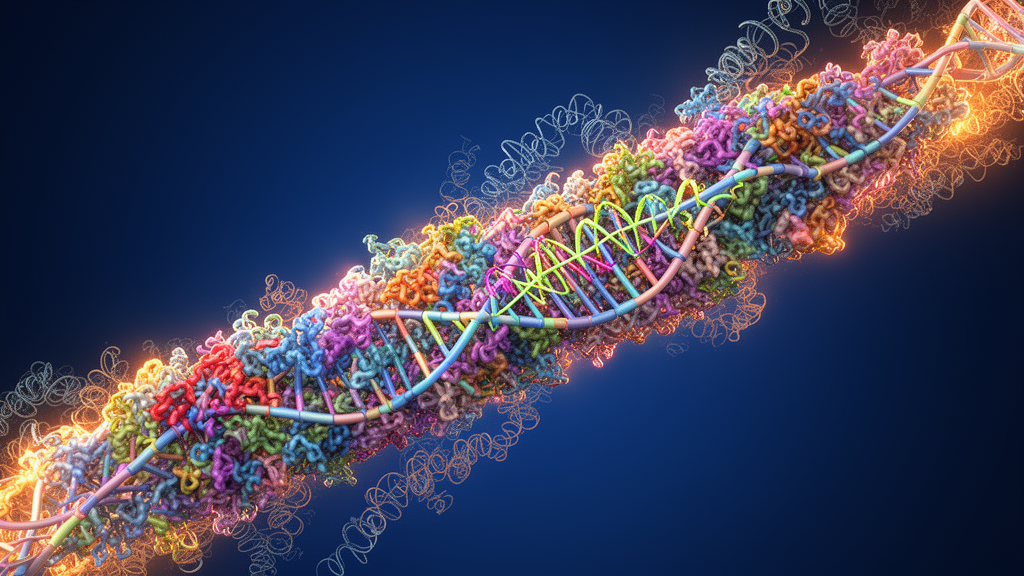
Every time a cell changes its identity — a skin fibroblast morphing into a stem cell, or an embryonic stem cell committing to a neural fate — thousands of genes must be switched on at precisely the right moment. A new study published in Advanced Science reveals that one of the master switches is the Super Elongation Complex, or SEC, a multi-protein machine best known for freeing stalled RNA polymerase II from its promoter-proximal pause. The work, which combines mouse embryonic fibroblast reprogramming with embryonic stem cell differentiation, shows that SEC does not merely assist gene activation; it actively drives the transition between cell identities through a previously underappreciated partnership with the RNA modification machinery.
The research team, led by investigators at Harbin Medical University and Northeast Agricultural University, used two complementary models of cell fate change: the reprogramming of mouse embryonic fibroblasts into induced pluripotent stem cells and the differentiation of embryonic stem cells into neuroectoderm. In both systems, disrupting SEC with KL-2, a peptidomimetic compound that selectively interferes with the interaction between the SEC scaffold protein AFF4 and the P-TEFb subunit Cyclin T1, dramatically impaired the transition. Crucially, the compound had no effect on the survival or proliferation of fibroblasts or stem cells under steady-state conditions, indicating that SEC is dispensable for maintaining a cell’s existing identity but indispensable for building a new one.
Timing proved to be everything. When the researchers inhibited SEC during the early days of reprogramming, the efficiency of induced pluripotent stem cell colony formation collapsed, and cells remained trapped in a mesenchymal state, never acquiring the epithelial morphology that marks successful reprogramming. RNA sequencing at day four revealed that more than half of the differentially expressed genes were downregulated, including core reprogramming factors such as Klf4 and Myc, along with cell cycle genes like Orc1 and pluripotency-associated genes such as Sall1. The downstream consequences were severe: cells accumulated in the G0/G1 phase, spindle structures became multipolar and abnormal, and karyotype analysis showed widespread chromosome number abnormalities in daughter cells.
To understand how SEC controls these genes, the team turned to the biophysics of transcription. After RNA polymerase II initiates transcription, it typically pauses 20 to 100 nucleotides downstream of the transcription start site, awaiting a release signal before productive elongation begins. Using published RNA polymerase II ChIP-seq datasets, the researchers quantified pause dynamics with two complementary metrics: the Traveling Ratio, which compares promoter-proximal to gene-body polymerase occupancy, and a two-dimensional Traveling Matrix method that simultaneously maps changes at both regions. Their analysis showed that early-activated genes like Klf4 and Myc carry pre-established paused polymerase even before reprogramming begins, and that reprogramming triggers their rapid release. In contrast, Oct4 and Sox2 lack pre-paused polymerase and instead acquire pause and release in a coupled, sequential manner during the mid-late stage.
CUT&Tag experiments confirmed that early SEC inhibition caused polymerase to pile up at the promoters of Klf4 and Myc while depleting from their gene bodies, a signature of failed pause release. ChIP-qPCR further showed reduced Ser2 phosphorylation of the polymerase C-terminal domain, the hallmark of productive elongation, and elevated pause indices at both loci. Ethynyl uridine incorporation assays demonstrated a global collapse in nascent RNA synthesis after SEC disruption, while overexpression of the SEC component ELL boosted it. The picture that emerged is one in which SEC acts as the trigger for the first transcriptional wave of reprogramming by liberating polymerase that was already parked at the most critical genes.
The most striking discovery, however, lay beyond the canonical mechanism. SEC is classically understood to promote pause release through P-TEFb-mediated phosphorylation of the polymerase C-terminal domain and the pause factors DSIF and NELF. But the researchers noticed that more than 40 percent of SEC target transcripts carry N6-methyladenosine, or m6A, the most abundant internal modification on eukaryotic messenger RNA. In Drosophila, m6A had already been shown to promote pause release, but whether the same held true in mammals was unknown. When the team inhibited SEC early in reprogramming, global m6A levels dropped sharply, as measured by RNA dot blot, ELISA, and the antibody-independent GLORI-seq method, which converts unmodified adenosines to inosines for single-nucleotide quantification. More than 23,000 m6A sites showed decreased modification, and the classic DRACH motif was enriched among the affected peaks, confirming their identity as bona fide m6A marks.
Using metabolic labeling with 4-thiouridine to isolate newly transcribed RNA, the researchers showed that SEC regulates m6A deposition co-transcriptionally. The single-base SELECT assay revealed that SEC inhibition significantly reduced m6A at specific sites in nascent Klf4 and Myc transcripts, including the promoter-proximal A701 site and gene-body A855 site of Klf4, while leaving non-m6A control sites untouched. Molecular docking predicted a close interaction between the SEC component ELL and the m6A methyltransferase METTL3, and this was validated by co-immunoprecipitation and immunofluorescence co-localization. ChIP-qPCR demonstrated that METTL3 and ELL co-occupy the promoters of Klf4 and Myc, and that SEC inhibition evicts both from these loci without changing total METTL3 protein levels. More than half of the transcripts losing m6A after SEC inhibition overlapped with those affected by METTL3 knockout, pointing to a shared regulatory pathway.
Functional experiments sealed the argument. Inhibiting METTL3 with the selective inhibitor STM2457 during the early stage of reprogramming reproduced the effects of SEC disruption: Klf4 and Myc expression fell, polymerase accumulated at their promoters, Ser2 phosphorylation declined, and reprogramming efficiency collapsed. Intriguingly, the study also uncovered a stage-specific duality: while early METTL3 inhibition was catastrophic for reprogramming, inhibition during the mid-late stage actually enhanced colony formation, suggesting that m6A plays opposing roles at different phases of the process. This may explain why previous studies have reported conflicting results about METTL3’s role in pluripotency. Most decisively, combined inhibition of SEC and METTL3 produced no additional increase in polymerase pausing beyond either treatment alone, and METTL3 overexpression could not rescue pause release when SEC was disrupted — evidence that the two operate in a single pathway, with SEC providing the scaffold that recruits METTL3 to specific loci.
The team then asked whether the same logic governs normal development. During retinoic acid-induced differentiation of embryonic stem cells, SEC inhibition selectively impaired the neuroectoderm lineage while leaving mesoderm and endoderm differentiation largely intact. Neural genes such as Nes and Tubb3 showed increased promoter-proximal pausing and reduced Ser2 phosphorylation upon SEC disruption, and global m6A levels again declined. STM2457 treatment similarly blocked neural marker acquisition, and reanalysis of published NET-seq data from METTL3 knockout cells revealed stalled nascent transcripts at the promoters of Nes and Tubb3. The authors propose that the functional divergence between SEC and the related elongation factor BRD4, which is known to drive mesendoderm specification, may act as a molecular determinant of lineage choice.
The implications extend well beyond the culture dish. Because SEC is dispensable for cell survival under steady-state conditions but essential whenever a cell must adopt a new identity, the findings suggest it may be a common driver of cell fate transitions throughout life, including embryonic development, tissue regeneration, and the initiation and progression of diseases such as cancer. The discovery that a transcription elongation complex doubles as a scaffold for RNA methylation adds a new layer to the growing intersection between the epitranscriptome and the transcriptional machinery, and hints that m6A deposited through the SEC-METTL3 pathway may act on R-loops to resolve paused polymerase. If confirmed, targeting this pathway could open new therapeutic avenues for conditions in which cell identity goes awry, from tumorigenesis to infertility.
Subject of Research: Role of the Super Elongation Complex and METTL3-mediated m6A modification in regulating RNA polymerase II pause release during cell identity transitions
Article Title: SEC Mediates m6A Deposition and Transcription Pause Release to Drive Cell Identity Transition
Article References: Zhang, Z., Xu, J., Wu, Y., Qu, Y., Hu, X., Sun, Y., Wu, Y., Liu, Z., Wang, J., & Lei, L. (2026). SEC Mediates m 6 A Deposition and Transcription Pause Release to Drive Cell Identity Transition. Advanced Science, Article e78131. https://doi.org/10.1002/advs.78131
Image Credits: AI Generated
DOI: 10.1002/advs.78131
Keywords: Super Elongation Complex, m6A, METTL3, RNA polymerase II, transcription pause release, iPSC reprogramming, embryonic stem cells, neuroectoderm differentiation, Klf4, Myc, cell fate transition, epitranscriptomics
Cite Scienmag News
Juliet Wilcox. (October 10, 2026). Super Elongation Complex Found to Switch On Genes That Transform Cell Identity. Scienmag. https://scienmag.com/super-elongation-complex-found-to-switch-on-genes-that-transform-cell-identity/
Juliet Wilcox. "Super Elongation Complex Found to Switch On Genes That Transform Cell Identity." Scienmag, 10 October 2026, https://scienmag.com/super-elongation-complex-found-to-switch-on-genes-that-transform-cell-identity/. Accessed 10 October 2026.
Juliet Wilcox. "Super Elongation Complex Found to Switch On Genes That Transform Cell Identity." Scienmag. October 10, 2026. https://scienmag.com/super-elongation-complex-found-to-switch-on-genes-that-transform-cell-identity/


